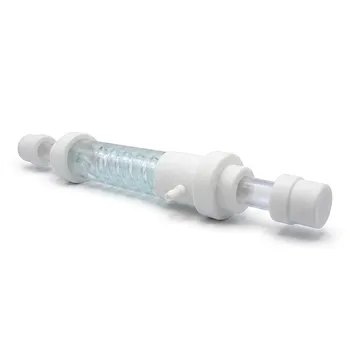
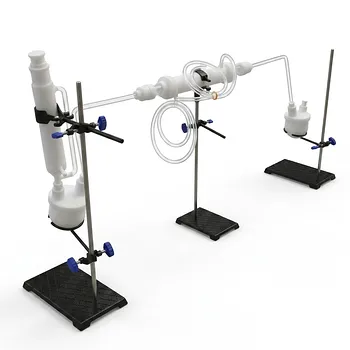
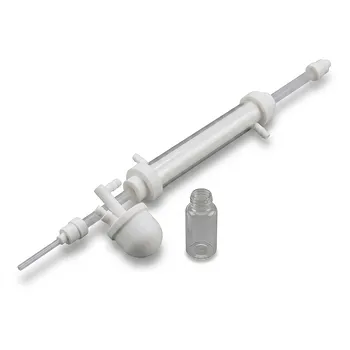
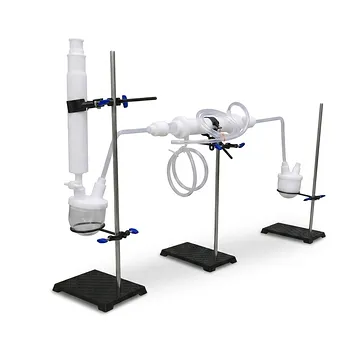
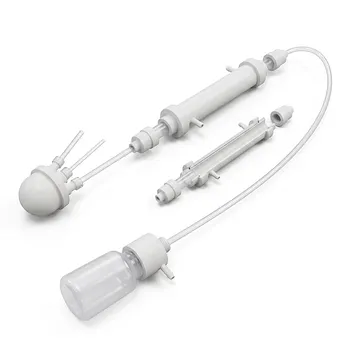
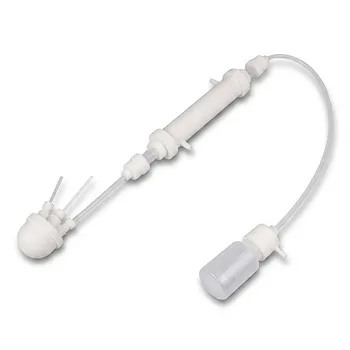
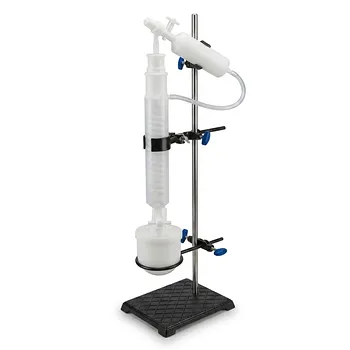
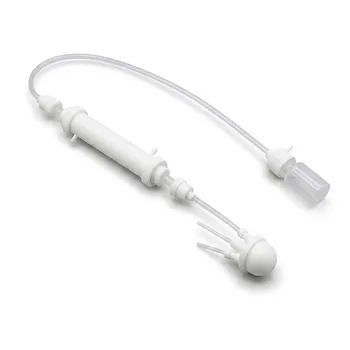
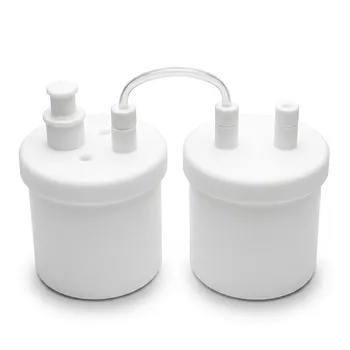
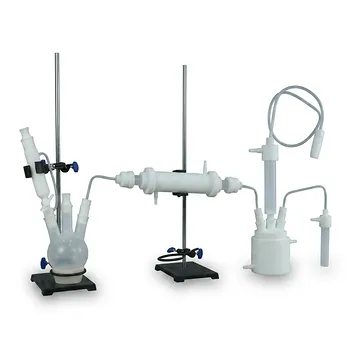
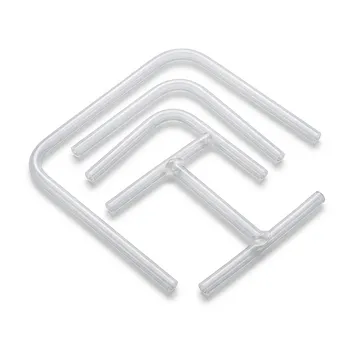
PTFE condenser tubes are critical components in vapor-recovery systems within semiconductor manufacturing. They are specifically designed to manage ultrapure etchants, stripping solutions, and deionized water during the production process.
The primary role of PTFE condenser tubes is to facilitate the recovery of process vapors without introducing ionic or particulate contamination. By leveraging the total chemical inertness of the material, manufacturers can maintain the sub-ppb (parts-per-billion) purity levels required to ensure high silicon wafer yields.
Maintaining Ultra-High Purity Standards
Prevention of Ionic Contamination
In semiconductor fabrication, even trace amounts of metallic ions can ruin a batch of wafers. PTFE (Polytetrafluoroethylene) is chosen for condenser tubes because it is chemically inert and does not leach ions into the process stream. This ensures that recovered chemicals remain at the extreme purity levels necessary for sensitive chemical synthesis.
Mitigation of Particulate Entrapment
The internal surfaces of PTFE tubes are exceptionally smooth, which is a functional requirement rather than a cosmetic one. This smoothness prevents particle entrapment, ensuring that microscopic debris does not accumulate and later break free into the fluid stream. By reducing "dead-leg" formation, the tubes eliminate areas where stagnant chemicals could degrade or collect contaminants.
Durability in Aggressive Chemical Environments
Resistance to Corrosive Etchants
Semiconductor manufacturing involves highly aggressive substances, including hydrofluoric acid and peroxides. PTFE condenser tubes provide a long service life in these environments because they do not react with or degrade when exposed to these corrosive etchants. This chemical stability is vital for maintaining the integrity of the vapor-recovery system over time.
Performance Under Extreme Conditions
Beyond liquid chemicals, PTFE is highly resistant to plasma exposure, which is a common occurrence in various stages of chip manufacture. The material’s ability to remain stable under thermal stress and chemically aggressive atmospheres makes it the standard for protecting sensitive electronic components during production.
Understanding the Trade-offs
Thermal Conductivity Limitations
While PTFE is an excellent insulator and chemically resistant, it has lower thermal conductivity than traditional metal alloys. In a condenser application, this means the wall thickness of the tubing must be carefully engineered to balance chemical durability with the need for efficient heat exchange.
Mechanical Softness
PTFE is a relatively soft fluoropolymer compared to stainless steel or specialized alloys. It is susceptible to mechanical damage if handled improperly during installation or if subjected to extreme physical stress. System designers must account for this by providing adequate support and protection within the manufacturing equipment.
Implementing PTFE Solutions in Your Facility
How to Apply This to Your Project
To maximize the benefits of PTFE condenser tubes, you must align the material properties with your specific process requirements.
- If your primary focus is maximizing wafer yield: Prioritize high-grade PTFE with the lowest possible extractables to ensure sub-ppb purity and prevent ionic contamination.
- If your primary focus is equipment longevity: Ensure the tubing is rated for the specific concentrations of aggressive etchants, such as hydrofluoric acid, used in your vapor-recovery cycles.
- If your primary focus is process efficiency: Optimize the tube wall thickness to ensure adequate heat transfer for condensation while maintaining the structural integrity of the PTFE.
By prioritizing chemical inertness and surface smoothness, PTFE condenser tubes remain the definitive choice for protecting the integrity of high-precision electronic and semiconductor fabrication processes.
Summary Table:
| Feature | Benefit to Semiconductor Manufacturing | Technical Consideration |
|---|---|---|
| Chemical Inertness | Prevents ionic contamination to maintain sub-ppb purity. | Critical for silicon wafer yields. |
| Surface Smoothness | Eliminates particulate entrapment and "dead-leg" zones. | Prevents microscopic debris release. |
| Corrosion Resistance | Withstands aggressive etchants like Hydrofluoric Acid (HF). | Extends equipment service life. |
| Thermal Stability | Maintains integrity under plasma and thermal stress. | Requires engineered wall thickness. |
| Mechanical Properties | Provides a non-reactive fluid path for ultra-pure liquids. | Requires support due to material softness. |
Optimize Your Process with KINTEK’s High-Performance Fluoropolymers
Elevate your manufacturing precision and safeguard your yields with KINTEK. From everyday basic labware (beakers, measuring cylinders, and reagent bottles) to specialized fluid transfer components (tubing, fittings, and valves), we provide the ultra-pure solutions your facility demands.
Whether you require high-purity trace analysis instruments, sample prep tools, or advanced derivative apparatus like custom PTFE condenser tubes, electrochemical cells, and microwave digestion vessels, KINTEK manufactures virtually all imaginable laboratory supplies crafted from premium PTFE and PFA.
Backed by end-to-end custom CNC fabrication, we are equipped to deliver everything from complex non-standard machined parts to high-volume orders with an absolute focus on high-performance materials. Ensure the integrity of your semiconductor fabrication—contact our specialists today for a bespoke solution!
Related Products
- Custom PTFE Condenser Tube 100ml Serpentine and Straight Fluoropolymer Laboratory Heat Exchanger with Flask Adapters
- Custom PTFE Condenser Tube Hydrofluoric Acid Resistant Reflux Device Constant Pressure Separatory Funnel
- Custom PTFE Condenser Tube Reflux Reaction Condensation Purification Device Semiconductor Chemical Lab Equipment
- Custom PTFE Condensation Device Reflux Condenser Tube Fluoropolymer Heat Exchanger Chemical Resistant Laboratory Apparatus
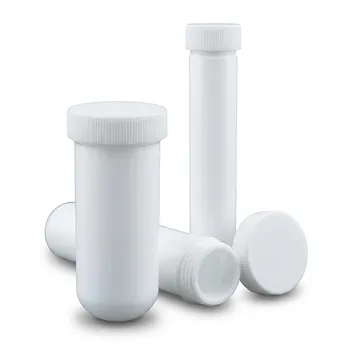
- High Purity PTFE Digestion Tubes and Custom Centrifuge Tubes 100ml for Trace Analysis and Chemical Digestion
People Also Ask
- How do PTFE condenser tubes perform in flue-gas cleaning? High-Resistance Solutions for Waste-Treatment Efficiency
- What are the temperature and pressure limitations for PTFE condenser tubes? Master PTFE Safety & Performance Limits
- How do PTFE condenser tubes address the challenge of low thermal conductivity? Geometric Optimization & Thin-Wall Design
- What are the typical configurations for PTFE condenser tubes in industrial applications? Expert Design Guide
- What are the three steps of heat transfer involved in the operation of a PTFE condenser tube? Optimize Thermal Efficiency