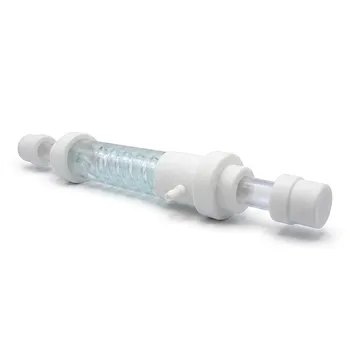
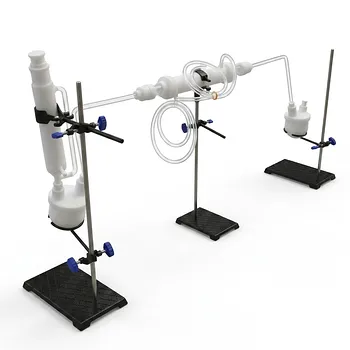
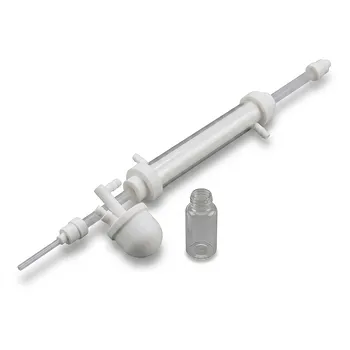
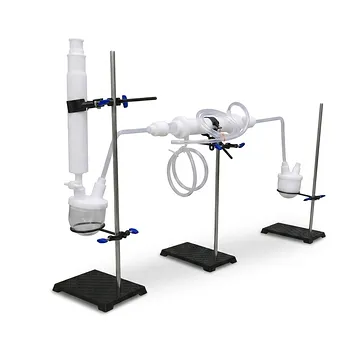
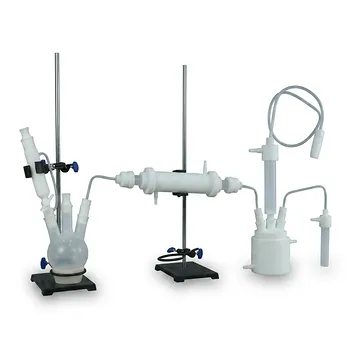
PTFE condenser tubes provide a superior solution for heat exchange by utilizing an ultra-low-friction, hydrophobic surface to prevent material buildup. By maintaining a coefficient of friction between 0.05 and 0.10, these tubes inhibit the adhesion of scale, biofilms, and particulates. This technical advantage ensures that design heat-transfer coefficients remain stable over time, drastically extending the intervals between required cleanings and reducing overall lifecycle costs.
PTFE’s inherent non-stick properties transform condenser maintenance from a labor-intensive chemical process into a streamlined operational routine. By preventing fouling at the molecular level, these tubes ensure long-term thermal efficiency and exceptional resistance to corrosive degradation.
The Mechanics of Fouling Resistance
Low-Friction Surface Dynamics
The primary technical advantage of PTFE is its coefficient of friction, which ranges from 0.05 to 0.10. This creates an "ultra-slick" environment where particulates and minerals cannot easily find purchase on the tube walls.
Because materials cannot effectively bond to the surface, the laminar flow of the medium often carries away potential foulants before they can settle. This preserves the internal diameter of the tube and maintains consistent flow rates.
Hydrophobic Properties and Biofilm Inhibition
PTFE is naturally hydrophobic, meaning it repels water and aqueous solutions. This property is critical in preventing the formation of biofilms, which are notorious for reducing heat transfer in metallic systems.
By denying biological organisms a stable substrate for growth, PTFE tubes eliminate the "insulation layer" caused by organic fouling. This ensures that the heat-transfer coefficient does not degrade prematurely during the production cycle.
Maintenance and Operational Longevity
Simplified Cleaning Protocols
Traditional metallic tubes often require aggressive chemical descaling or mechanical scrubbing to remove stubborn scale. In contrast, PTFE surfaces can often be restored to peak performance through a simple flushing process.
This shift in maintenance strategy eliminates the need for hazardous descaling agents and specialized cleaning equipment. The result is a significant reduction in maintenance downtime and labor costs.
Chemical Inertness and Material Integrity
PTFE offers near-universal chemical resistance, remaining inert when exposed to concentrated acids, bases, and organic solvents. This prevents tube-wall thinning, pitting, and corrosion-related leaks that frequently plague metallic alternatives.
By eliminating material degradation, PTFE ensures that the purity of the process fluid is maintained. There is no risk of metallic ions or corrosion byproducts leaching into the chemical reaction path.
Understanding the Trade-offs
Thermal Conductivity Considerations
While PTFE excels in fouling resistance, it generally has a lower thermal conductivity than traditional metals like copper or titanium. To compensate, engineers must often design systems with thinner walls or increased surface areas.
Pressure and Temperature Limits
PTFE is a polymer, meaning it has different mechanical limits regarding high-pressure and high-temperature environments compared to alloys. It is essential to verify that the operating parameters of your system align with the material's specific structural ratings.
Making the Right Choice for Your Goal
- If your primary focus is maximum uptime: PTFE’s fouling resistance allows for continuous operation with minimal interruptions for cleaning, often extending service life to 10–20 years.
- If your primary focus is chemical purity: The inert nature of PTFE prevents product contamination and eliminates the introduction of impurities caused by component dissolution.
- If your primary focus is reducing maintenance costs: Transitioning to PTFE can replace expensive chemical descaling routines with simple water flushes, lowering long-term operational expenditures.
By prioritizing surface chemistry over traditional metallurgy, you can achieve a more resilient and predictable heat exchange process.
Summary Table:
| Feature | Technical Advantage | Maintenance/Operational Benefit |
|---|---|---|
| Low Friction (0.05-0.10) | Prevents particulate and mineral adhesion | Reduces cleaning frequency and downtime |
| Hydrophobicity | Inhibits biofilm formation | Maintains stable heat-transfer coefficients |
| Chemical Inertness | Resists concentrated acids and bases | Prevents corrosion, leaks, and contamination |
| Non-stick Surface | Facilitates simple flushing | Eliminates the need for aggressive chemical descaling |
Upgrade Your Lab Efficiency with KINTEK Fluoropolymer Solutions
Maximize your uptime and ensure uncompromising chemical purity with KINTEK’s high-performance PTFE and PFA laboratory supplies. From everyday essentials like beakers, centrifuge tubes, and filtration tools to advanced standard or custom electrochemical cells, hydrothermal synthesis liners, and microchannel reactors, we manufacture virtually every laboratory component required for high-performance environments.
Backed by end-to-end custom CNC fabrication, KINTEK is equipped to deliver everything from complex non-standard machined parts to high-volume orders, maintaining an absolute focus on fluoropolymer excellence. Whether you are managing corrosive fluid transfer with our tubing, valves, and fittings or conducting complex sample prep, our solutions eliminate fouling and reduce maintenance costs.
Ready to transform your laboratory's operational routine? Contact us today to discuss your custom requirements!
Related Products
- Custom PTFE Condenser Tube 100ml Serpentine and Straight Fluoropolymer Laboratory Heat Exchanger with Flask Adapters
- Custom PTFE Condenser Tube Hydrofluoric Acid Resistant Reflux Device Constant Pressure Separatory Funnel
- Custom PTFE Condenser Tube Reflux Reaction Condensation Purification Device Semiconductor Chemical Lab Equipment
- Custom PTFE Condensation Device Reflux Condenser Tube Fluoropolymer Heat Exchanger Chemical Resistant Laboratory Apparatus
- High Purity PTFE Digestion Tubes and Custom Centrifuge Tubes 100ml for Trace Analysis and Chemical Digestion
People Also Ask
- How do PTFE condenser tubes perform in flue-gas cleaning? High-Resistance Solutions for Waste-Treatment Efficiency
- What are the temperature and pressure limitations for PTFE condenser tubes? Master PTFE Safety & Performance Limits
- How do PTFE condenser tubes address the challenge of low thermal conductivity? Geometric Optimization & Thin-Wall Design
- What are the typical configurations for PTFE condenser tubes in industrial applications? Expert Design Guide
- What are the three steps of heat transfer involved in the operation of a PTFE condenser tube? Optimize Thermal Efficiency