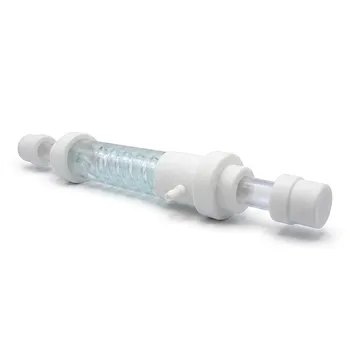
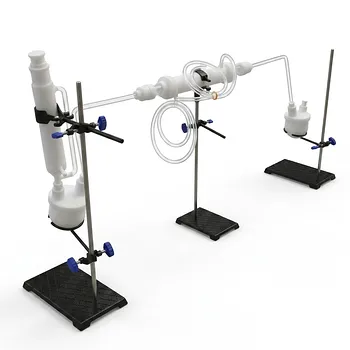
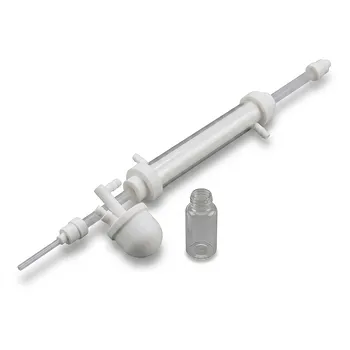
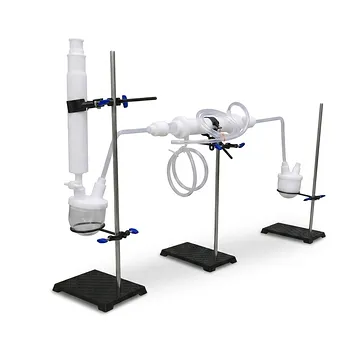
The selection of condenser tube material is a critical factor in determining the operational uptime and safety of a chemical facility. PTFE (Polytetrafluoroethylene) condenser tubes provide near-universal chemical resistance against aggressive acids and solvents, virtually eliminating corrosion-related failures like pitting or thinning. Their inherently non-stick surface prevents fouling and product contamination, ensuring high process reliability and a service life that often exceeds two decades.
PTFE condenser tubes represent a definitive solution for highly corrosive environments where metallic or glass alternatives fail prematurely. By combining chemical inertness with anti-fouling properties, they significantly reduce maintenance overhead and protect product purity in critical chemical streams.
Superior Chemical Inertness and Corrosion Resistance
Resistance to Aggressive Media
PTFE offers near-universal resistance to a vast spectrum of corrosive substances, including concentrated sulfuric, hydrochloric, hydrofluoric, and nitric acids. Unlike glass or specialty metals, it remains stable when exposed to organic solvents and halogenated compounds that would typically trigger rapid material degradation.
Elimination of Structural Degradation
The use of PTFE eliminates common failure modes associated with metallic tubes, such as wall thinning, pitting, and stress-corrosion cracking. Because the material does not react with the process media, the integrity of the tube wall is maintained over long periods, preventing hazardous leaks.
Stability Across Temperature Extremes
PTFE components are capable of handling a wide thermal range, from cryogenic gases to hot reactive streams. This thermal stability ensures that the tubes do not melt, erode, or lose their functional shape during high-temperature chemical manufacturing processes.
Process Efficiency and Purity
Anti-Fouling and Non-Stick Characteristics
The low surface energy of PTFE creates a non-stick environment that naturally resists the buildup of scale or "fouling" from the process fluid. This ensures that the heat transfer efficiency remains consistent over time and reduces the frequency of required cleanings.
Prevention of Product Contamination
Because PTFE is chemically non-reactive, there is no risk of the tube material leaching ions or contaminants into the chemical product. This is essential for high-purity applications where even trace amounts of metallic contamination could compromise the final product or catalyze unwanted side reactions.
Enhanced Leak Protection
When integrated into heat exchangers, PTFE's ability to maintain a seal—often complemented by PTFE gaskets—prevents cross-contamination between the process and cooling streams. This reliability is vital for maintaining the safety and environmental compliance of the facility.
Understanding the Trade-offs
Thermal Conductivity Limits
While PTFE is excellent for corrosion resistance, it is naturally a thermal insulator compared to metals like copper or stainless steel. To compensate for lower thermal conductivity, engineers must often design condensers with increased surface area or thinner tube walls.
Mechanical Strength and Pressure
PTFE is a softer polymer and does not possess the same structural rigidity as metallic alloys. It may require additional support structures or specialized housing to handle high-pressure differentials within a heat exchanger or reactor vessel.
Material Cost Considerations
The initial investment in PTFE tubing can be higher than standard metallic options. However, this is typically offset by the significantly lower total cost of ownership, driven by reduced downtime and a service life that often reaches 10 to 20 years.
How to Apply This to Your Project
When integrating PTFE condenser tubes into your chemical processing system, consider your primary operational goal to determine the best configuration.
- If your primary focus is Long-Term Durability: Prioritize PTFE for streams involving concentrated acids or halogens where stainless steel or glass would require replacement in less than five years.
- If your primary focus is Product Purity: Utilize the non-reactive nature of PTFE to eliminate metallic ion contamination in pharmaceutical or fine chemical synthesis.
- If your primary focus is Reduced Maintenance: Leverage the non-stick properties of PTFE in processes prone to heavy scaling or crystallization to extend the intervals between manual cleanings.
By aligning the unique inertness of PTFE with specific process challenges, chemical processors can achieve a more reliable and cost-effective production environment.
Summary Table:
| Key Benefit | Operational Impact | Ideal Application |
|---|---|---|
| Universal Inertness | Prevents corrosion from acids & solvents | Aggressive chemical streams |
| Non-Stick Surface | Eliminates fouling and scale buildup | High-crystallization processes |
| High Purity | Zero leaching of metallic contaminants | Pharma & fine chemical synthesis |
| Extended Lifespan | Service life often exceeding 20 years | High-uptime manufacturing facilities |
| Thermal Stability | Maintains integrity across thermal extremes | Cryogenic to hot reactive streams |
Elevate Your Lab Performance with KINTEK High-Performance Fluoropolymers
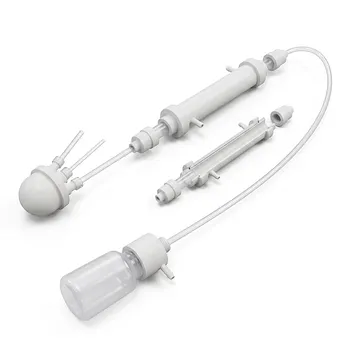
Maximize your operational uptime and ensure absolute product purity with KINTEK. As specialists in high-performance fluoropolymers, we provide everything from everyday basic labware—including beakers, crucibles, and reagent bottles—to advanced fluid transfer components, filtration tools, and reaction apparatus like custom PTFE condenser tubes.
Whether you require high-purity trace analysis instruments or complex, non-standard machined parts, our end-to-end custom CNC fabrication ensures every component meets your rigorous specifications. From high-volume orders of general consumables like stirring bars and O-rings to bespoke laboratory setups and battery testing fixtures, KINTEK is your ultimate partner for durable, corrosion-resistant solutions.
Ready to upgrade your facility with precision-engineered PTFE and PFA solutions?
Contact KINTEK Today to Discuss Your Project
Related Products
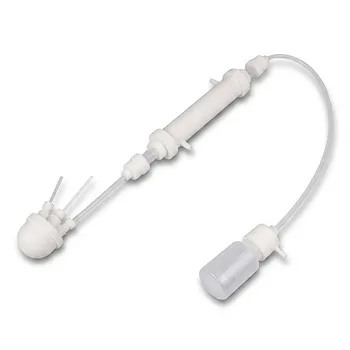
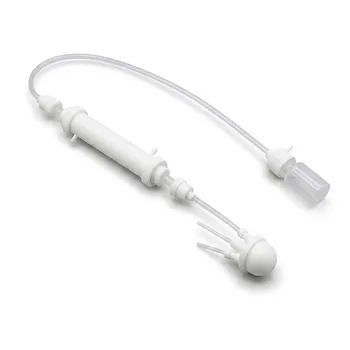
- Custom PTFE Condenser Tube 100ml Serpentine and Straight Fluoropolymer Laboratory Heat Exchanger with Flask Adapters
- Custom PTFE Condenser Tube Hydrofluoric Acid Resistant Reflux Device Constant Pressure Separatory Funnel
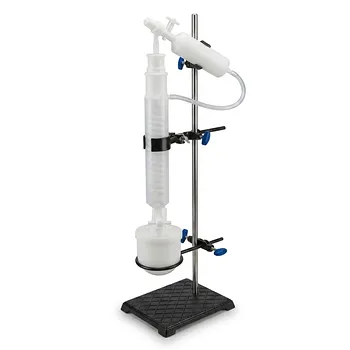
- Custom PTFE Condenser Tube Reflux Reaction Condensation Purification Device Semiconductor Chemical Lab Equipment
- Custom PTFE Condensation Device Reflux Condenser Tube Fluoropolymer Heat Exchanger Chemical Resistant Laboratory Apparatus
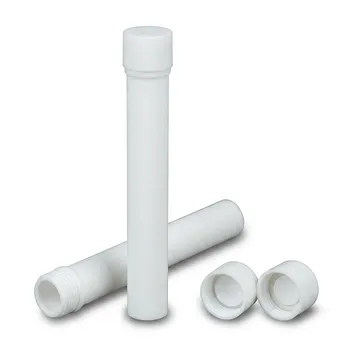
- High Purity PTFE Digestion Tubes and Custom Centrifuge Tubes 100ml for Trace Analysis and Chemical Digestion
People Also Ask
- How do PTFE condenser tubes perform in flue-gas cleaning? High-Resistance Solutions for Waste-Treatment Efficiency
- What are the temperature and pressure limitations for PTFE condenser tubes? Master PTFE Safety & Performance Limits
- How do PTFE condenser tubes address the challenge of low thermal conductivity? Geometric Optimization & Thin-Wall Design
- What are the typical configurations for PTFE condenser tubes in industrial applications? Expert Design Guide
- What are the three steps of heat transfer involved in the operation of a PTFE condenser tube? Optimize Thermal Efficiency