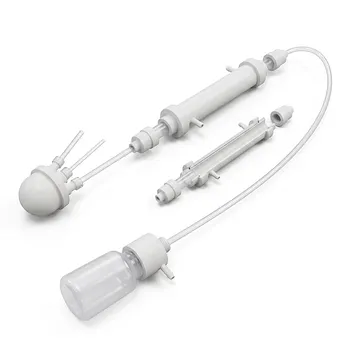
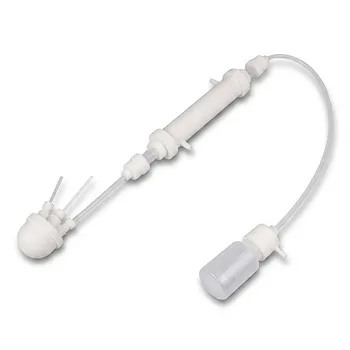
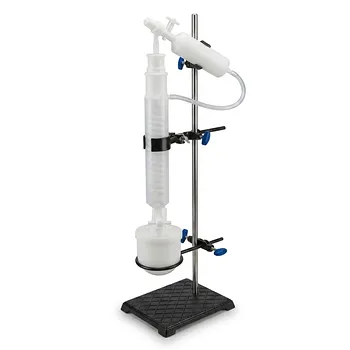
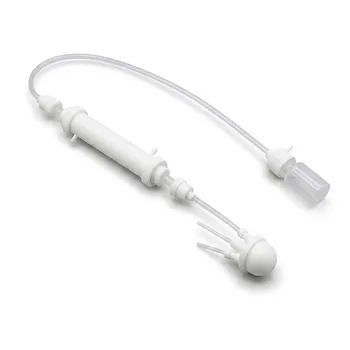
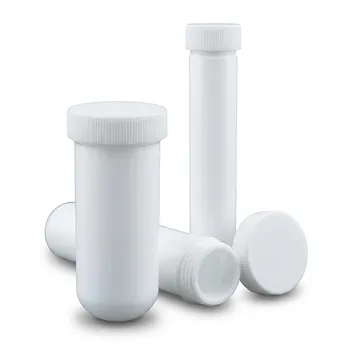
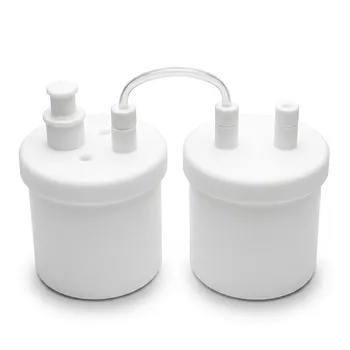
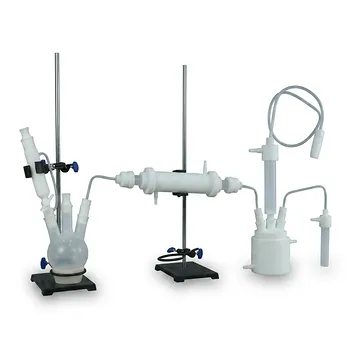
PTFE condenser tubes are designed for extreme thermal environments. In industrial service, they operate effectively from cryogenic levels as low as -268°C (-450°F) up to a continuous service temperature of 260°C (500°F). This massive range makes them uniquely suited for processes involving both liquid nitrogen cooling and high-temperature chemical heating.
The operational versatility of PTFE stems from its exceptional thermal stability, allowing it to maintain physical integrity across a 500-degree spectrum. While the material remains functional in extreme cold, the 260°C (500°F) threshold is the definitive industry-standard limit for continuous, safe industrial application.
The Upper Thermal Threshold
Maintaining Integrity at 260°C
PTFE maintains its mechanical properties at 260°C without significant material degradation or loss of chemical resistance. This stability is critical for condenser tubes handling aggressive chemical vapors or high-heat transfer fluids that would destroy lesser polymers.
The Melting Point vs. Service Temperature
While the crystalline melting point of PTFE is approximately 327°C (621°F), industrial service is capped lower to ensure structural safety. Operating too close to the melting point can cause the material to soften, potentially leading to tube deformation under system pressure.
Long-Term vs. Short-Term Exposure
Most industrial data sheets specify 260°C for both short-term and long-term service. While some specialized configurations may tolerate brief excursions up to 300°C, staying at or below 260°C is required to prevent the release of trace decomposition fumes and ensure a long service life.
Performance in Cryogenic Conditions
Flexibility at -268°C
Unlike many polymers that become brittle and shatter in extreme cold, PTFE remains functional down to -268°C. This allows it to be used in cryogenic cooling systems where other materials would fail due to embrittlement.
Resistance to Thermal Shock
PTFE exhibits excellent resistance to thermal shock, meaning it can transition between temperature extremes rapidly. This ensures that condenser tubes do not crack or fail during sudden process start-ups or emergency shutdowns involving rapid cooling.
Understanding the Trade-offs
Pressure Derating at High Temperatures
As temperatures rise toward the 260°C limit, the mechanical strength of PTFE naturally decreases. Engineers must derate the allowable working pressure of the condenser to prevent "creep" or tube rupture when operating at the higher end of the temperature scale.
The Impact of Fillers and Additives
While pure PTFE offers the widest temperature range, some tubes use fillers (like glass or carbon) to increase stiffness. These additives can sometimes reduce the maximum service temperature or alter the material's expansion rate, requiring careful verification of the specific product's data sheet.
How to Apply This to Your Project
- If your primary focus is cryogenic processing: Utilize high-purity PTFE to ensure maximum ductility and prevent brittleness at temperatures approaching absolute zero.
- If your primary focus is high-temperature chemical synthesis: Ensure your system's operating pressure is within the derated limits for 260°C to prevent tube expansion or failure over time.
- If your primary focus is frequent thermal cycling: Leverage PTFE’s inherent resistance to thermal shock to maintain seal and structural integrity during rapid heating and cooling phases.
By respecting the 260°C upper limit while leveraging its cryogenic resilience, you can deploy PTFE condenser tubes as a robust solution for the most demanding thermal environments in modern industry.
Summary Table:
| Thermal Parameter | Temperature Range/Value | Performance Detail |
|---|---|---|
| Continuous Service Range | -268°C to 260°C | Maintains physical integrity across a massive 528°C spectrum. |
| Cryogenic Limit | -268°C (-450°F) | Remains flexible and ductile; avoids brittle failure in extreme cold. |
| Maximum Service Temp | 260°C (500°F) | Industry-standard limit for safe, continuous industrial application. |
| Crystalline Melting Point | ~327°C (621°F) | Operational safety margin to prevent softening or tube deformation. |
| Thermal Shock Stability | High Resistance | Can transition between extremes rapidly without cracking or failing. |
Elevate Your Lab Performance with KINTEK’s High-Performance Fluoropolymers
Need reliable performance in extreme thermal environments? Whether you are managing cryogenic cooling or high-temperature chemical synthesis, KINTEK offers an exhaustive range of laboratory supplies crafted from premium PTFE and PFA.
From everyday basic labware (beakers, crucibles, reagent bottles) and high-purity trace analysis instruments to comprehensive fluid transfer components (tubing, fittings, valves) and advanced reaction apparatus like electrochemical cells and microwave digestion vessels, we provide it all.
Why choose KINTEK?
- Unmatched Versatility: Our products handle temperatures from -268°C to 260°C with ease.
- Custom Engineering: Backed by end-to-end custom CNC fabrication, we deliver everything from complex non-standard machined parts to high-volume bespoke setups.
- Total Solutions: We cover all your needs, including sample prep tools, filtration tools, and general consumables like O-rings and seal tapes.
Ready to upgrade your laboratory with high-performance fluoropolymer materials tailored to your specific process?
Contact KINTEK today for a custom quote or consultation!
Related Products
- Custom PTFE Condenser Tube 100ml Serpentine and Straight Fluoropolymer Laboratory Heat Exchanger with Flask Adapters
- Custom PTFE Condenser Tube Hydrofluoric Acid Resistant Reflux Device Constant Pressure Separatory Funnel
- Custom PTFE Condenser Tube Reflux Reaction Condensation Purification Device Semiconductor Chemical Lab Equipment
- Custom PTFE Condensation Device Reflux Condenser Tube Fluoropolymer Heat Exchanger Chemical Resistant Laboratory Apparatus
- High Purity PTFE Digestion Tubes and Custom Centrifuge Tubes 100ml for Trace Analysis and Chemical Digestion
People Also Ask
- How do PTFE condenser tubes perform in flue-gas cleaning? High-Resistance Solutions for Waste-Treatment Efficiency
- What are the temperature and pressure limitations for PTFE condenser tubes? Master PTFE Safety & Performance Limits
- How do PTFE condenser tubes address the challenge of low thermal conductivity? Geometric Optimization & Thin-Wall Design
- What are the typical configurations for PTFE condenser tubes in industrial applications? Expert Design Guide
- What are the three steps of heat transfer involved in the operation of a PTFE condenser tube? Optimize Thermal Efficiency