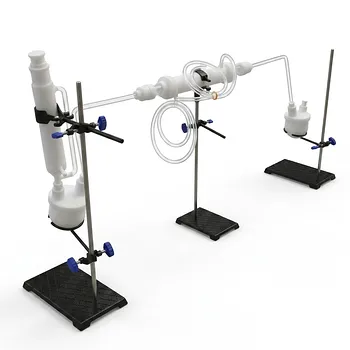
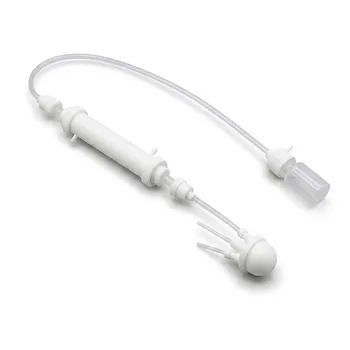
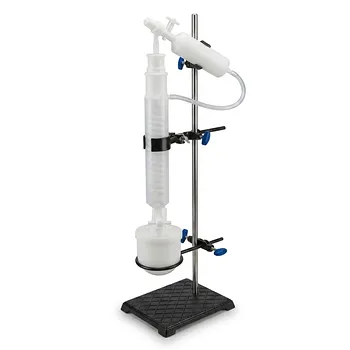
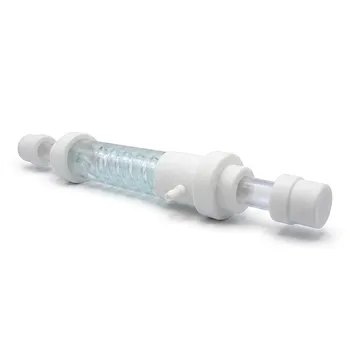
Hollow-fiber PTFE condenser modules maximize heat-exchange efficiency by leveraging extreme surface area and minimized wall resistance. These modules utilize thousands of microscopic capillaries to overcome the inherent thermal limitations of PTFE (polytetrafluoroethylene). By packing a massive amount of exchange area into a compact footprint, they achieve heat-transfer coefficients that allow plastic heat exchangers to compete with traditional metal systems.
While PTFE is naturally a thermal insulator, hollow-fiber modules solve this through geometry. By utilizing thousands of thin-walled capillaries, they create a high-density exchange surface that facilitates rapid energy transfer even in highly corrosive environments.
The Geometry of High Surface Area
The Power of High Packing Density
The primary driver of efficiency in these modules is the thousands of thin PTFE capillaries bundled together. Unlike traditional shell-and-tube designs with large pipes, these fibers have an outer diameter of approximately 1 mm.
This allows design engineers to pack a significantly larger amount of exchange surface into a very small volume. The result is a dramatic increase in the total area available for heat to transfer between the two fluids.
Optimizing Flow Geometry
Beyond surface area, the small diameter of the fibers influences how fluids move through the system. By controlling the arrangement of these capillaries, engineers can optimize flow geometry to minimize dead zones.
This ensures that every square millimeter of the PTFE surface is actively contributing to the cooling or heating process. This level of optimization is essential for compensating for the material's lower natural conductivity.
Overcoming PTFE’s Thermal Resistance
Minimizing the Thermal Path
PTFE has a relatively low thermal conductivity of approximately 0.25 W/(m·K), which would normally act as a barrier to heat flow. To counteract this, hollow fibers are engineered with extremely thin walls, typically around 0.2 mm.
Reducing the thickness of the wall shortens the distance heat must travel through the insulating plastic. This strategic thinning significantly lowers the overall thermal resistance of the module.
Achieving High Heat-Transfer Coefficients
By combining massive surface area with thin-walled capillaries, these modules reach performance levels previously thought impossible for polymers. They can achieve overall heat-transfer coefficients (U) approaching 400 W/(m²·K).
This performance level allows these modules to be used in demanding industrial applications where corrosion resistance is required but thermal efficiency cannot be sacrificed.
Understanding the Trade-offs
Balancing Thickness and Durability
The most critical trade-off in PTFE module design is the balance between wall thickness and structural integrity. While thinner walls improve heat transfer, they are more susceptible to mechanical failure under high pressure.
Engineers must precisely calibrate the 0.2 mm thickness to ensure the fibers can withstand thermal cycling and pressure differentials over a long service life.
Material Limitations vs. Chemical Resistance
While PTFE is an excellent choice for highly corrosive environments, it will never match the raw thermal conductivity of metals like copper or graphite.
The choice to use PTFE is usually driven by a need for chemical inertness. If your process fluid is not corrosive, a metal-based exchanger will almost always offer higher raw efficiency for the same surface area.
How to Apply This to Your Project
When evaluating hollow-fiber PTFE modules for your system, consider your specific operational priorities to determine if this technology is the right fit.
- If your primary focus is extreme corrosion resistance: PTFE modules are the gold standard, as the material is nearly inert to most aggressive chemicals.
- If your primary focus is footprint reduction: Use hollow-fiber designs to achieve high heat-exchange capacity in a fraction of the space required by traditional plastic exchangers.
- If your primary focus is maximum thermal conductivity: Consider if specialized metal alloys or graphite can handle your fluid, as they will provide higher heat-transfer rates than any polymer-based system.
By understanding the synergy between capillary geometry and wall thickness, you can effectively deploy PTFE technology to solve complex thermal challenges in harsh environments.
Summary Table:
| Feature | Specification | Key Benefit |
|---|---|---|
| Fiber Diameter | ~1 mm | Maximizes packing density and surface area |
| Wall Thickness | ~0.2 mm | Minimizes thermal resistance through PTFE |
| Transfer Coeff. (U) | Up to 400 W/(m²·K) | Competes with traditional heat exchange systems |
| Material | Pure PTFE | Provides near-total inertness to corrosive chemicals |
| Flow Geometry | Optimized Bundle | Eliminates dead zones for uniform energy transfer |
Optimize Your Lab’s Thermal Performance with KINTEK
Facing challenges with corrosive fluids or complex heat exchange? KINTEK specializes in high-performance fluoropolymer solutions tailored to your most demanding applications. From everyday basic labware like PTFE beakers and PFA reagent bottles to advanced fluid transfer components and custom-machined reaction apparatus, we ensure your setup is both efficient and chemically inert.
Why choose KINTEK?
- End-to-End Customization: Our expert CNC fabrication delivers everything from non-standard machined parts to bespoke electrochemical cells and microwave digestion vessels.
- Comprehensive Catalog: We provide everything from stirring bars and O-rings to sophisticated condensation and reflux devices.
- Material Expertise: An exclusive focus on PTFE and PFA guarantees maximum durability in harsh environments.
Don't let material limitations hinder your research. Whether you need high-volume consumables or a one-of-a-kind experimental setup, our team is ready to deliver. Contact us today to discuss your project requirements!
Related Products
- Custom PTFE Sleeves and Hollow Rods for Advanced Applications
- PTFE Distillation Condensation Apparatus High Temperature Hydrofluoric Acid Resistant Fluorination Reaction Flask
- Custom PTFE Condensation Device Reflux Condenser Tube Fluoropolymer Heat Exchanger Chemical Resistant Laboratory Apparatus
- Custom PTFE Condensation Reflux Apparatus with Serpentine Coil and Flask Collection System for Corrosive Chemical Processing
- Custom PTFE Condenser Tube Reflux Reaction Condensation Purification Device Semiconductor Chemical Lab Equipment
People Also Ask
- What industries benefit most from custom PTFE parts? Solve Extreme Environment Challenges
- What advantages do custom PTFE parts offer for industrial efficiency? Boost Uptime & Cut Costs
- What industries use custom PTFE parts and for what purposes? Solve Critical Challenges with High-Performance Materials
- What design considerations are important for custom PTFE parts? Design for Performance & Reliability
- What are the key properties of Teflon (PTFE) used in custom parts? | Achieve Peak Performance