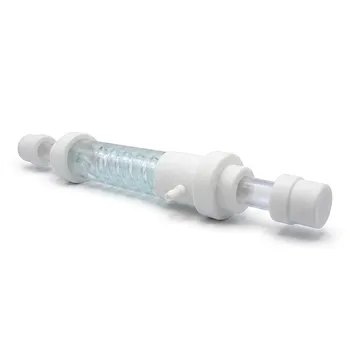
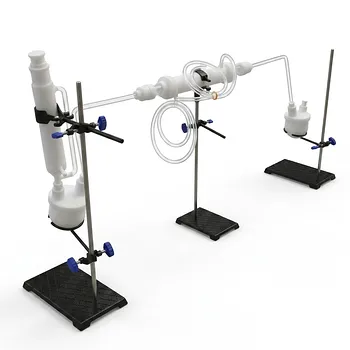
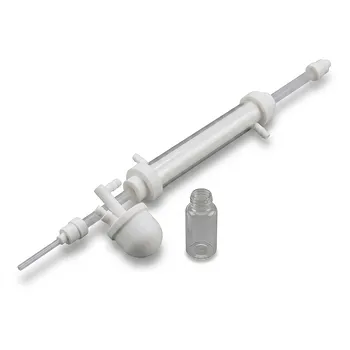
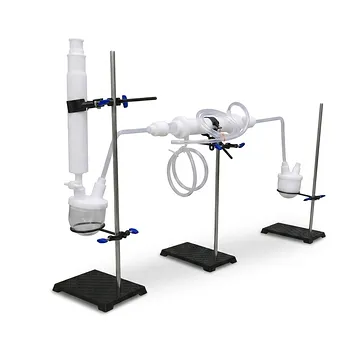
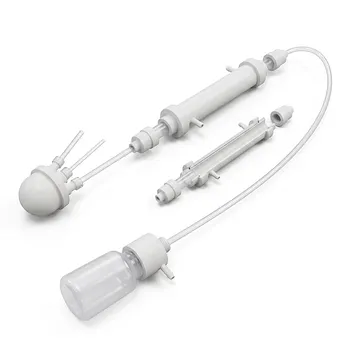
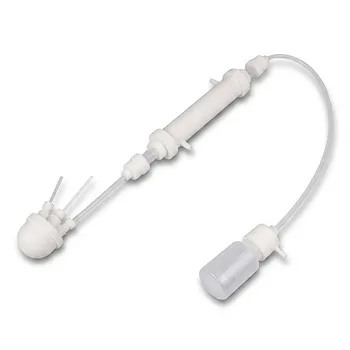
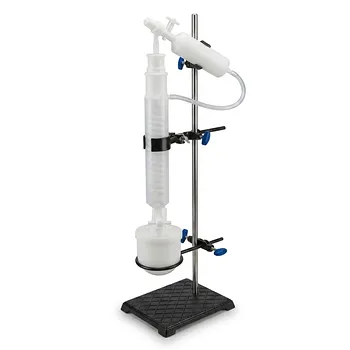
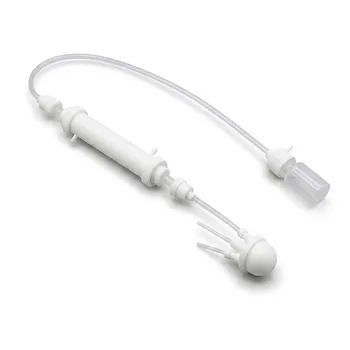
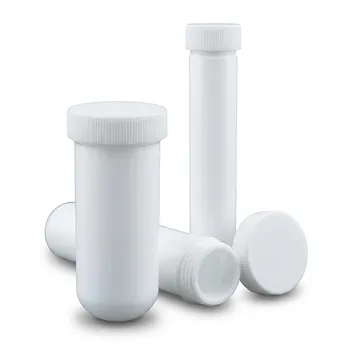
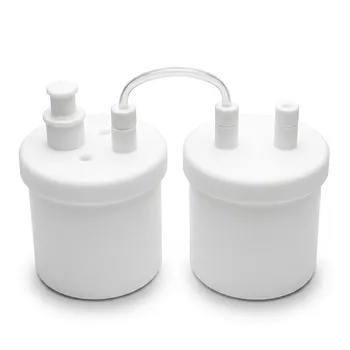
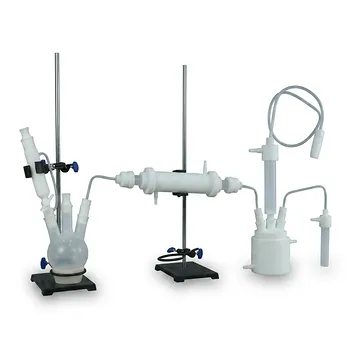
PTFE (Polytetrafluoroethylene) in condenser tubes is defined by its extreme chemical inertness. This material resists attack from nearly all acids, bases, solvents, and oxidizers, regardless of concentration. This resistance is rooted in the high energy required to break its carbon-fluorine bonds, making it essentially "immune" to standard corrosive environments.
PTFE is the gold standard for corrosive heat exchange because it maintains a non-reactive surface in environments that would destroy most metals or other polymers. Its chemical immunity is nearly total, with only a few highly specific and rare exceptions.
The Molecular Basis of Resistance
The Strength of Carbon-Fluorine Bonds
The chemical resistance of PTFE is a direct result of its unique molecular structure. The carbon-fluorine (C-F) bond is one of the strongest in organic chemistry, creating a protective shield around the carbon backbone.
This bond strength prevents other chemicals from reacting with or breaking the polymer chain. As a result, the material remains stable and does not degrade even when exposed to aggressive reagents.
Universal Compatibility across pH Scales
PTFE is virtually unaffected by the entire pH spectrum. It shows no reaction to concentrated mineral acids, such as sulfuric or hydrochloric acid, nor to strong bases like sodium hydroxide.
In condenser applications, this allows a single unit to handle a diverse range of chemical vapors without the risk of corrosion or structural failure. This versatility simplifies equipment selection for multi-purpose facilities.
Surface Integrity and Purity
Non-Porous and Non-Absorbent Characteristics
The surface of PTFE is non-porous, which is a critical property for condenser tubes. Because it does not absorb the liquids or gases it contacts, there is no risk of the material swelling or softening.
This non-absorbent nature also ensures that residues are not retained on the tube walls. This minimizes the risk of cross-contamination between different processing batches.
Prevention of Leaching and Contamination
Because PTFE is so chemically stable, it does not leach plasticizers or other additives into the process stream. This maintains the purity of sensitive samples, which is vital in pharmaceutical and high-purity chemical manufacturing.
The material’s inertness prevents unintended catalytic reactions. The condenser tube acts strictly as a heat transfer surface without participating in the chemistry of the fluid.
Understanding the Trade-offs
Specific Chemical Vulnerabilities
While PTFE is "nearly" universal, it is not invincible. It can be attacked by molten alkali metals (such as liquid sodium or potassium) which can strip the fluorine atoms from the carbon chain.
It also faces degradation when exposed to elemental fluorine gas at elevated temperatures and pressures. These conditions are rare in standard industrial condensers but must be accounted for in specialized chemical synthesis.
Rare Fluorinating Agents
Certain highly reactive fluorinating agents can cause damage to PTFE. These include chlorine trifluoride, cobalt(III) fluoride, and xenon difluoride.
If your process involves these specific halogenated compounds, PTFE may not be the appropriate material choice. In most standard laboratory and industrial settings, however, these substances are not present.
How to Apply This to Your Project
Making the Right Choice for Your Goal
- If your primary focus is handling highly acidic or basic vapors: PTFE is the ideal choice due to its total immunity to pH-driven corrosion.
- If your primary focus is maintaining ultra-high process purity: Use PTFE condenser tubes to ensure zero leaching and easy cleaning between batches.
- If your primary focus is extreme temperature/pressure with fluorine gas: Seek alternative specialized alloys or ceramics, as PTFE may fail under these specific conditions.
PTFE remains the most reliable material for ensuring long-term hardware integrity in the face of aggressive chemical environments.
Summary Table:
| Property | Advantage | Compatibility / Application |
|---|---|---|
| C-F Bond Strength | Molecular shield against degradation | Resists nearly all acids, solvents, and oxidizers |
| pH Spectrum | Universal compatibility | Unaffected by concentrated mineral acids and strong bases |
| Surface Integrity | Non-porous and non-absorbent | Prevents material swelling and simplifies cleaning |
| Purity & Leaching | Zero additive migration | Ideal for pharmaceutical and high-purity chemical processing |
| Specific Limits | Rare chemical vulnerabilities | Attacked only by molten alkali metals or elemental fluorine |
Elevate Your Lab Performance with KINTEK’s Fluoropolymer Expertise
Ensure absolute purity and chemical integrity in your most demanding processes with KINTEK. From everyday basic labware like beakers, crucibles, and reagent bottles to advanced fluid transfer components and high-purity trace analysis instruments, we specialize exclusively in high-performance fluoropolymers.
Whether you need standard consumables—such as stirring bars, O-rings, and filters—or complex, custom-engineered reaction apparatus like electrochemical cells, microwave digestion vessels, and microchannel reactors, KINTEK delivers. Our end-to-end custom CNC fabrication ensures we can provide everything from bespoke laboratory setups to high-volume orders crafted from premium PTFE and PFA.
Ready to optimize your corrosive heat exchange and sample prep? Contact KINTEK today to discuss your custom project or high-volume needs!
Related Products
- Custom PTFE Condenser Tube 100ml Serpentine and Straight Fluoropolymer Laboratory Heat Exchanger with Flask Adapters
- Custom PTFE Condenser Tube Hydrofluoric Acid Resistant Reflux Device Constant Pressure Separatory Funnel
- Custom PTFE Condenser Tube Reflux Reaction Condensation Purification Device Semiconductor Chemical Lab Equipment
- Custom PTFE Condensation Device Reflux Condenser Tube Fluoropolymer Heat Exchanger Chemical Resistant Laboratory Apparatus
- High Purity PTFE Digestion Tubes and Custom Centrifuge Tubes 100ml for Trace Analysis and Chemical Digestion
People Also Ask
- How do PTFE condenser tubes perform in flue-gas cleaning? High-Resistance Solutions for Waste-Treatment Efficiency
- What are the temperature and pressure limitations for PTFE condenser tubes? Master PTFE Safety & Performance Limits
- How do PTFE condenser tubes address the challenge of low thermal conductivity? Geometric Optimization & Thin-Wall Design
- What are the typical configurations for PTFE condenser tubes in industrial applications? Expert Design Guide
- What are the three steps of heat transfer involved in the operation of a PTFE condenser tube? Optimize Thermal Efficiency