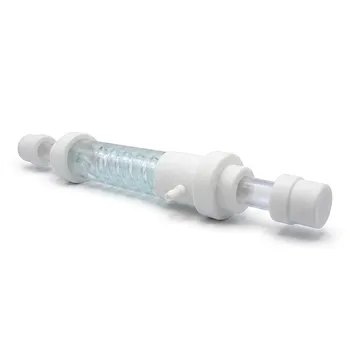
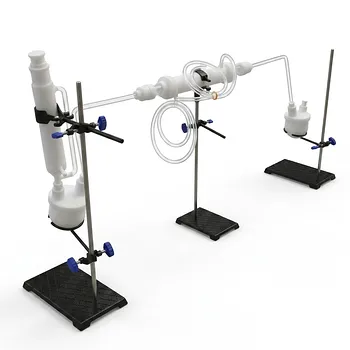
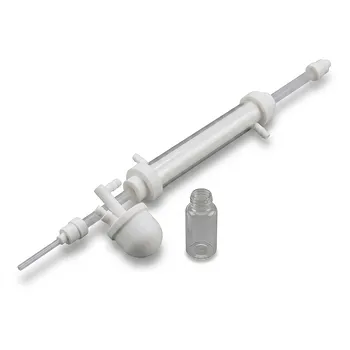
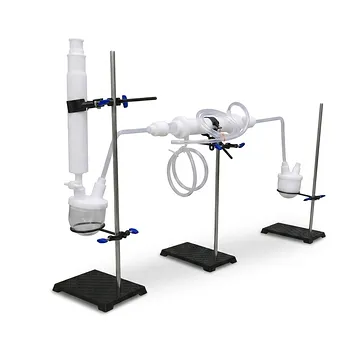
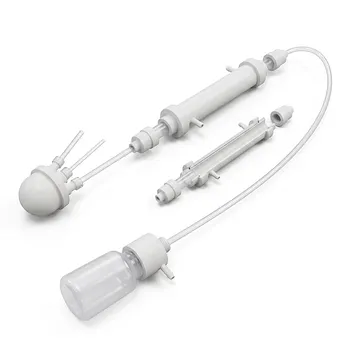
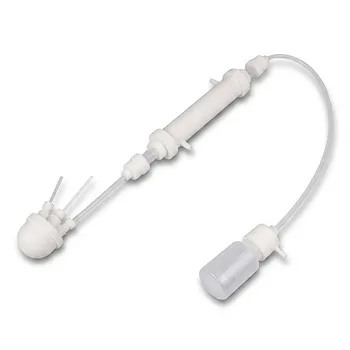
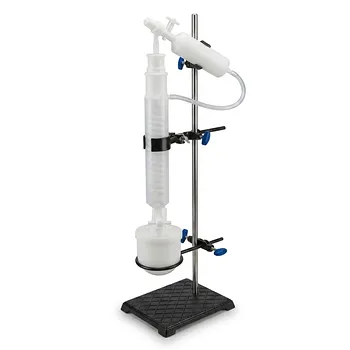
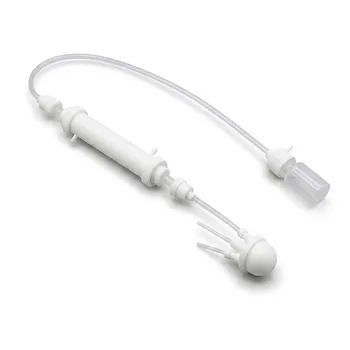
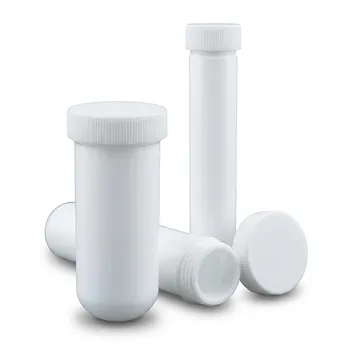
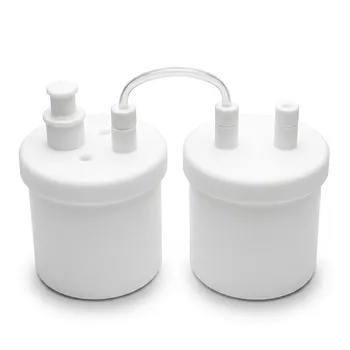
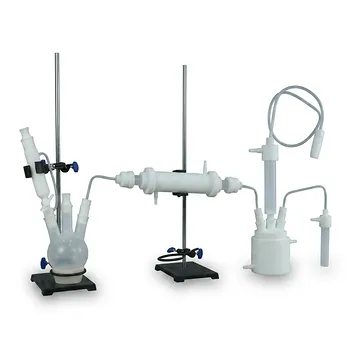
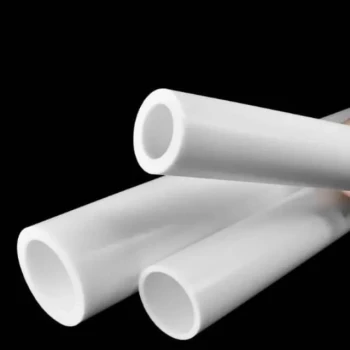
PTFE condenser tubes preserve the purity of process fluids by serving as a chemically inert barrier that eliminates metallic ion leaching and organic contamination. Because PTFE is non-reactive, it prevents the catalytic side reactions and material degradation that often occur with metallic alternatives. This ensures that the chemical composition of the distillate remains identical to its intended state, which is critical for high-stakes environments like semiconductor and pharmaceutical manufacturing.
Core Takeaway: PTFE’s total chemical inertness and non-stick properties prevent the introduction of leachables, extractables, and residues into the process stream, ensuring a contamination-free environment across a wide range of temperatures and aggressive chemistries.
The Mechanisms of Purity Preservation
Elimination of Leachable Contaminants
Traditional metal condensers can release trace metallic ions into the fluid through corrosion or micro-pitting. PTFE eliminates this risk entirely because it does not contain metallic components that can migrate into the process stream.
In industries like semiconductor fabrication, even parts-per-trillion (ppt) levels of metallic ions can ruin a batch. PTFE's molecular structure ensures there are no organic leachables or extractables to compromise the fluid's integrity.
Prevention of Catalytic Side Reactions
Some process fluids are sensitive to the materials they touch and may undergo unwanted chemical changes when in contact with metals. PTFE is chemically non-reactive, meaning it will not act as a catalyst for side reactions.
This inertness allows for the safe processing of high-purity reagents and aggressive acids, such as hydrofluoric, nitric, and sulfuric acids, without changing their molecular profile.
Surface Integrity and Maintenance of Purity
Non-Stick Properties and Fouling Resistance
PTFE features a naturally low-friction, non-stick surface that prevents the buildup of scale, biofilms, or chemical residues. In food and beverage applications, this prevents flavor or color carry-over between different product batches.
By minimizing residue adhesion, these tubes reduce the risk of bacterial growth and cross-contamination. This surface integrity ensures that the process fluid remains "clean" as it moves through the condenser.
Resilience Under Aggressive Cleaning
To maintain high purity standards, systems must undergo rigorous Clean-in-Place (CIP) or Sterilize-in-Place (SIP) cycles. PTFE withstands these aggressive cleaning chemicals and high-temperature steam without degrading.
Because the material does not pit or thin over time, there are no microscopic "hiding places" for contaminants to lodge. This longevity contributes to a service life that can exceed 10 to 20 years in corrosive environments.
Performance in Extreme Environments
Thermal Stability and Outgassing
PTFE maintains its structural and chemical integrity from cryogenic levels up to 260 °C. Unlike some plastics that may release gases (outgassing) when heated, high-purity PTFE remains stable.
This lack of outgassing is vital for vacuum-based distillation or high-temperature chemical processing. It ensures that no airborne particles or vapors contaminate the fluid or the surrounding cleanroom environment.
Hydrophobic Nature and Drainage
The hydrophobic (water-repelling) nature of PTFE facilitates complete drainage of the condenser tubes. This reduces "dead volume" where stagnant fluid could potentially degrade or contaminate the next cycle.
Complete drainage is essential in pharmaceutical dosing and biotech applications. It ensures that every drop of high-value process fluid is recovered without being tainted by remnants of previous runs.
Understanding the Trade-offs
Thermal Conductivity Constraints
The primary drawback of PTFE is its low thermal conductivity compared to metals like copper or stainless steel. To achieve the same cooling efficiency, PTFE condensers often require a larger surface area or specialized thin-wall designs.
Mechanical Considerations
PTFE is a relatively soft material and can be subject to "creep" or cold flow under high pressure or mechanical stress. Design engineers must account for this by using proper supports and limiting operating pressures to prevent tube deformation.
Applying This to Your Project
Making the Right Choice for Your Goal
- If your primary focus is Semiconductor Manufacturing: Use high-purity PTFE to maintain metallic contamination levels below 10 ppt and prevent yield-killing particles.
- If your primary focus is Pharmaceutical or Biotech: Prioritize PTFE for its USP Class VI compliance and its ability to withstand repeated CIP/SIP sterilization cycles without leaching.
- If your primary focus is Aggressive Chemical Processing: Leverage PTFE’s resistance to hydrofluoric and nitric acids to prevent tube-wall thinning and ensure a multi-decade service life.
Choosing PTFE condenser tubes is a strategic investment in process stability that prioritizes long-term fluid integrity over raw thermal transfer speed.
Summary Table:
| Feature | Purity Benefit | Primary Application |
|---|---|---|
| Chemical Inertness | Eliminates metallic ion leaching and organic extractables | Semiconductor & Trace Analysis |
| Non-Stick Surface | Prevents biofilm buildup and cross-batch contamination | Pharmaceutical & Food Science |
| Catalytic Resistance | Prevents unwanted side reactions with aggressive acids | High-Purity Chemical Synthesis |
| Thermal Stability | Zero outgassing up to 260 °C; maintains fluid integrity | Vacuum Distillation & Hot Acids |
| Hydrophobicity | Facilitates complete drainage to prevent "dead volume" | Biotech & Precision Dosing |
Elevate Your Process Purity with KINTEK’s Fluoropolymer Expertise
At KINTEK, we understand that in high-stakes environments, even a part-per-trillion of contamination can be a failure. We specialize in manufacturing a comprehensive range of high-performance laboratory supplies crafted exclusively from PTFE and PFA to ensure your process fluids remain untainted.
From everyday basic labware—including beakers, crucibles, and reagent bottles—to advanced fluid transfer components (tubing, fittings, valves) and trace analysis instruments, our products provide a chemically inert barrier against contamination. We also offer specialized sample prep tools, filtration devices, and advanced reaction apparatus such as electrochemical cells, battery testing fixtures, and microwave digestion vessels.
Whether you require high-volume standard consumables or bespoke, non-standard machined parts via our end-to-end custom CNC fabrication, KINTEK is equipped to deliver precision-engineered solutions tailored to your specific purity requirements.
Secure your results with the ultimate in chemical resistance—contact KINTEK today to discuss your custom lab requirements!
Related Products
- Custom PTFE Condenser Tube 100ml Serpentine and Straight Fluoropolymer Laboratory Heat Exchanger with Flask Adapters
- Custom PTFE Condenser Tube Hydrofluoric Acid Resistant Reflux Device Constant Pressure Separatory Funnel
- Custom PTFE Condenser Tube Reflux Reaction Condensation Purification Device Semiconductor Chemical Lab Equipment
- Custom PTFE Condensation Device Reflux Condenser Tube Fluoropolymer Heat Exchanger Chemical Resistant Laboratory Apparatus
- High Purity PTFE Digestion Tubes and Custom Centrifuge Tubes 100ml for Trace Analysis and Chemical Digestion
People Also Ask
- How do PTFE condenser tubes perform in flue-gas cleaning? High-Resistance Solutions for Waste-Treatment Efficiency
- What are the temperature and pressure limitations for PTFE condenser tubes? Master PTFE Safety & Performance Limits
- How do PTFE condenser tubes address the challenge of low thermal conductivity? Geometric Optimization & Thin-Wall Design
- What are the typical configurations for PTFE condenser tubes in industrial applications? Expert Design Guide
- What are the three steps of heat transfer involved in the operation of a PTFE condenser tube? Optimize Thermal Efficiency