The three-electrode configuration is utilized in photoelectrochemical (PEC) water splitting to provide precise, isolated control over the potential of the working electrode. This setup allows researchers to measure intrinsic properties—such as onset potential and saturation current—without interference from the polarization or resistance of the counter electrode.
The core takeaway of a three-electrode system is its ability to decouple the potential measurement from the current-carrying circuit. By using a dedicated reference electrode, the system ensures that the electrochemical data collected relates specifically to the photoelectrode's performance, rather than the combined behavior of the entire cell.
Isolating the Working Electrode Performance
Decoupling Potential from Current Flow
In a standard two-electrode system, the potential is measured across the entire cell, meaning the behavior of the counter electrode is conflated with the working electrode. A three-electrode setup introduces a Reference Electrode (RE), which acts as a stable voltage probe that does not carry the cell's current.
This separation ensures that the applied bias is strictly controlled relative to the Working Electrode (WE) surface. Consequently, any changes in current can be directly attributed to the kinetics of the water-splitting reaction occurring at the photoanode or photocathode.
Eliminating Counter Electrode Polarization
As current flows through a cell, the Counter Electrode (CE) undergoes polarization, meaning its own potential shifts to sustain the reaction. If only two electrodes are used, this shift is incorrectly added to the measurement of the working electrode's performance.
The three-electrode configuration bypasses this by ignoring the CE's potential fluctuations. This allows for the accurate determination of thermodynamic data and the specific mechanisms of the hydrogen or oxygen evolution reactions.
Managing Internal Resistance and Precision
Minimizing the iR Drop
Electrical resistance within the electrolyte, known as iR drop, can significantly distort electrochemical measurements by creating a "hidden" voltage loss. The three-electrode geometry is designed to minimize this uncompensated resistance by positioning the reference electrode close to the working electrode.
This precision is vital for cyclic voltammetry and other kinetic analyses where even a small voltage error can lead to incorrect conclusions about a material's efficiency. It ensures that the energy levels of the semiconductor are correctly aligned with the redox potentials of the water-splitting process.
Ensuring Reference Stability
Because the reference electrode (such as Ag/AgCl or SCE) does not participate in the high-current circuit, it remains non-polarizable. This stability is essential for long-term experiments, such as controlled potential electrolysis, where the researcher must ensure the environment remains constant over several hours.
Without this stable "fixed point," the potential applied to the photoelectrode would drift. Such drift would make it impossible to evaluate the long-term stability and durability of new PEC materials.
Understanding the Trade-offs
While the three-electrode system is superior for fundamental research and material characterization, it has specific limitations:
- Complexity of Setup: It requires more sophisticated instrumentation (a potentiostat) and careful placement of the reference electrode to avoid shadowing the light source.
- Non-Representative of Devices: Real-world PEC devices and electrolyzers operate as two-electrode systems. Therefore, data from a three-electrode cell may not directly reflect the overall energy efficiency of a commercial-scale device.
- Ohmic Loss Sensitivity: Even with three electrodes, extremely high-current applications or low-conductivity electrolytes can still suffer from residual iR drop if the geometry is not optimized.
How to Apply This to Your Research
Selecting the right configuration depends on whether you are testing a new material or a complete device prototype.
- If your primary focus is material characterization: Use a three-electrode cell to accurately determine the onset potential, flat-band potential, and charge-transfer kinetics of your photoelectrode.
- If your primary focus is system-level efficiency: Transition to a two-electrode configuration to measure the "whole-cell" voltage and determine the actual solar-to-hydrogen (STH) efficiency of a practical device.
- If your primary focus is kinetic analysis: Ensure your three-electrode cell features a transparent window for accurate light irradiation and place the reference electrode as close to the WE as possible to eliminate solution resistance.
By isolating the working electrode, you gain the clarity needed to optimize the fundamental bottlenecks of the PEC water-splitting process.
Summary Table:
| Feature | Function in PEC Testing | Research Benefit |
|---|---|---|
| Reference Electrode | Acts as a stable voltage probe | Decouples potential from current for precise WE analysis |
| Working Electrode | The photoelectrode being tested | Isolates intrinsic properties like onset potential |
| Counter Electrode | Completes the electrical circuit | Prevents CE polarization from affecting WE data |
| iR Drop Control | Minimizes internal resistance | Ensures accurate voltage alignment and kinetic analysis |
Elevate Your PEC Research with High-Performance Fluoropolymer Solutions
Precision in electrochemical testing starts with the right equipment. KINTEK specializes in manufacturing high-performance laboratory supplies crafted from PTFE and PFA, ensuring your PEC water-splitting cells are chemically inert, durable, and engineered for accuracy.
From everyday basic labware (beakers, crucibles, reagent bottles) and high-purity trace analysis instruments to advanced reaction apparatus like standard or custom electrochemical cells, electrode accessories, and microwave digestion vessels, we provide the tools you need for reliable data. Whether you require standard fluid transfer components (tubing, fittings, valves) or bespoke CNC-fabricated non-standard parts tailored to your specific light-irradiation geometry, KINTEK delivers end-to-end solutions for both high-volume orders and complex custom setups.
Ready to optimize your electrochemical measurements? Contact us today to discover how our specialized fluoropolymer expertise can support your next breakthrough!
References
- Francisco Javier Fernández-Alonso, C. T. Sousa. Exploring the interplay of Ti-Sn co-doping in photoelectrochemical water splitting of hematite nanowires. DOI: 10.20517/energymater.2024.108
This article is also based on technical information from Kintek Knowledge Base .
Related Products
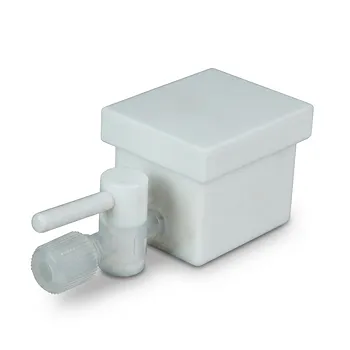
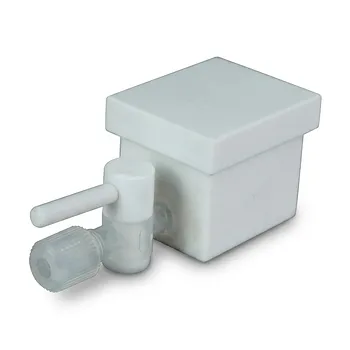
- Custom PTFE Corrosion Resistant Insulating Electrophoresis Reaction Cell with Septum and Valves for Low Background Trace Analysis
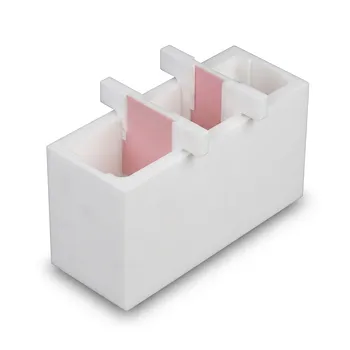
- High Purity PTFE PM2.5 Filter Sample Splitter for Environmental Monitoring Customizable Square Filter Divider for CDC Analysis
- Corrosion Resistant PTFE Electrochemical Cell for New Energy Research Inert Insulating Customizable Lab Reaction Vessel
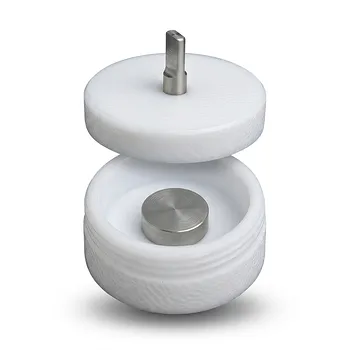
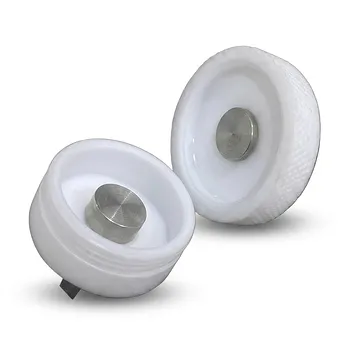
- Acid Resistant PTFE Button Cell Battery Test Fixture Customizable Machining High Purity Electrochemical Testing Clamp
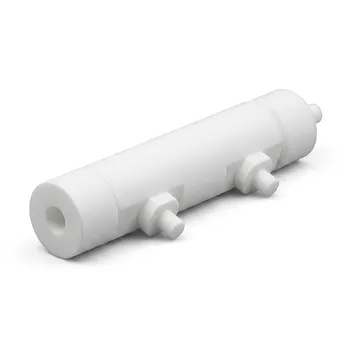
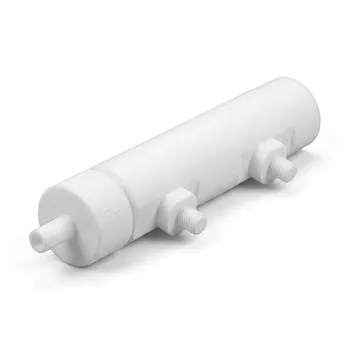
- Custom PTFE Electrolytic Cell Corrosion Resistant Low Background Reaction Vessel with Inlet Outlet Ports
People Also Ask
- What industries use custom PTFE parts and for what purposes? Solve Critical Challenges with High-Performance Materials
- What industries benefit most from custom PTFE parts? Solve Extreme Environment Challenges
- What design considerations are important for custom PTFE parts? Design for Performance & Reliability
- What advantages do custom PTFE parts offer for industrial efficiency? Boost Uptime & Cut Costs
- What are the key properties of Teflon (PTFE) used in custom parts? | Achieve Peak Performance