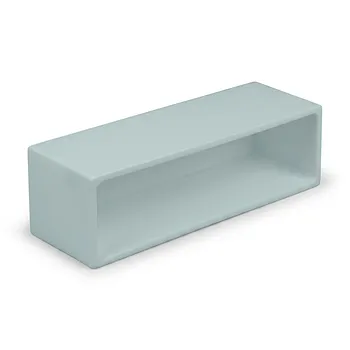
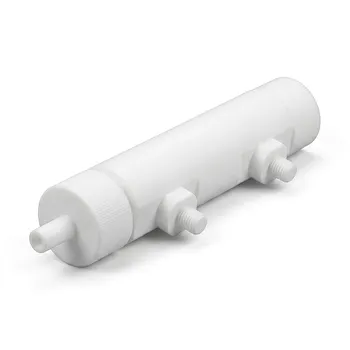
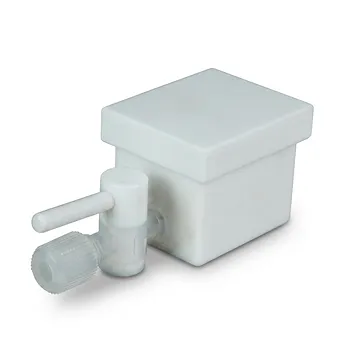
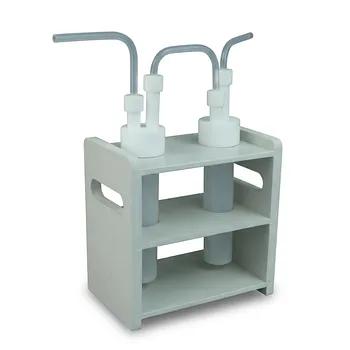
High proton conductivity at low relative humidity depends on preserving both proton availability and continuous transport pathways. Fluorinated membranes achieve this through strongly acidic sulfonate groups, fluorine-enhanced proton dissociation, and nanoscale phase separation that maintains interconnected hydrophilic channels within a mechanically stable hydrophobic framework. Custom PTFE/PFA electrochemical fixtures then protect measurement accuracy by providing chemically inert, electrically insulating, thermally stable, and leak-resistant test environments.
Core takeaway: Membrane chemistry sustains proton transport under limited hydration, while PTFE/PFA hardware ensures that the measured conductivity reflects the membrane—not contamination, corrosion, leakage, or unstable temperature and humidity conditions.
Why Fluorinated Membranes Conduct Protons Under Low RH
Strong acid groups improve proton dissociation
Super-acidic fluoroalkyl sulfonate side chains promote proton dissociation even when limited water is available. The strong electron-withdrawing effect of fluorine increases the acidity of the functional groups, helping maintain mobile proton carriers at reduced hydration.
This is important because low RH reduces the water available to hydrate protons. A membrane with stronger acid sites can compensate partly by making proton release more favorable.
Hydrophilic and hydrophobic domains form a functional architecture
Fluorinated membranes typically combine hydrophilic ionic regions with a hydrophobic fluorinated backbone. The ionic regions absorb water and support proton transport, while the fluorinated domains provide mechanical reinforcement and limit excessive swelling.
The most useful structure is not simply high water uptake. It is a continuous, interconnected network of ionic domains that remains open as humidity decreases.
Nanoscale ionic channels preserve transport continuity
Microphase separation produces hydrophilic nano-channels and ionic clusters, reported in the primary reference at approximately 3 nm in scale. These channels provide pathways through which protons can move across the membrane.
At low RH, the challenge is preventing those domains from becoming isolated. A well-organized morphology maintains connectivity over a wider humidity range, including approximately 20–100% RH in the cited design.
Fluorinated backbones preserve dimensional stability
The hydrophobic fluorinated framework resists swelling and supports the ionic domains mechanically. This helps prevent the membrane from losing its structure as it absorbs and releases water during humidity cycling.
The backbone also contributes high thermal and chemical stability, allowing membrane testing at elevated temperatures without rapid structural degradation.
Additional Strategies for Anhydrous or Low-Humidity Transport
Nitrogen-containing heterocycles can support proton hopping
Triazole and imidazole derivatives provide an alternative or complementary transport mechanism. Their nitrogen sites can participate in proton exchange and support proton hopping when water-mediated transport becomes less effective.
This approach is particularly relevant below approximately 30% RH, where conventional hydration-dependent membranes can lose substantial conductivity.
Grafted ionic chains increase charge-carrier density
Sulfonated polystyrene chains and related ionic grafts can introduce additional proton-conducting functionality into a fluorinated matrix. Increasing the concentration of acidic groups raises the number of potential charge carriers.
However, the ionic groups must remain sufficiently connected. High charge density without continuous morphology can increase water uptake without producing equally effective long-range transport.
Lower equivalent weight can increase conductivity
A lower equivalent weight generally means more ionic groups are present per unit mass of polymer. This can substantially increase proton conductivity across different RH conditions, with the supplementary reference indicating improvements of up to roughly three times in some comparisons.
The benefit must be balanced against dimensional stability, water uptake, and mechanical performance.
Why Relative Humidity Still Matters
Hydration enables fast proton transport
Water assists proton dissociation and facilitates transport through the ionic domains. As RH increases, the membrane generally develops more continuous hydrated pathways, so conductivity can rise sharply.
The supplementary references describe conductivity increases of one to two orders of magnitude as RH rises from very dry to fully humidified conditions.
Low RH can cause a large conductivity penalty
Even highly optimized fluorinated membranes do not eliminate the effect of dehydration. One cited example reports up to a 25-fold conductivity decrease when RH falls from 100% to 20% at 80 °C.
Therefore, “high conductivity under low RH” should be understood as improved retention of performance, not humidity independence.
Temperature and RH must be controlled together
At elevated temperature, membranes can lose water more rapidly, making RH control especially important. A test conducted at the correct nominal RH but with unstable gas temperature, condensation, or sealing can produce misleading conductivity results.
The cell must maintain the intended thermal and humidity conditions at the membrane itself, not merely at an upstream sensor.
How Custom PTFE/PFA Fixtures Improve Membrane Testing
Chemical inertness prevents contamination
PTFE and PFA resist aggressive humidified gases, acidic media, and other chemically demanding environments. This reduces the risk that the fixture will corrode, dissolve, or release ions into the membrane or electrolyte.
That protection is essential when measuring sensitive proton-conducting materials, where trace contamination can alter conductivity or electrode behavior.
Electrical insulation reduces measurement artifacts
Both materials are electrically insulating. A properly designed PTFE/PFA cell helps prevent unintended current paths and reduces electrical interference during impedance or conductivity measurements.
This allows the instrument to measure ionic transport through the membrane rather than leakage through the cell body or surrounding hardware.
Thermal stability supports elevated-temperature operation
PTFE and PFA retain useful stability across the temperature ranges relevant to membrane characterization, including testing near 120 °C in the primary reference. Their broader thermal capability also provides margin for demanding laboratory procedures.
The fixture material must still be selected and designed according to the actual temperature, load, pressure, and chemical exposure conditions.
Precision machining controls compression and geometry
Custom machining allows the cell to define the membrane area, electrode alignment, fluid path, and compression conditions more consistently than a generic enclosure. Stable compression is important because contact resistance, interfacial gaps, and membrane thickness all influence the measured result.
A repeatable geometry also improves comparison between membranes and reduces uncertainty when conductivity is measured across multiple RH levels.
Reliable sealing prevents gas and humidity errors
Leakage can change the local RH, pressure, and gas composition around the membrane. PTFE/PFA components, combined with suitable sealing features and high-purity fluid-transfer hardware, help maintain a stable test environment.
The objective is not merely to prevent visible leaks. It is to preserve the intended boundary conditions throughout the measurement.
High-purity fluid paths protect intrinsic measurements
Custom fluoropolymer manifolds, fittings, and transfer components minimize contact between the test fluids and reactive or contaminating materials. This is particularly important for long-duration testing and for measurements involving aggressive humidified gases.
The resulting system better isolates the membrane’s intrinsic conductivity and water-uptake behavior.
Understanding the Trade-offs
Low-RH performance remains morphology-dependent
Strong acid groups alone are insufficient if the ionic domains lose connectivity during dehydration. Membrane design must coordinate acid strength, ionic-domain distribution, water retention, and backbone reinforcement.
Higher ionic content can increase swelling
Lower equivalent weight and additional sulfonated groups can increase conductivity, but they can also increase water uptake and dimensional changes. The best composition depends on whether the priority is peak conductivity, mechanical durability, or stable operation across humidity cycles.
Heterocyclic transport may not replace hydration entirely
Nitrogenous heterocycles can support proton hopping under dry conditions, but their effectiveness depends on the local chemical environment and the continuity of the functional groups. They should be treated as a complementary transport strategy rather than proof that humidity is irrelevant.
Fixture inertness does not guarantee accurate data by itself
PTFE and PFA prevent many chemical and electrical problems, but accurate testing also requires controlled temperature, calibrated RH, uniform compression, known membrane dimensions, and appropriate impedance analysis.
A chemically inert cell can still produce poor data if the membrane is misaligned, partially sealed, overheated, or exposed to nonuniform humidity.
PTFE and PFA should be chosen for the actual cell design
PTFE and PFA are both valuable fluoropolymers, but the appropriate choice depends on machining requirements, dimensional tolerances, sealing strategy, thermal exposure, and chemical conditions. Material selection should be made alongside the mechanical design rather than treated as a substitute for it.
Making the Right Choice for Your Goal
The membrane and fixture should be designed as one measurement system, because transport chemistry and test-environment control directly affect one another.
- If your primary focus is low-RH conductivity: Use strongly acidic fluorinated side chains, interconnected ionic nano-channels, and—where appropriate—heterocyclic proton-hopping groups to preserve transport as hydration decreases.
- If your primary focus is high-temperature operation: Combine a thermally stable fluorinated backbone with controlled humidification and PTFE/PFA hardware capable of maintaining stable sealing and compression.
- If your primary focus is intrinsic membrane characterization: Use high-purity, electrically insulating PTFE/PFA cells and fluid paths to minimize contamination, leakage, corrosion, and stray electrical currents.
- If your primary focus is long-term mechanical durability: Favor a fluorinated structural framework that limits swelling, while balancing equivalent weight and ionic-group concentration against dimensional stability.
- If your primary focus is reproducible RH-dependent measurements: Use a precision-machined cell with controlled membrane geometry, uniform compression, calibrated temperature, and stable gas or liquid delivery.
Reliable low-humidity proton-conductivity data comes from matching membrane-scale transport structure with cell-scale control of heat, humidity, chemistry, and electrical measurement conditions.
Summary Table:
| Factor | Role in Low-RH Conductivity | Key Considerations |
|---|---|---|
| Strong acid groups (sulfonate) | Promote proton dissociation with limited water | Fluorine enhances acidity, maintaining mobile protons |
| Nanoscale phase separation | Creates interconnected hydrophilic channels for proton transport | Channels must stay connected as RH decreases; ~3 nm scale observed |
| Fluorinated backbone | Provides mechanical stability and prevents excessive swelling | Supports ionic domains, thermal/chemical stability |
| Grafted ionic chains | Increases charge-carrier density | Must maintain connectivity; higher density can increase conductivity |
| Heterocyclic additives (triazole, imidazole) | Support proton hopping under dry conditions | Effective below ~30% RH; complementary to hydration |
| Lower equivalent weight | Increases ionic group concentration | Can boost conductivity but may affect dimensional stability |
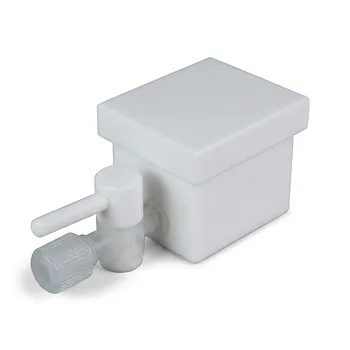
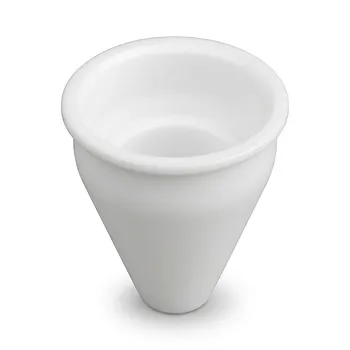
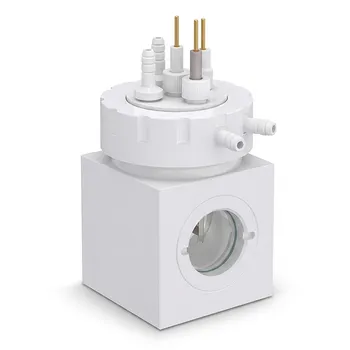
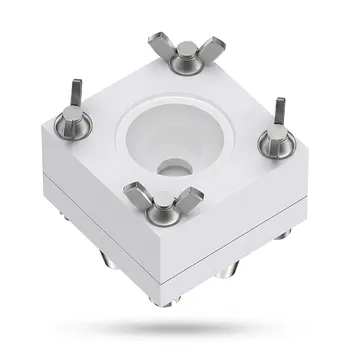
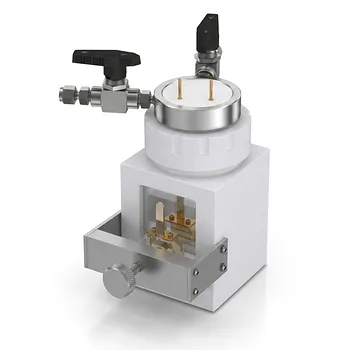
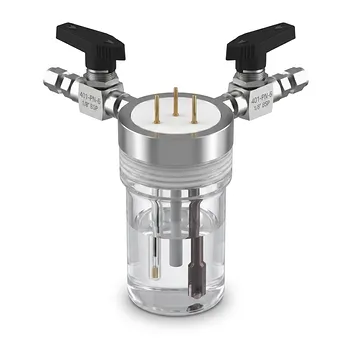
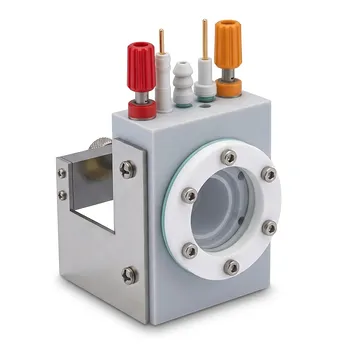
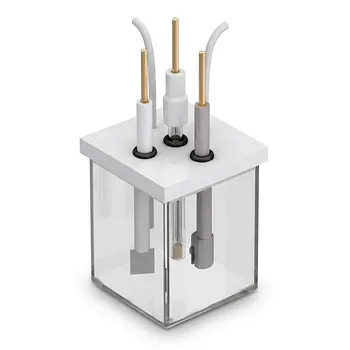
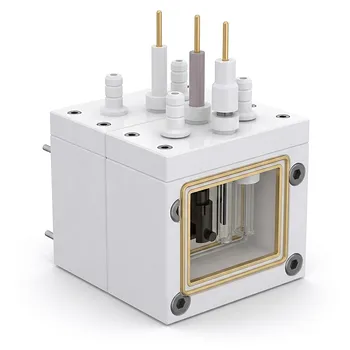
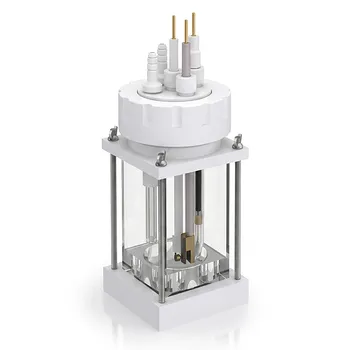
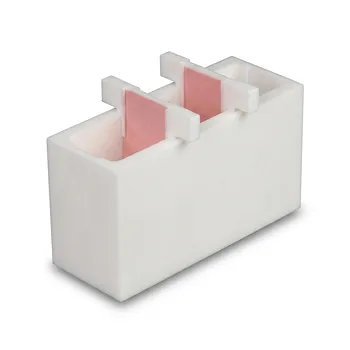
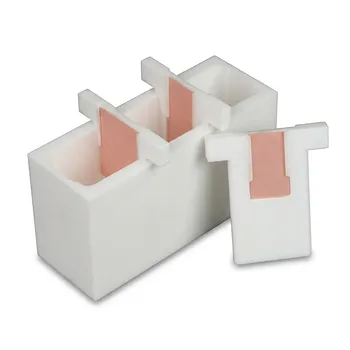
Optimize your membrane testing with custom PTFE/PFA electrochemical cells from KINTEK. Our high-purity, chemically inert, and precisely machined fixtures ensure accurate low-RH proton conductivity measurements. From standard labware to bespoke electrochemical cells, we provide end-to-end solutions for high-performance fluoropolymers. Contact us today to discuss your requirements and elevate your research.
Related Products
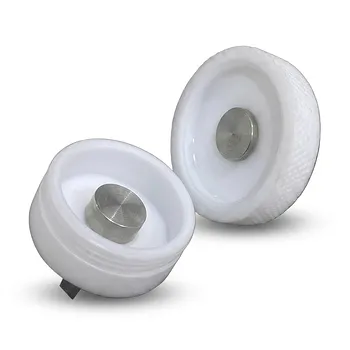
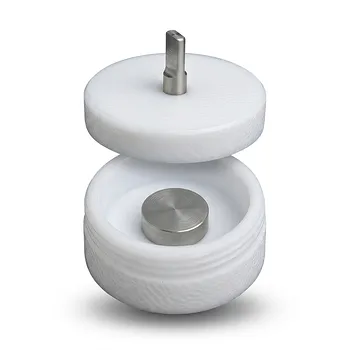
- Corrosion Resistant PTFE Coin Cell Battery Testing Clamps and Acid Proof Custom Fluoropolymer Battery Fixtures
- Acid Resistant PTFE Button Cell Battery Test Fixture Customizable Machining High Purity Electrochemical Testing Clamp
- Corrosion Resistant PTFE Electrochemical Cell for New Energy Research Inert Insulating Customizable Lab Reaction Vessel
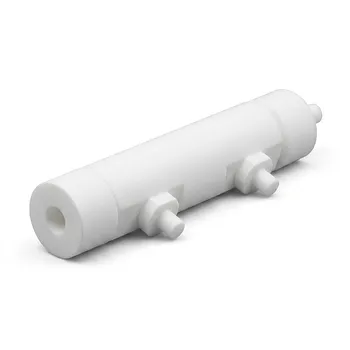
- Custom PTFE Electrolytic Cell Corrosion Resistant Low Background Reaction Vessel with Inlet Outlet Ports
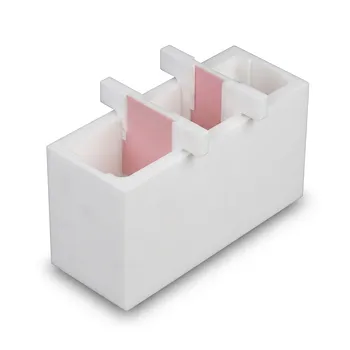
- Custom PTFE Reaction Box Opaque White Square Electrochemical Cell Tank
People Also Ask
- What is the thermal operating range for PTFE battery clamps in electrochemical research? Stability from -200°C to +260°C
- What are the primary functions and material compositions of PTFE battery clamps? Ensure Precision & Chemical Resistance
- How do coin cell testing fixtures evaluate ZIF-derived LCO cycling stability? Ensure Battery Research Precision
- What are the electrical insulation and signal integrity advantages of using PTFE battery clamps? Ensure Data Accuracy
- How does the chemical inertness of PTFE benefit laboratory-scale battery testing? Ensure high-purity research results.