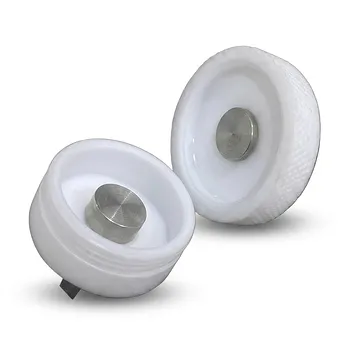
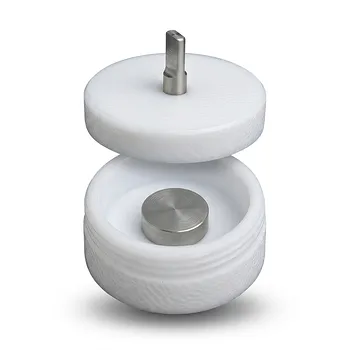
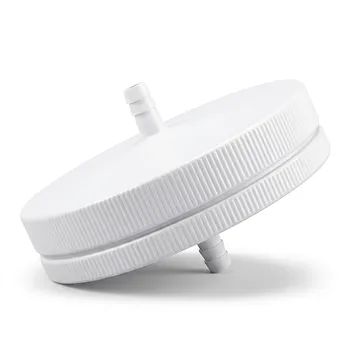
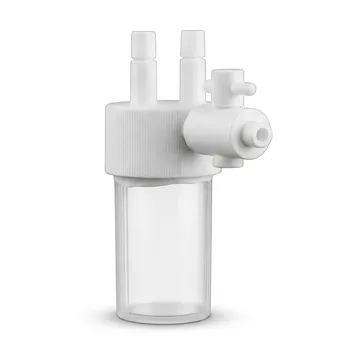
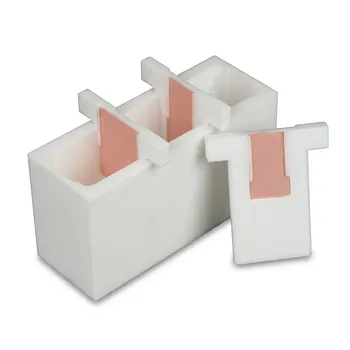
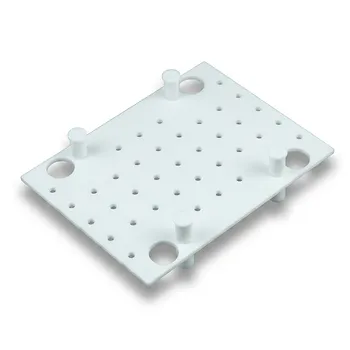
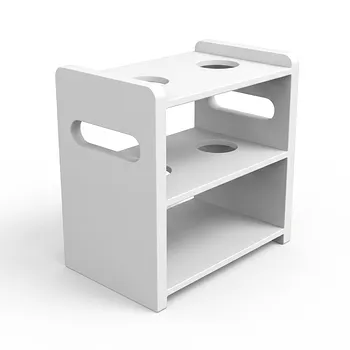
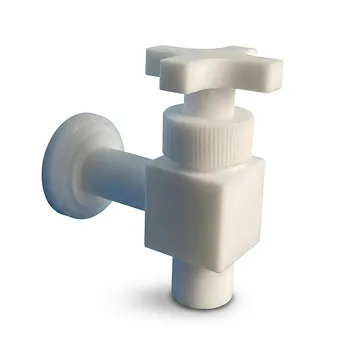
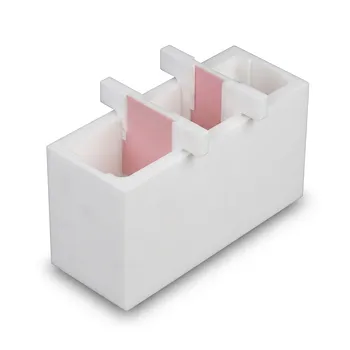
PTFE battery clamps are the gold standard for high-precision electrochemical testing and high-voltage safety. These components leverage a unique molecular structure to provide nearly perfect electrical isolation, featuring a volume resistivity of approximately $10^{18}$ $\Omega\cdot$cm. By eliminating stray currents and parasitic capacitance, they ensure that the data collected during sensitive tests, such as impedance spectroscopy, is a true reflection of the battery’s performance rather than environmental noise.
PTFE’s extreme resistivity and low dielectric constant create a "silent" electrical environment, preventing signal distortion and accidental short circuits. This makes them indispensable for applications where data accuracy and operational safety cannot be compromised.
Eliminating Stray Currents with Extreme Resistivity
High Volume Resistivity and Leakage Prevention
The primary advantage of PTFE is its volume resistivity of $10^{18}$ $\Omega\cdot$cm, which is among the highest of any known material. This property effectively eliminates stray currents that might otherwise travel through the clamp body to the electrolyte or counter electrodes.
Superior Dielectric Strength
With a dielectric strength of approximately 60 MV/m, PTFE can withstand intense electric fields without breaking down. This allows the clamps to maintain total isolation even when subjected to high-voltage spikes or continuous high-load testing.
Prevention of Surface Leakage
The non-conductive nature of the material prevents surface leakage, ensuring that the current is forced through the intended conductive contact points only. This isolation is critical for maintaining the accuracy of the electrochemical circuit under study.
Maintaining Signal Integrity for High-Precision Data
Minimal Parasitic Capacitance and Noise
PTFE possesses exceptionally low parasitic capacitance, which prevents the clamp from acting as an unintended capacitor during testing. This results in cleaner electrochemical data and significantly reduced background noise, particularly during high-frequency measurements.
Low Dielectric Constant and Signal Clarity
A low dielectric constant of 2.1 ensures that the material does not distort high-frequency signals. In applications like electrochemical impedance spectroscopy (EIS), this clarity allows researchers to capture subtle battery characteristics without interference from the testing hardware.
Energy Loss Prevention
The material features an exceptionally low dissipation factor, meaning it loses very little energy as heat in high-frequency systems. This stability ensures that the electrical environment remains consistent throughout the duration of a test.
Long-Term Reliability in Corrosive Environments
Preventing Galvanic Potentials
PTFE is chemically inert and does not introduce galvanic potentials that could skew voltage readings. By isolating the conductive terminals from the surrounding environment, it ensures that the measured potential is purely a result of the battery’s internal chemistry.
Resistance to Battery Off-Gassing
In industrial settings, PTFE-coated clamps provide long-term resistance to sulfuric acid mist and electrolyte leakage. This prevents the corrosion of copper or lead terminals, which otherwise leads to voltage drops and degraded contact integrity.
Enhanced Maintenance Safety
The full insulation provided by PTFE bodies reduces the risk of accidental short circuits during maintenance. This is a critical safety feature when working in confined battery rooms or high-density offshore power installations.
Understanding the Trade-offs
Mechanical Softness and Creep
PTFE is a relatively soft fluoropolymer and can be subject to "creep" or cold flow under heavy mechanical pressure. While it excels as an insulator, the clamps must be designed to ensure that the mechanical pressure does not deform the PTFE enough to loosen the electrical connection over time.
Heat Dissipation Limits
Because PTFE is such an excellent thermal and electrical insulator, it does not help dissipate heat away from the terminal. In extremely high-current applications, users must ensure the conductive core of the clamp is appropriately sized to prevent heat buildup that the PTFE jacket might trap.
How to Apply This to Your Project
Making the Right Choice for Your Goal
To maximize the benefits of PTFE battery clamps, match the specific property of the material to your primary technical objective:
- If your primary focus is Laboratory Accuracy: Use PTFE clamps specifically for Impedance Spectroscopy (EIS) to eliminate background noise and parasitic capacitance.
- If your primary focus is High-Voltage Safety: Select clamps with full PTFE bodies to leverage the 60 MV/m dielectric strength and prevent accidental arcing.
- If your primary focus is Longevity in Harsh Conditions: Prioritize PTFE-coated terminals to prevent electrolyte corrosion and maintain stable contact resistance.
By prioritizing PTFE in sensitive or high-risk electrical environments, you ensure that your hardware remains a neutral, safe, and reliable conduit for both power and data.
Summary Table:
| Feature | Value/Property | Key Advantage |
|---|---|---|
| Volume Resistivity | $10^{18}$ $\Omega\cdot$cm | Eliminates stray currents and leakage |
| Dielectric Strength | 60 MV/m | Prevents breakdown in high-voltage tests |
| Dielectric Constant | 2.1 | Minimal parasitic capacitance and noise |
| Dissipation Factor | Low | Reduces energy loss in high-frequency EIS |
| Chemical Inertness | High | Prevents corrosion and galvanic potentials |
Elevate Your Research with KINTEK’s High-Performance Fluoropolymer Solutions
Maximize the accuracy and safety of your electrochemical testing with KINTEK’s specialized laboratory supplies. We maintain an exclusive focus on high-performance materials, offering an exhaustive range of PTFE and PFA products tailored for high-precision environments.
From everyday essentials like beakers, crucibles, and reagent bottles to critical fluid transfer components such as tubing, fittings, and valves, KINTEK provides the reliability your data demands. We specialize in advanced apparatus, including custom electrochemical cells, battery testing fixtures, and hydrothermal synthesis liners, all backed by our end-to-end custom CNC fabrication capabilities.
Our Value to You:
- Bespoke Engineering: Complex, non-standard machined parts and custom laboratory setups.
- Unrivaled Material Quality: Superior insulation and chemical resistance for trace analysis and sample prep.
- Scalable Production: High-volume orders handled with precision and speed.
Contact KINTEK today to discuss your custom project or high-volume labware needs!
Related Products
- Corrosion Resistant PTFE Coin Cell Battery Testing Clamps and Acid Proof Custom Fluoropolymer Battery Fixtures
- Acid Resistant PTFE Button Cell Battery Test Fixture Customizable Machining High Purity Electrochemical Testing Clamp
- PTFE Filter Membrane Holder for Hydrogen Chloride and Water Filtration 90mm Environmental Sampling Clamp Customizable
- Custom PTFE Insulating Gaskets and Corrosion Resistant Fluoropolymer Seals for Industrial Electrical Applications
- Custom PTFE Reaction Lid with Integrated Valve and Fitting Corrosion Resistant No Leaching PFA FEP Bottle Cap System
People Also Ask
- What is the thermal operating range for PTFE battery clamps in electrochemical research? Stability from -200°C to +260°C
- What are the primary functions and material compositions of PTFE battery clamps? Ensure Precision & Chemical Resistance
- How do coin cell testing fixtures evaluate ZIF-derived LCO cycling stability? Ensure Battery Research Precision
- How does the chemical inertness of PTFE benefit laboratory-scale battery testing? Ensure high-purity research results.
- In what ways do PTFE battery testing fixtures enhance laboratory throughput and reliability? Maximize Research Efficiency