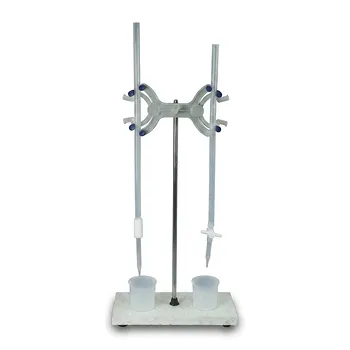
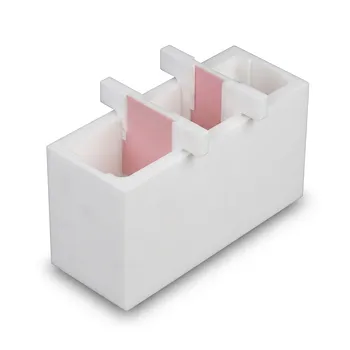
The chemical inertness of Polytetrafluoroethylene (PTFE) ensures the integrity of battery test results by preventing material degradation and electrochemical contamination. It allows laboratory fixtures to withstand aggressive electrolytes—including strong acids, organic carbonates, and sulfide electrolytes—without leaching ions or swelling. This stability eliminates parasitic reactions, ensuring that measured performance reflects the cell's chemistry rather than interference from the testing hardware.
PTFE acts as an electrochemical "safeguard" in battery research by providing a non-reactive environment for sensitive materials. Its primary value lies in its ability to maintain structural and chemical purity across diverse and corrosive battery chemistries, ranging from lithium-ion to solid-state systems.
The Molecular Foundation of Inertness
The Strength of the Carbon-Fluorine Bond
PTFE is a linear homopolymer where the carbon backbone is shielded by a dense sheath of fluorine atoms. The carbon-fluorine (C-F) bonds are among the strongest in organic chemistry, possessing a bond energy of approximately 485 kJ/mol.
Steric and Electronic Protection
The high electronegativity of fluorine creates a non-polar, electron-dense surface around the polymer chain. This helical conformation provides both steric and electronic protection, preventing chemical agents from attacking or reacting with the internal carbon backbone.
Impacts on Experimental Accuracy
Preventing Ion Leaching and Contamination
Because PTFE does not leach ions or dissolve into the electrolyte, it prevents the formation of resistive layers on electrodes. In laboratory-scale testing, even trace metal-ion contamination can lead to parasitic reactions that skew performance data and degrade cell longevity.
Dimensional Stability Against Solvents
Unlike many polymers, PTFE does not swell or degrade when exposed to organic carbonate solvents or ionic liquids. This ensures that battery clamps, alignment sleeves, and molds maintain precise tolerances, which is critical for consistent electrode compaction and contact pressure.
Mitigating Parasitic Side Reactions
PTFE provides a non-conductive and corrosion-resistant environment that prevents unwanted electrical paths. By resisting attack from reactive components like lithium salts ($LiPF_6$) or sodium metal, it ensures that the electrochemical measurements reflect the intended chemical system.
Practical Laboratory Advantages
Simplified Cleaning and Maintenance
The material's low-friction and non-stick properties simplify the cleaning process between experiments. This reduces the risk of cross-contamination and minimizes mechanical damage to delicate electrode samples during assembly and disassembly.
Versatility Across Chemistries
PTFE is compatible with a wide range of aggressive substances, including sulfuric acid, alkaline solutions, and sulfide electrolytes. This versatility allows researchers to use the same high-quality fixtures for lithium-ion, sodium-ion, and solid-state battery research.
Common Pitfalls and Limitations
Reactivity with Alkali Metals
While PTFE is "near-universally" inert, it is vulnerable to alkali metals (such as molten sodium or potassium) under certain conditions. Exposure to these metals, particularly at high temperatures and pressures, can lead to chemical breakdown of the polymer.
Limitations in Extreme Environments
PTFE can react with specific aggressive agents like chlorotrifluoride and basic fluorine when subjected to extreme heat. Researchers must verify compatibility when testing experimental high-temperature chemistries that deviate from standard battery protocols.
Applying PTFE Strategy to Your Research
How to Apply This to Your Project
- If your primary focus is high-purity electrochemical cycling: Utilize PTFE-lined or solid PTFE fixtures to eliminate the risk of ion leaching that could form resistive layers on your electrodes.
- If your primary focus is testing aggressive liquid electrolytes: Leverage PTFE's resistance to organic carbonates and strong acids to ensure your hardware does not swell or lose structural integrity during long-term immersion.
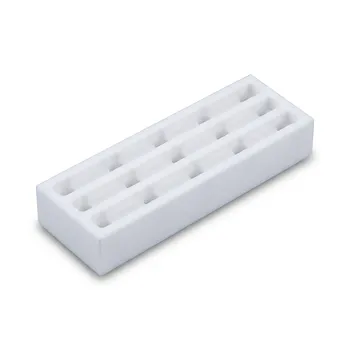
- If your primary focus is solid-state battery compaction: Use PTFE multi-cavity molds to prevent side reactions with reactive sulfide or lithium components while maintaining precise mechanical tolerances.
By integrating PTFE into the laboratory environment, researchers can effectively isolate the electrochemical behavior of the battery chemistry from the physical influence of the testing apparatus.
Summary Table:
| Benefit of PTFE | Impact on Battery Research | Key Mechanism |
|---|---|---|
| Chemical Integrity | Prevents ion leaching and contamination | Strong C-F bonds (485 kJ/mol) |
| Dimensional Stability | Ensures precise electrode contact/pressure | Resistance to solvent swelling |
| Broad Compatibility | Versatile use across diverse cell chemistries | Shielded carbon backbone |
| High Purity | Eliminates parasitic side reactions | Non-polar, electron-dense surface |
| Operational Ease | Simplifies cleaning; prevents cross-contamination | Low-friction, non-stick properties |
Ensure the integrity of your energy storage research with KINTEK, the leader in high-performance fluoropolymer laboratory supplies. From everyday basic labware—including beakers, measuring cylinders, crucibles, dishes, reagent bottles, and centrifuge tubes—to advanced apparatus like standard or custom electrochemical cells, battery testing fixtures, and hydrothermal synthesis liners, KINTEK manufactures virtually every laboratory supply imaginable from PTFE and PFA.
Our expertise extends to high-purity trace analysis tools, fluid transfer components (tubing, fittings, valves), and precision-machined parts tailored to your specific research needs. Backed by end-to-end custom CNC fabrication, we are equipped to deliver everything from high-volume consumables to complex, bespoke laboratory setups with an absolute focus on fluoropolymer excellence.
Don't let material degradation compromise your data. Contact KINTEK today to discuss your project requirements!
Related Products
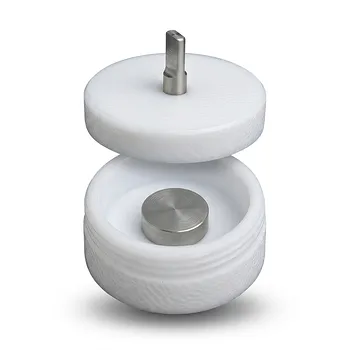
- Acid Resistant PTFE Button Cell Battery Test Fixture Customizable Machining High Purity Electrochemical Testing Clamp
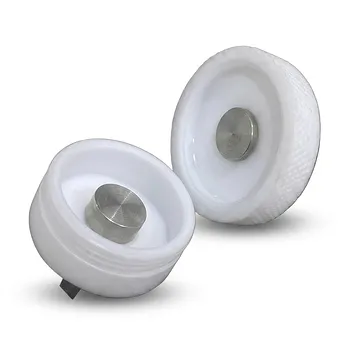
- Corrosion Resistant PTFE Coin Cell Battery Testing Clamps and Acid Proof Custom Fluoropolymer Battery Fixtures
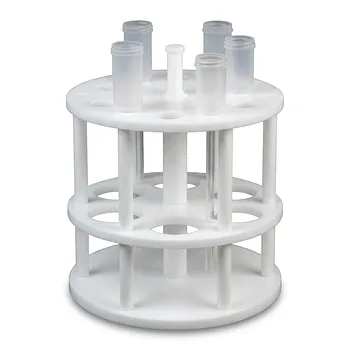
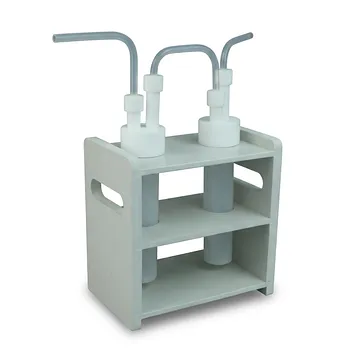
- Custom PFA Microcolumn Racks and PTFE Machined Low Background Corrosion Resistant Laboratory Fixtures
- Custom PTFE Acid Resistant Support Rack for PFA Hydrogen Absorption Systems Multi Hole Configurations
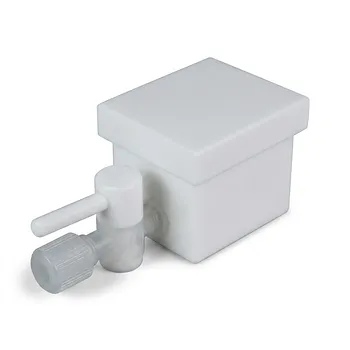
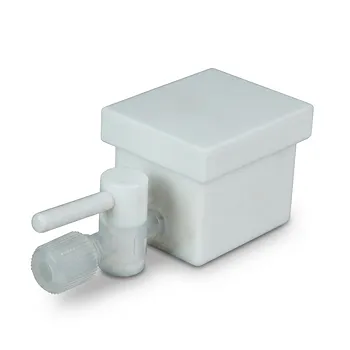
- Custom PTFE Reaction Box Opaque White Square Electrochemical Cell Tank
People Also Ask
- In what ways do PTFE battery testing fixtures enhance laboratory throughput and reliability? Maximize Research Efficiency
- In what industrial manufacturing contexts are PTFE battery clamps or fixtures utilized? Optimize Battery Production.
- What is the thermal operating range for PTFE battery clamps in electrochemical research? Stability from -200°C to +260°C
- What are the primary functions and material compositions of PTFE battery clamps? Ensure Precision & Chemical Resistance
- What are the electrical insulation and signal integrity advantages of using PTFE battery clamps? Ensure Data Accuracy