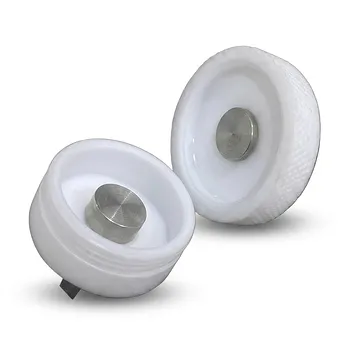
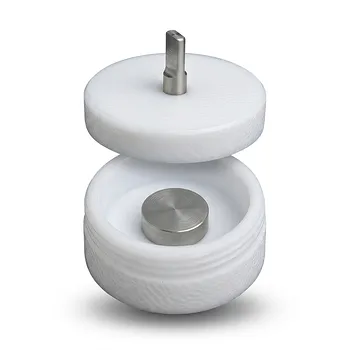
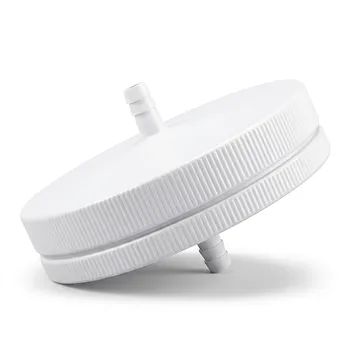
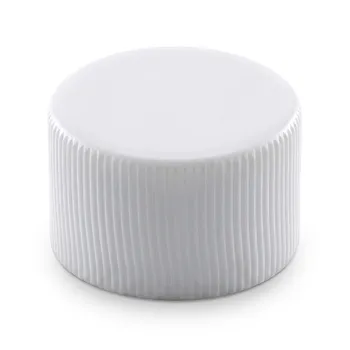
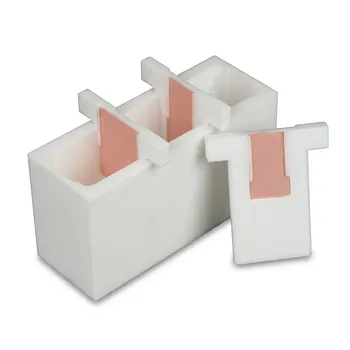
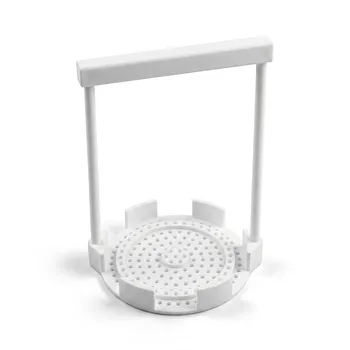
PTFE battery clamps are engineered for extreme thermal resilience in laboratory environments. For electrochemical research, these components maintain mechanical integrity across a standard operating range of -200°C to +260°C. While the material can briefly withstand temperatures approaching its melting point of 327°C, long-term stability is typically rated for continuous service up to 260°C.
The Central Takeaway: PTFE (Polytetrafluoroethylene) provides an unparalleled thermal window for battery testing, allowing researchers to conduct experiments from cryogenic conditions to high-heat simulations without risking clamp deformation or chemical outgassing.
The Scope of Thermal Stability
Performance in Cryogenic Conditions
PTFE remains functional at temperatures as low as -200°C. Unlike many plastics that become brittle and shatter under extreme cold, PTFE retains sufficient flexibility and mechanical strength to secure battery cells during low-temperature characterization.
Elevated Temperature Thresholds
For high-heat applications, the material supports continuous service at 260°C (500°F). This allows for accelerated aging protocols and elevated temperature cycling that would cause standard plastic housings to fail or melt.
Short-Term Exposure and Melting Point
The absolute physical limit of PTFE is its melting point of 327°C. While the material can survive short-term spikes near this limit, it is not recommended for prolonged use at these levels due to the risk of structural softening.
Impact on Electrochemical Research
Eliminating Outgassing Concerns
In sensitive electrochemical setups, outgassing from hardware can contaminate electrolytes or interfere with gas analysis. PTFE is exceptionally stable and does not release volatile compounds within its rated temperature range, ensuring high-purity results.
Suitability for Thermal Runaway Studies
Researchers investigating battery safety often push cells to failure. PTFE clamps are ideal for these studies because they can withstand the initial heat of a thermal runaway event without losing their grip or introducing secondary chemical variables into the environment.
Mechanical Integrity Under Stress
Because PTFE maintains its shape across such a wide delta, it provides consistent contact pressure on battery terminals. This consistency is vital for maintaining low contact resistance during long-term cycling tests where temperature fluctuations occur.
Understanding the Trade-offs
The Risk of Material Creep
The primary limitation of PTFE at high temperatures is creep, or cold flow. Even below the melting point, the material may slowly deform under constant mechanical load, which can lead to a loosening of the clamp's grip over time at temperatures exceeding 260°C.
Influence of Fillers and Energizers
The specific thermal range can vary based on whether the PTFE is virgin or contains fillers like glass or carbon. While fillers can improve mechanical strength and reduce creep, they may also shift the chemical compatibility or the precise thermal limits of the clamp.
Environmental Degradation
While PTFE is chemically inert to almost all reagents, users must be aware that extreme thermal cycling—moving rapidly between -200°C and +260°C—can eventually cause micro-stresses in the material. Regular inspection is recommended for clamps used in extreme thermal shock protocols.
Applying This to Your Research
Recommendations Based on Research Goals
- If your primary focus is cryogenic battery characterization: Utilize virgin PTFE clamps to ensure maximum material flexibility and grip at temperatures down to -200°C.
- If your primary focus is high-temperature aging or runaway studies: Limit continuous exposure to 260°C to prevent material creep, while relying on the 327°C melting point as a safety buffer for short-term heat spikes.
- If your primary focus is high-purity electrochemical analysis: Choose PTFE specifically for its lack of outgassing, ensuring the hardware does not contaminate the electrolyte during heated cycles.
By adhering to these thermal boundaries, researchers can ensure that their battery hardware provides the reliability and precision required for sophisticated electrochemical analysis.
Summary Table:
| Property/Condition | Temperature Range | Performance Benefit |
|---|---|---|
| Cryogenic Stability | -200°C to 0°C | Maintains flexibility without becoming brittle. |
| Continuous Service | Up to +260°C | Resists deformation during long-term cycling. |
| Short-Term Limit | Up to +327°C | Survives brief heat spikes (melting point threshold). |
| Outgassing Safety | Full Range | Zero volatile release for high-purity analysis. |
| Chemical Resistance | Full Range | Inert to electrolytes and corrosive reagents. |
Maximize Precision with KINTEK’s High-Performance Fluoropolymer Labware
At KINTEK, we understand that electrochemical research demands hardware that can withstand extreme thermal and chemical environments. We manufacture an exhaustive range of laboratory supplies crafted exclusively from high-performance PTFE and PFA.
Whether you require everyday basic labware (beakers, crucibles, reagent bottles), comprehensive fluid transfer components (tubing, valves, fittings), or advanced reaction apparatus such as standard and custom electrochemical cells, battery testing fixtures, and microwave digestion vessels, we have you covered. Our end-to-end custom CNC fabrication allows us to deliver everything from complex non-standard machined parts to high-volume orders with absolute precision.
Ready to upgrade your lab's thermal resilience? Contact KINTEK today to discuss your custom project or bulk order!
Related Products
- Corrosion Resistant PTFE Coin Cell Battery Testing Clamps and Acid Proof Custom Fluoropolymer Battery Fixtures
- Acid Resistant PTFE Button Cell Battery Test Fixture Customizable Machining High Purity Electrochemical Testing Clamp
- PTFE Filter Membrane Holder for Hydrogen Chloride and Water Filtration 90mm Environmental Sampling Clamp Customizable
- Custom PTFE Sealing Caps and Corrosion Resistant Low Background Teflon Adapters
- Custom PTFE Reaction Lid with Integrated Valve and Fitting Corrosion Resistant No Leaching PFA FEP Bottle Cap System
People Also Ask
- What are the primary functions and material compositions of PTFE battery clamps? Ensure Precision & Chemical Resistance
- How do coin cell testing fixtures evaluate ZIF-derived LCO cycling stability? Ensure Battery Research Precision
- What are the electrical insulation and signal integrity advantages of using PTFE battery clamps? Ensure Data Accuracy
- How does the chemical inertness of PTFE benefit laboratory-scale battery testing? Ensure high-purity research results.
- In what ways do PTFE battery testing fixtures enhance laboratory throughput and reliability? Maximize Research Efficiency