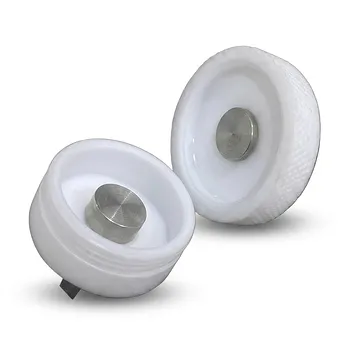
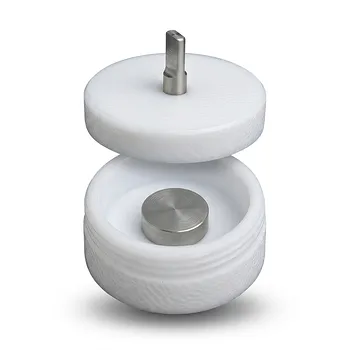
Laboratory coin cell testing fixtures provide the essential mechanical and environmental architecture required to isolate the intrinsic performance of ZIF-derived lithium cobalt oxide. These fixtures ensure that the electrode assembly—comprising the active material, conductive carbon, and binder—maintains continuous physical contact with the electrolyte and lithium metal counter-electrode. By providing a hermetically sealed environment and constant internal pressure, these fixtures allow researchers to accurately quantify specific capacity and capacity retention over hundreds of cycles within precise voltage windows, typically ranging from 3.0 V to 4.3 V.
Core Takeaway: To accurately evaluate the cycling stability of ZIF-derived materials, laboratory fixtures must provide a standardized, pressurized, and sealed environment that eliminates external variables, ensuring that measured capacity decay is a result of material degradation rather than mechanical failure.
The Role of Mechanical Integrity in Electrochemical Testing
Maintaining Consistent Interfacial Contact
Internal components, such as stainless steel springs, exert constant mechanical pressure across the electrode layers. This pressure is critical for ZIF-derived materials, which often possess high surface areas and porous structures that require firm contact to maintain low charge-transfer resistance.
Ensuring a Hermetically Sealed Environment
The 2032-type coin cell housing provides a precise mechanical seal that prevents electrolyte evaporation and protects the sensitive lithium metal chip from moisture and oxygen. This isolation is necessary to ensure that long-term cycling data reflects the stability of the LCO cathode rather than the intrusion of environmental contaminants.
Facilitating Electrolyte Wetting
The compact design of the fixture forces the electrolyte to fully saturate the electrode sheet, ensuring all active sites within the ZIF-derived LCO are electrochemically accessible. Without this controlled immersion, capacity measurements would be artificially low and inconsistent across different testing batches.
Translating Fixture Precision to Cycling Stability Data
Validating Capacity Retention Over Time
By maintaining stable electrical contact pressure, these fixtures allow for the monitoring of capacity retention over multiple charge-discharge cycles. This data is the primary metric for determining the durability of the ZIF-derived structure during the intercalation and de-intercalation of lithium ions.
Defining Operational Voltage Windows
Fixtures enable precise testing within specific voltage ranges, such as 3.0 V to 4.3 V, where the ZIF-derived LCO is most active. The stability of the fixture ensures that the electrochemical signals recorded are a true reflection of the material's behavior under these specific electrical stresses.
Standardizing the Evaluation Platform
Using standardized 2032-type housings allows for the benchmarking of ZIF-derived materials against traditional LCO. This standardization is vital for the technical community to compare results across different laboratories and validate the benefits of ZIF-derived synthesis methods.
Understanding the Trade-offs and Common Pitfalls
The Risk of Over-Compression
While mechanical pressure is necessary, excessive pressure from over-compressed springs can damage the separator or cause short-circuiting between the lithium anode and the LCO cathode. This leads to premature cell failure that can be misinterpreted as poor material cycling stability.
Electrolyte Volumetric Limitations
The small internal volume of a coin cell fixture limits the amount of electrolyte that can be used. In long-term cycling studies, "electrolyte starvation" can occur if the material consumes the electrolyte through side reactions, potentially skewing the stability data of the ZIF-derived material.
Potential for Internal Corrosion
In high-voltage testing scenarios (above 4.3 V), standard stainless steel housings may undergo subtle corrosion or catalyze electrolyte decomposition. Researchers must differentiate between the degradation of the active LCO material and the instability of the fixture components themselves.
How to Apply This to Your Project
Evaluating ZIF-derived materials requires a rigorous approach to fixture preparation to ensure data integrity.
- If your primary focus is material benchmarking: Utilize standardized 2032-type housings with high-quality stainless steel springs to ensure reproducible contact pressure across all samples.
- If your primary focus is long-term cycling stability: Prioritize the quality of the hermetic seal and use high-purity electrolytes to prevent secondary reactions from masking the LCO degradation profile.
- If your primary focus is high-rate performance: Ensure that the electrode-to-current-collector contact is optimized within the fixture to minimize ohmic losses that could throttle high-current testing.
Ultimately, the testing fixture is not just a container, but a precision instrument that determines the reliability of every milliampere-hour measured.
Summary Table:
| Feature of Fixture | Impact on ZIF-derived LCO Evaluation | Key Benefit |
|---|---|---|
| Mechanical Pressure | Maintains contact across porous ZIF structures | Ensures low charge-transfer resistance |
| Hermetic Sealing | Prevents electrolyte evaporation & contamination | Isolates material degradation variables |
| Electrolyte Wetting | Forces saturation of active electrode sites | Delivers consistent capacity measurements |
| Standardized Housing | Enables benchmarking against traditional LCO | Validates benefits of synthesis methods |
Elevate Your Battery Research with KINTEK Precision Solutions
To achieve reliable and reproducible data in advanced material testing, the quality of your laboratory environment is paramount. KINTEK specializes in high-performance fluoropolymer solutions and precision-engineered labware designed to meet the rigorous demands of electrochemical research.
Whether you require everyday basic labware (beakers, measuring cylinders, crucibles, reagent bottles, and digestion tubes) or specialized battery testing fixtures and electrochemical cells, we have you covered. Our expertise extends to:
- High-Purity Analysis: Trace analysis instruments and cleaning/storage tanks.
- Fluid Management: Tubing, fittings, valves, and filtration tools.
- Custom Fabrication: End-to-end custom CNC fabrication for non-standard machined parts and bespoke laboratory setups.
- Advanced Reaction Tools: Hydrothermal synthesis liners, microwave digestion vessels, and microchannel reactors.
From high-volume orders of stirring bars and O-rings to complex, custom-machined PTFE and PFA components, KINTEK maintains an absolute focus on high-performance materials to ensure your research remains untainted by environmental variables.
Ready to optimize your lab's performance? Contact us today to discuss your specific requirements and discover how our fluoropolymer expertise can drive your next breakthrough.
References
- Despoina Andriotou, David Peralta. New Approach of In Situ Dense Sphere Shaping of ZIF-7-III and ZIF-9-III in Water without Additive. DOI: 10.1021/acs.cgd.5c01155
This article is also based on technical information from Kintek Knowledge Base .
Related Products
- Corrosion Resistant PTFE Coin Cell Battery Testing Clamps and Acid Proof Custom Fluoropolymer Battery Fixtures
- Acid Resistant PTFE Button Cell Battery Test Fixture Customizable Machining High Purity Electrochemical Testing Clamp
People Also Ask
- What is the thermal operating range for PTFE battery clamps in electrochemical research? Stability from -200°C to +260°C
- What are the primary functions and material compositions of PTFE battery clamps? Ensure Precision & Chemical Resistance
- What are the electrical insulation and signal integrity advantages of using PTFE battery clamps? Ensure Data Accuracy
- How does the chemical inertness of PTFE benefit laboratory-scale battery testing? Ensure high-purity research results.
- In what ways do PTFE battery testing fixtures enhance laboratory throughput and reliability? Maximize Research Efficiency