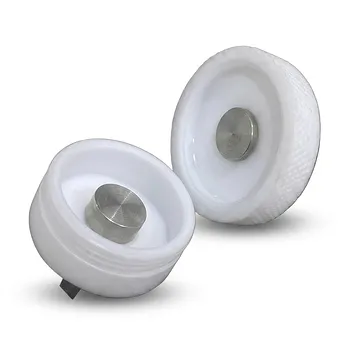
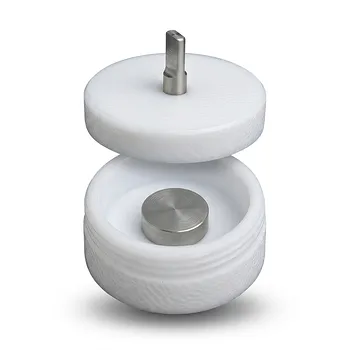
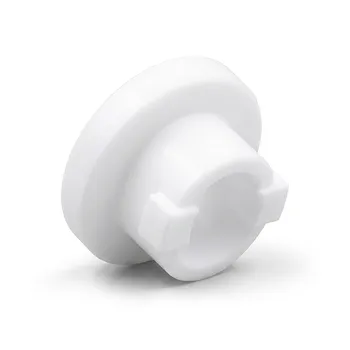
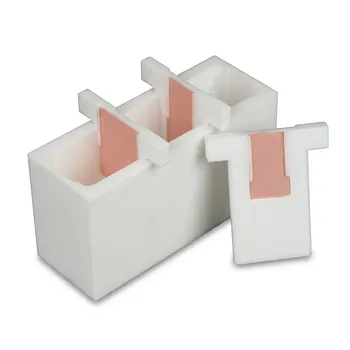
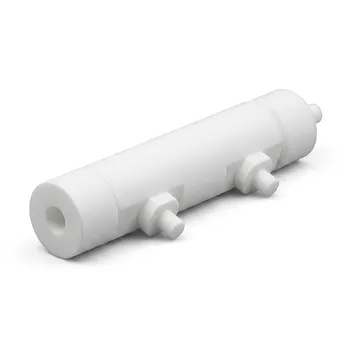
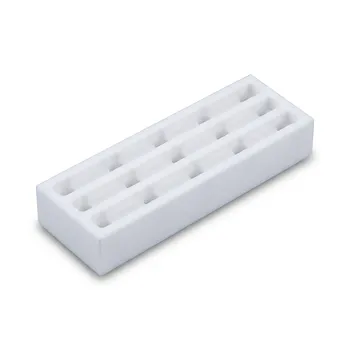
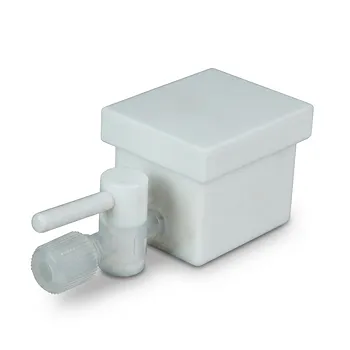
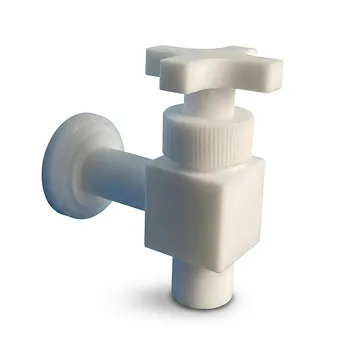
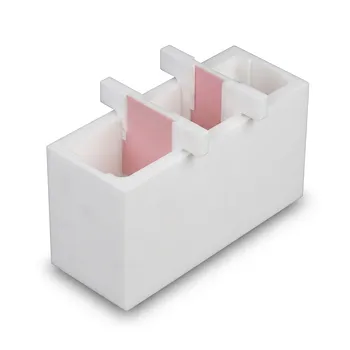
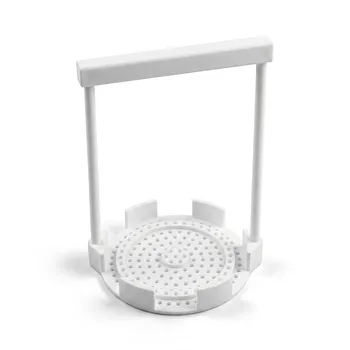
PTFE battery clamps are specialized electrode holders designed to provide secure, contamination-free electrical connections and precise positioning within electrochemical systems. They function as a bridge between the testing equipment and the active materials, ensuring that electrochemical measurements—such as cyclic voltammetry or impedance spectroscopy—are not compromised by external interference. By utilizing high-purity Polytetrafluoroethylene, these clamps offer a chemically inert and electrically isolated environment capable of withstanding aggressive electrolytes and extreme temperatures.
Core Takeaway: PTFE battery clamps serve as the critical interface in electrochemical research, combining extreme chemical resistance with high dielectric strength to ensure that test data reflects the intended chemistry rather than hardware interference.
Primary Functions in Electrochemical Systems
Secure Positioning and Electrical Contact
The most fundamental role of these clamps is to provide a stable mechanical grip on electrodes while maintaining a low-resistance electrical path. They are essential in three-electrode cells and H-cells, where precise placement of the working, reference, and auxiliary electrodes is required for reproducible results.
Signal Integrity and Electrical Isolation
PTFE possesses a dielectric strength of 60 MV/m and a volume resistivity exceeding 10^18 Ω·cm. This allows the clamp body to effectively isolate stray currents and prevent surface leakage or short-circuiting. By acting as a high-performance insulator, the clamp ensures that the measurement system captures only the intended conductive contact.
Environmental Protection of Conductors
In systems like fuel cell test stands or redox-flow batteries, these clamps protect internal metal conductors from oxidative attack and corrosion. The PTFE housing acts as a barrier, shielding sensitive internal components from aggressive battery chemistries and ensuring the longevity of the testing apparatus.
Thermal Stability for Extreme Testing
These devices are engineered to maintain mechanical integrity from cryogenic levels (-200 °C) up to 260 °C. This thermal range is vital for conducting thermal runaway studies or high-temperature battery testing without risking clamp deformation or material outgassing.
Material Compositions and Construction
High-Purity PTFE Body
The primary structural material is Polytetrafluoroethylene (PTFE), chosen for its near-total chemical inertness and hydrophobicity. This material prevents the clamp from reacting with electrolytes or contaminating the sensing environment, which is critical for high-purity materials testing.
Internal Conductive Pathways
The internal wiring or rods are typically constructed from high-purity metals such as gold-plated copper or platinum. Gold plating is specifically utilized to ensure low contact resistance while providing a layer of protection that prevents the conductor from alloying with the battery chemistry under test.
Structural Reinforcements
Because PTFE is a relatively soft polymer, many clamps integrate PEEK (Polyether ether ketone) or metal cores. These cores enhance the mechanical stability and clamping force of the device, preventing "creep" or deformation over time while the outer PTFE layer maintains chemical isolation.
Understanding the Trade-offs
Mechanical Limitations and "Cold Flow"
While PTFE is chemically superior, it is susceptible to mechanical deformation under constant pressure, a phenomenon known as cold flow. This can lead to a loosening of the electrode grip over time if the clamp is not reinforced with a more rigid material like PEEK.
Cost vs. Performance
The use of high-purity materials like gold and platinum significantly increases the unit cost compared to standard laboratory clips. Researchers must weigh the need for high-precision, low-noise data against the budget constraints of the project.
Thermal Limits of Conductors
Although the PTFE body can survive near its melting point of 327 °C, the plating on internal conductors may degrade or diffuse at these extremes. Continuous operation at the very top of the thermal range can eventually lead to increased contact resistance or contamination.
How to Apply This to Your Project
When selecting or implementing PTFE battery clamps, consider the specific requirements of your electrochemical cell to ensure data accuracy.
- If your primary focus is sensitive impedance measurements (EIS): Prioritize clamps with gold-plated internal conductors to ensure the lowest possible contact resistance and minimize signal noise.
- If your primary focus is high-temperature battery cycling: Ensure the clamp is reinforced with a PEEK or metal core to prevent mechanical loosening due to PTFE's thermal expansion and cold flow.
- If your primary focus is testing in highly acidic or corrosive electrolytes: Verify that the PTFE jacket completely seals the internal metal path to prevent corrosion-induced artifacts in your data.
Properly utilized, PTFE battery clamps provide the structural and electrical foundation necessary for high-fidelity electrochemical research and materials validation.
Summary Table:
| Feature | Specification/Material | Key Benefit |
|---|---|---|
| Body Material | High-Purity PTFE | Near-total chemical inertness & high dielectric strength |
| Conductors | Gold-plated Copper / Platinum | Low contact resistance & protection against oxidation |
| Temperature Range | -200 °C to +260 °C | Reliable performance in cryogenic and high-heat testing |
| Reinforcements | PEEK or Metal Cores | Prevents mechanical "cold flow" and ensures stable grip |
| Function | Electrical Isolation | Eliminates stray currents and surface leakage |
Elevate Your Electrochemical Research with KINTEK Precision
Ensure the highest data fidelity with high-performance fluoropolymer solutions from KINTEK. Whether you require everyday basic labware (beakers, crucibles, reagent bottles) or specialized components like PTFE battery clamps and electrochemical cells, we provide the chemical inertness and thermal stability your research demands.
From high-purity trace analysis instruments and fluid transfer components (tubing, valves) to advanced battery testing fixtures and custom hydrothermal synthesis liners, our end-to-end custom CNC fabrication ensures we can deliver everything from bespoke non-standard parts to high-volume orders.
Ready to optimize your laboratory setup? Contact our experts today to discuss your specific requirements and discover the KINTEK advantage.
Related Products
- Corrosion Resistant PTFE Coin Cell Battery Testing Clamps and Acid Proof Custom Fluoropolymer Battery Fixtures
- Acid Resistant PTFE Button Cell Battery Test Fixture Customizable Machining High Purity Electrochemical Testing Clamp
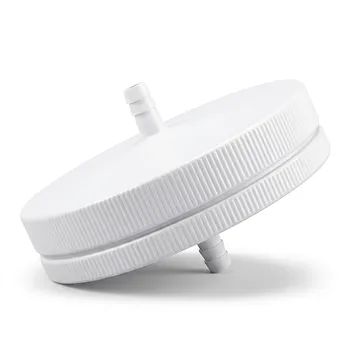
- PTFE Filter Membrane Holder for Hydrogen Chloride and Water Filtration 90mm Environmental Sampling Clamp Customizable
- Custom PTFE Sealing Caps and Corrosion Resistant Low Background Teflon Adapters
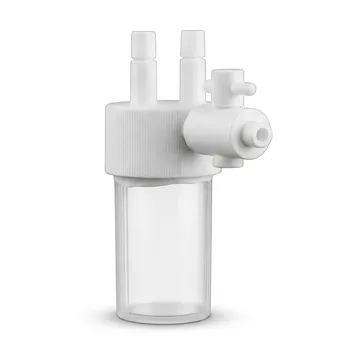
- Custom PTFE Reaction Lid with Integrated Valve and Fitting Corrosion Resistant No Leaching PFA FEP Bottle Cap System
People Also Ask
- What is the thermal operating range for PTFE battery clamps in electrochemical research? Stability from -200°C to +260°C
- How do coin cell testing fixtures evaluate ZIF-derived LCO cycling stability? Ensure Battery Research Precision
- What are the electrical insulation and signal integrity advantages of using PTFE battery clamps? Ensure Data Accuracy
- How does the chemical inertness of PTFE benefit laboratory-scale battery testing? Ensure high-purity research results.
- In what ways do PTFE battery testing fixtures enhance laboratory throughput and reliability? Maximize Research Efficiency