The primary advantage of a three-electrode system is its ability to isolate and precisely control the electrical potential of the working electrode. By introducing an independent reference electrode, the system decouples the measurement of potential from the flow of electrical current. This ensures that the data collected—such as specific capacitance, redox kinetics, and cycling stability—reflects the intrinsic properties of the material under test rather than the interference or limitations of the counter electrode.
A three-electrode configuration provides a stable potential benchmark that isolates the working electrode’s behavior. By separating the current-carrying circuit from the potential-sensing circuit, it eliminates errors caused by electrode polarization and resistance, allowing for high-precision material analysis.
The Mechanics of Isolation
The fundamental difference between these systems lies in how they manage electrical measurements. In a two-electrode setup, you measure the total potential difference between two points, which includes the contributions of both electrodes and the electrolyte.
The Role of the Reference Electrode
A three-electrode system adds a Reference Electrode (RE), such as Ag/AgCl or a Saturated Calomel Electrode (SCE), which maintains a constant, known potential. This electrode acts as a stable "yardstick" against which the Working Electrode (WE) is measured. Because the RE draws virtually no current, its potential remains steady throughout the experiment.
Decoupling Current and Potential
In this configuration, the electrical current flows between the Working Electrode and the Counter Electrode (CE). Because the potential is measured between the WE and the RE, the system effectively separates the "work" (current flow) from the "measurement" (potential control). This prevents the current flow from fluctuating the reference point.
Precision in Material Characterization
When testing new materials, researchers must distinguish between the material's actual performance and "noise" generated by the testing environment. The three-electrode system is designed specifically to filter out this noise.
Eliminating Counter Electrode Polarization
In a two-electrode system, the counter electrode can become polarized, meaning its potential shifts as current flows. This shift is "added" to the measurement of the working electrode, leading to inaccurate data. The three-electrode setup ensures that changes in the counter electrode do not affect the perceived potential of the material being studied.
Minimizing iR Drop and Resistance Errors
Resistance within the electrolyte solution can cause a voltage drop known as iR drop. High-precision electrochemical workstations use the three-electrode configuration to compensate for this solution resistance. This ensures that the resulting curves, such as Cyclic Voltammetry (CV), accurately reflect the true redox kinetics occurring at the electrode interface.
Obtaining Intrinsic Material Parameters
By isolating the working electrode, researchers can determine the intrinsic parameters of a material, such as its specific capacitance and thermodynamic redox potentials. This is essential for fundamental research where the goal is to understand how a specific chemical structure or morphology influences electrochemical performance.
Understanding the Trade-offs
While superior for fundamental analysis, the three-electrode system is not always the ideal choice for every stage of development. It is a tool for characterization, not necessarily for final device validation.
Complexity and Environment
A three-electrode setup is physically more complex, requiring more space and specific cell geometries. It is typically used in half-cell configurations, which may not perfectly replicate the physical constraints of a finished commercial battery or supercapacitor.
The Distance from Real-World Application
A two-electrode system is often more representative of a final device, such as a commercial battery. While the three-electrode system is better for understanding the "why" of material behavior, the two-electrode system is necessary to understand how the material performs when paired with a specific anode or cathode in a practical application.
Making the Right Choice for Your Goal
Choosing between these systems depends on whether you are investigating a material's fundamental properties or its practical utility in a device.
- If your primary focus is fundamental research and kinetic studies: Use a three-electrode system to isolate the working electrode and obtain precise thermodynamic and mechanistic data.
- If your primary focus is determining specific capacitance or redox potentials: The three-electrode configuration is essential to eliminate interference from the counter electrode and ensure data accuracy.
- If your primary focus is evaluating final device performance: Use a two-electrode system to simulate the real-world conditions and total energy density of a completed electrochemical cell.
The three-electrode system remains the gold standard for material scientists because it provides the clarity needed to innovate at the molecular level.
Summary Table:
| Feature | Two-Electrode System | Three-Electrode System |
|---|---|---|
| Electrodes | Working & Counter (combined) | Working, Counter, & Reference |
| Potential Control | Measures total cell potential | Isolates and controls Working Electrode potential |
| Measurement Accuracy | Affected by counter electrode polarization | Eliminates counter electrode interference |
| Main Advantage | Simulates real-world device performance | Precise isolation of intrinsic material properties |
| Best Use Case | Final battery/capacitor testing | Fundamental research and kinetic studies |
Elevate Your Electrochemical Research with KINTEK
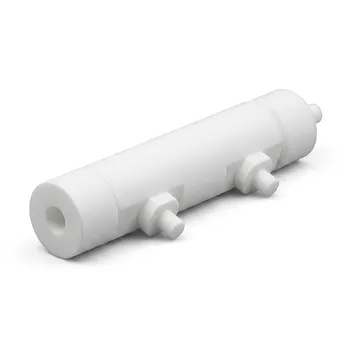
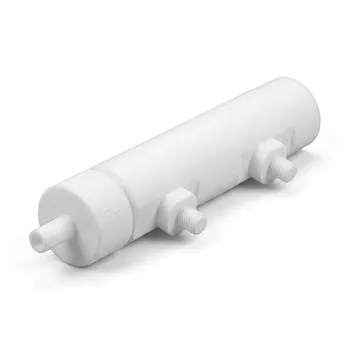
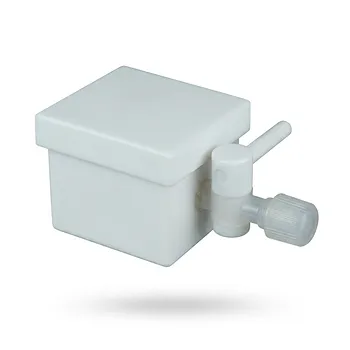
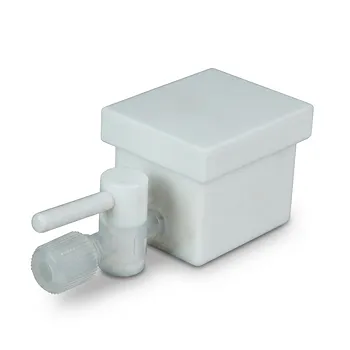
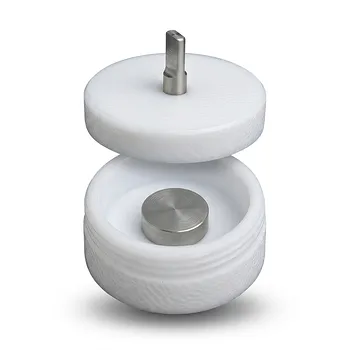
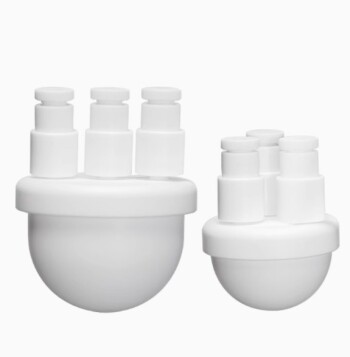
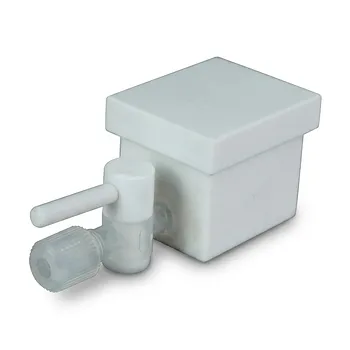
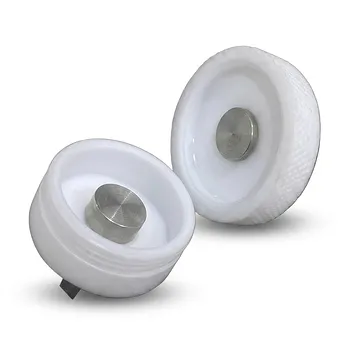
Precision in material testing starts with the right equipment. KINTEK manufactures a vast array of high-performance laboratory supplies crafted exclusively from PTFE and PFA to ensure zero contamination and chemical resistance. Whether you need standard labware like beakers and crucibles or advanced standard and custom electrochemical cells and battery testing fixtures, our end-to-end custom CNC fabrication delivers the exact specifications your research demands.
From high-purity trace analysis instruments to comprehensive fluid transfer components (tubing, valves, and fittings) and sample prep tools, we provide everything from complex non-standard machined parts to high-volume orders.
Ready to optimize your lab setup? Contact us today to discuss your bespoke fluoropolymer requirements!
References
- Zahra Shoghi Doroudkhani, M. Mahinzad Ghaziani. Optical and electrochemical performance of electrospun NiO–Mn3O4 nanocomposites for energy storage applications. DOI: 10.1038/s41598-025-96008-4
This article is also based on technical information from Kintek Knowledge Base .
Related Products
- Corrosion Resistant PTFE Electrochemical Cell for New Energy Research Inert Insulating Customizable Lab Reaction Vessel
- Custom PTFE Electrolytic Cell Corrosion Resistant Low Background Reaction Vessel with Inlet Outlet Ports
- Square PTFE Electrochemical Cell for Silicon Wafer Processing and Hydrofluoric Acid Resistance in Semiconductor and New Energy Research
- White PTFE Electrolytic Cell with Movable Slider and Insulated Lid for Fluorine Corrosion Resistance
- Custom PTFE Reaction Box Opaque White Square Electrochemical Cell Tank
People Also Ask
- How do custom PTFE electrochemical cells improve the accuracy of stability testing for alkaline catalysts compared to glass cells?
- How does the hydrophobicity of PTFE benefit electrochemical measurements? Enhance Stability and Precision in Your Lab
- What makes PTFE an ideal construction material for custom electrochemical cells and electronic analytical instrumentation housings? Discover superior chemical resistance and electrical insulation
- Why must seawater electrolysis test cells have high corrosion resistance? Protect catalyst stability & data accuracy.
- What are the key steps for structural integrity in molded PTFE lab reaction vessels? Master fine powder processing.