The requirement for high chemical corrosion resistance in seawater electrolysis testing is driven by the extreme aggressiveness of chloride ions and alkaline electrolytes.
For catalysts like CuCo2S4@Co–V–O–F, simulated seawater (often a mix of KOH and NaCl) creates a volatile environment that can rapidly degrade standard laboratory materials. Using chemically inert components, such as those made from polytetrafluoroethylene (PTFE), is mandatory to prevent the leaching of impurity ions that would otherwise contaminate the catalyst, skew Faraday efficiency results, and invalidate long-term stability data.
Core Takeaway: Corrosion-resistant testing environments are essential to isolate the catalyst's true performance from experimental artifacts caused by cell degradation. Without these materials, leached ions and structural failures would make it impossible to accurately measure the lifespan and selectivity of seawater electrolysis catalysts.
The Corrosive Nature of the Seawater Environment
The Synergistic Threat of Chloride and Alkali
Simulated seawater electrolysis typically utilizes a high-concentration alkaline electrolyte, such as 1.0 M KOH, combined with 0.5 M NaCl.
This combination is exceptionally corrosive to standard metals and even laboratory glassware, which can be etched or dissolved over extended periods.
The chloride ions (Cl⁻) specifically target metal components, promoting localized corrosion and pitting that can lead to catastrophic hardware failure during testing.
Vulnerability During Long-Term Stability Tests
Evaluating the stability of a catalyst like CuCo2S4@Co–V–O–F requires long-term chronoamperometry data, often spanning hundreds or even thousands of hours.
Materials that seem stable in short-term bursts often fail under the sustained chemical stress of industrial-grade durability assessments.
High-performance fluoropolymers like PTFE or PFA are required to maintain structural integrity throughout these multi-week experiments.
Protecting Data Integrity and Catalyst Performance
Preventing Impurity Ion Contamination
When test cell components corrode, they release metallic impurity ions into the electrolyte.
These impurities can migrate to the catalyst surface, blocking active sites or creating unintended "synergistic" effects that artificially inflate the catalyst's perceived activity.
Using corrosion-resistant PTFE ensures that the observed electrochemical behavior belongs solely to the CuCo2S4@Co–V–O–F catalyst and not to leached material from the cell body.
Safeguarding Faraday Efficiency and Selectivity
In seawater electrolysis, the catalyst must navigate the competition between the Oxygen Evolution Reaction (OER) and the corrosive Chlorine Oxidation Reaction (ClOR).
If the cell environment is compromised, the introduction of secondary pollutants can alter the reaction kinetics and produce inaccurate Faraday efficiency measurements.
A stable, inert environment is the only way to confirm that the catalyst is successfully producing oxygen rather than being consumed by side reactions or contaminated by the test setup.
Ensuring Structural and Positional Stability
Maintaining Fixed Electrode Geometry
Precision-machined cells ensure that the spatial positions of the working, reference, and counter electrodes remain constant.
Corrosion of electrode holders or seals can cause electrodes to shift, leading to fluctuations in the measured potential and inconsistent data.
Stable materials ensure that overpotential data and lifetime decay curves accurately reflect the catalyst’s intrinsic durability rather than a change in the cell’s internal resistance.
Preventing Electrolyte Concentration Fluctuations
Standard seals and tubing can degrade in high-alkali environments, leading to leaks or evaporation.
This degradation causes fluctuations in the electrolyte concentration, which directly impacts the reproducibility of OER polarization curves.
Utilizing fluoropolymer fluid transfer parts ensures a closed, stable system that protects the electrolyte composition for the duration of the test.
Understanding the Trade-offs and Pitfalls
Material Limitations of Fluoropolymers
While PTFE and PFA offer unmatched chemical resistance, they are softer than metals and can be more difficult to machine to extremely tight tolerances.
Researchers must ensure that threads and seals are handled carefully to avoid stripping, which could lead to accidental leaks despite the material's chemical inertness.
The Risk of "Secondary Pollution"
A common mistake is using corrosion-resistant cell bodies but failing to upgrade the electrode holders or tubing.
Even a small amount of leached metal from a minor component can "poison" the catalyst surface, leading to data that suggests a catalyst is failing when it is actually just being contaminated.
How to Apply This to Your Project
If your primary focus is long-term durability (150+ hours): Prioritize precision-machined PTFE or PFA electrochemical cells to prevent cell-body erosion and ensure the spatial stability of your electrodes.
If your primary focus is Faraday efficiency accuracy: Ensure every component in contact with the electrolyte—including seals, tubing, and holders—is made of high-purity fluoropolymers to prevent impurity leaching.
If your primary focus is industrial-grade scaling (6 M KOH at 80 °C): Utilize high-performance alkali-resistant materials specifically rated for high-temperature caustic environments to prevent material dissolution.
Investing in chemically inert testing infrastructure is the only way to ensure that your catalyst's performance data is a reflection of material science rather than experimental error.
Summary Table:
| Feature | Impact on Electrolysis Testing | Recommended Solution |
|---|---|---|
| Corrosive Agents | Cl⁻ and KOH attack standard metal/glass | High-purity PTFE/PFA components |
| Data Integrity | Leached metal ions skew Faraday efficiency | Chemically inert cell bodies |
| Structural Stability | Material degradation shifts electrode geometry | Precision-machined fluoropolymer cells |
| System Consistency | Leakage and evaporation alter concentration | Reliable fluoropolymer seals & tubing |
Secure Your Research Integrity with KINTEK
Don't let experimental artifacts undermine your catalyst's potential. KINTEK provides high-performance fluoropolymer solutions specifically designed for the harshest electrochemical environments. Whether you are conducting long-term stability tests on CuCo2S4-based catalysts or measuring Faraday efficiency in aggressive alkaline-chloride electrolytes, our chemically inert equipment prevents impurity leaching and hardware failure.
From everyday basic labware (beakers, measuring cylinders, crucibles, reagent/wash bottles) and fluid transfer components (tubing, fittings, valves) to advanced reaction apparatus like standard or custom electrochemical cells, battery testing fixtures, and microwave digestion vessels, KINTEK manufactures virtually all imaginable laboratory supplies crafted from PTFE and PFA.
Backed by end-to-end custom CNC fabrication, we are equipped to deliver everything from complex non-standard machined parts to high-volume orders, maintaining an absolute focus on high-performance materials. Ensure your stability data is irreproachable—contact us today!
References
- Boyao Zhang, Fu‐Fa Wu. Rapidly reconstructed CuCo<sub>2</sub>S<sub>4</sub>@Co–V–O–F nanocatalysts for efficient and stable overall water splitting in alkaline and seawater electrolysis. DOI: 10.1039/d5ra03052h
This article is also based on technical information from Kintek Knowledge Base .
Related Products
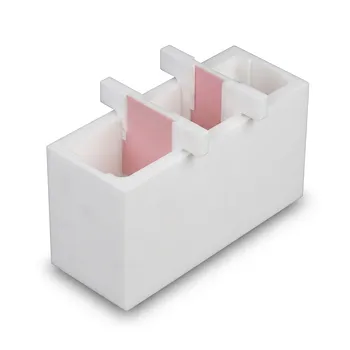
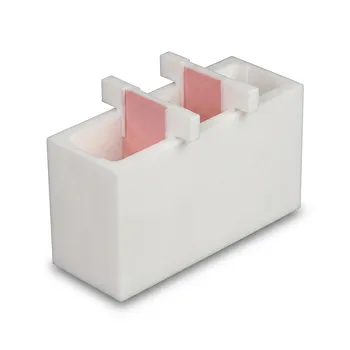
- Corrosion Resistant PTFE Electrochemical Cell for New Energy Research Inert Insulating Customizable Lab Reaction Vessel
- Square PTFE Electrochemical Cell for Silicon Wafer Processing and Hydrofluoric Acid Resistance in Semiconductor and New Energy Research
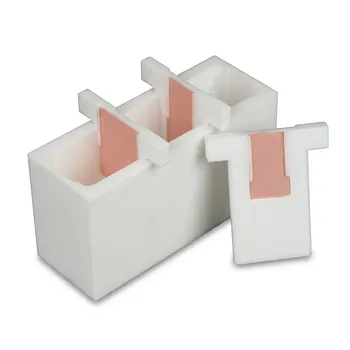
- White PTFE Electrolytic Cell with Movable Slider and Insulated Lid for Fluorine Corrosion Resistance
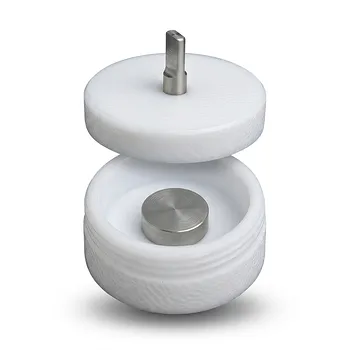
- Acid Resistant PTFE Button Cell Battery Test Fixture Customizable Machining High Purity Electrochemical Testing Clamp
- Custom PTFE Electrolytic Cell Corrosion Resistant Low Background Reaction Vessel with Inlet Outlet Ports
People Also Ask
- How do custom PTFE electrochemical cells improve the accuracy of stability testing for alkaline catalysts compared to glass cells?
- How does the hydrophobicity of PTFE benefit electrochemical measurements? Enhance Stability and Precision in Your Lab
- What makes PTFE an ideal construction material for custom electrochemical cells and electronic analytical instrumentation housings? Discover superior chemical resistance and electrical insulation
- What are the key steps for structural integrity in molded PTFE lab reaction vessels? Master fine powder processing.
- How do hydrogen-containing and halogenated solvents differ in their ability to cause swelling in PTFE laboratory vessels? Key Differences Explained