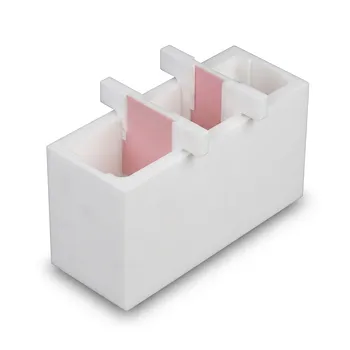
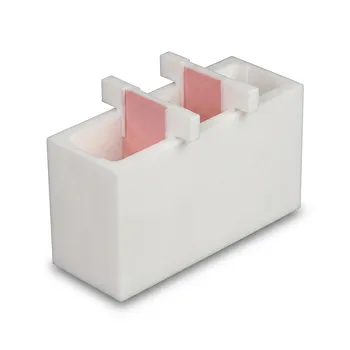
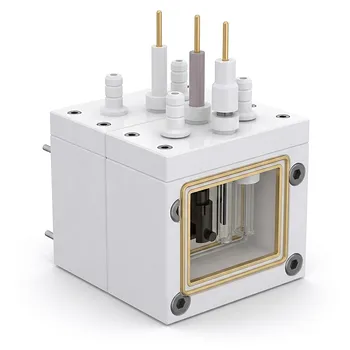
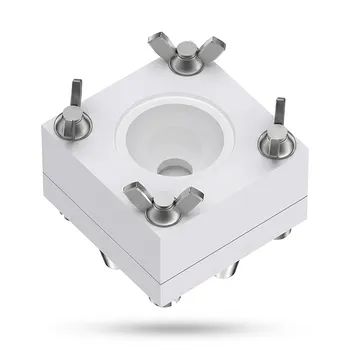
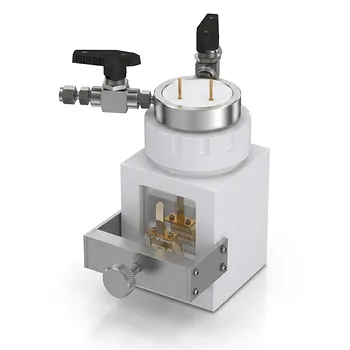
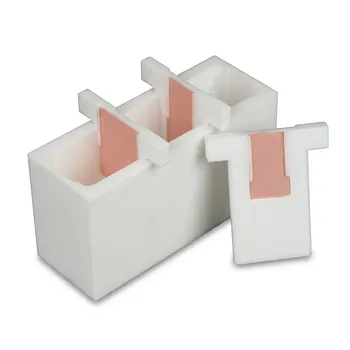
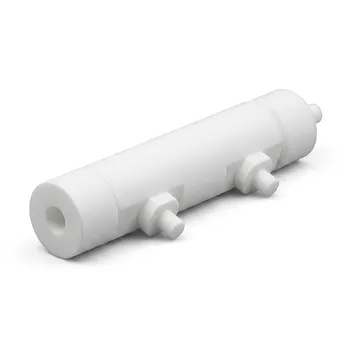
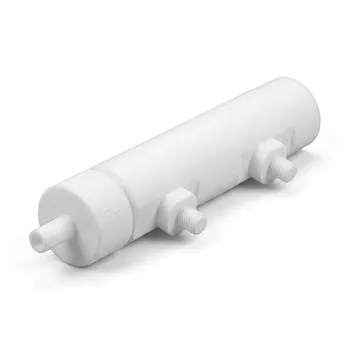
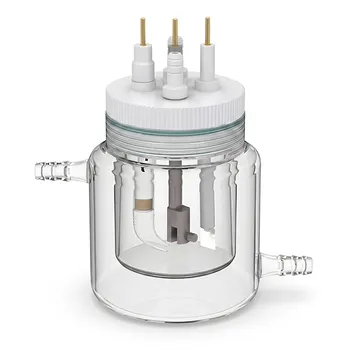
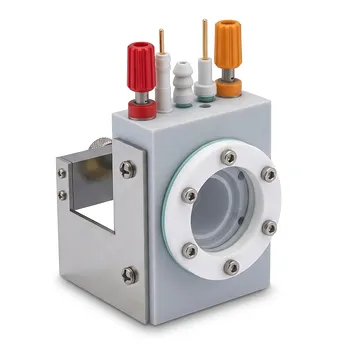
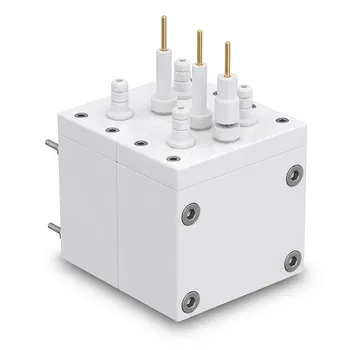
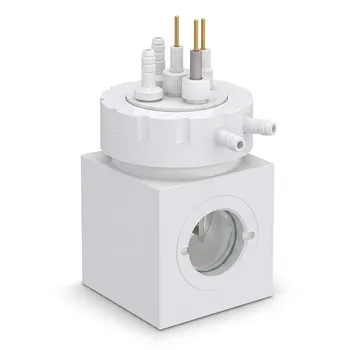
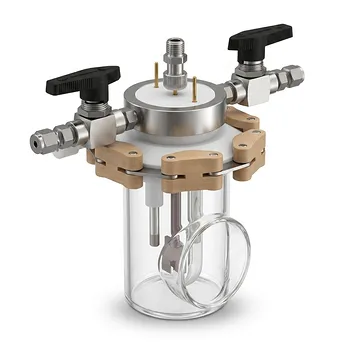
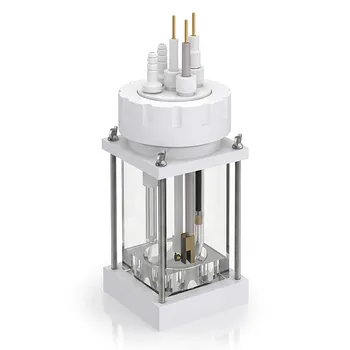
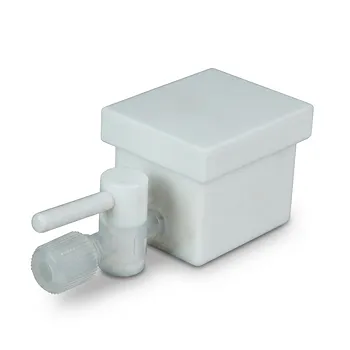
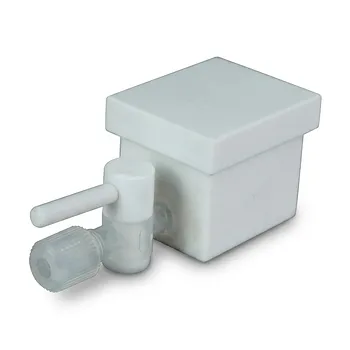
PTFE is ideal for custom electrochemical cells and electronic analytical instrumentation housings because it combines exceptional chemical inertness with excellent electrical insulation. Its high surface and volume resistivity, low dielectric constant of approximately 2.1, and very low dissipation factor below 0.0003 help prevent current leakage, capacitive loading, and stray electrical interference. These properties support stable, accurate measurements while the material withstands corrosive electrolytes and broad temperature variations.
PTFE provides an electrically isolated, chemically resistant, and low-contamination structural foundation for sensitive electrochemical and analytical systems. It does not remove polarization at the electrodes themselves, but it prevents the cell body or housing from introducing additional leakage paths and measurement artifacts.
Why PTFE Performs Well in Electrochemical Cells
It Resists Aggressive Chemical Media
PTFE withstands most strong acids, bases, oxidizers, and corrosive electrolytes, including fluoride-containing solutions and hydrofluoric acid under many laboratory conditions. This makes it substantially more reliable than glass in fluoride-rich environments, where glass can be rapidly etched.
PTFE is also suitable for alkaline electrolysis systems exposed to concentrated potassium hydroxide and reaction products from processes such as carbon dioxide reduction. Its chemical stability helps preserve the geometry and function of the cell over extended operation.
It Minimizes Contamination
High-purity PTFE has very low extractables and does not readily leach substances into the electrolyte or analytical sample. That is important in trace analysis, where small amounts of contamination can become a significant source of error.
Its non-stick surface also reduces residue buildup and makes cleaning easier. The material's low surface reactivity helps prevent the cell from becoming an unintended participant in the experiment.
It Maintains Structural Integrity Across Temperature Changes
PTFE remains useful across a broad operating temperature range and retains its chemical resistance when conditions vary. This supports electrochemical systems that experience heating, thermal cycling, or localized temperature differences.
The material also resists corrosion and surface wear, allowing custom cell bodies, electrode holders, covers, seals, and electrolyte-level components to remain functional during repeated use.
How PTFE Improves Electrical Measurement Quality
High Volume and Surface Resistivity Prevent Leakage
PTFE's very high volume resistivity, reported for PTFE and related fluoropolymers as exceeding (10^{18}) ohm-cm, strongly limits current flow through the material. Its high surface resistance also reduces unwanted conduction along the housing or cell surface.
This prevents electrical current from bypassing the intended electrode path. The result is better isolation between electrodes, fluid compartments, sensors, and external instrumentation.
Low Dielectric Loss Reduces Signal Distortion
A dielectric constant near 2.1 indicates that PTFE has low electrical polarizability compared with many other engineering materials. Its dissipation factor below 0.0003 also indicates very low dielectric energy loss.
These characteristics are valuable in high-impedance measurements and electronic analytical instrumentation. The housing is less likely to add meaningful capacitive or dielectric effects that could distort weak signals.
High Dielectric Strength Supports High-Potential Systems
PTFE has high dielectric strength, commonly reported for PTFE and related fluoropolymers at approximately 19.7 kV/mm under specified test conditions. This helps the material withstand high electric fields without electrical breakdown.
The exact performance depends on thickness, geometry, defects, temperature, and test conditions. Nevertheless, PTFE provides a strong insulating margin for electrode holders, separators, fluid-control components, and testing apparatus.
Why Custom Machining Matters
It Supports Complex Cell Geometries
PTFE can be precision CNC-machined into bespoke reaction vessels, cell covers, electrode holders, gas-separation skirts, electrolyte-level holders, tanks, and seals. This allows the material to serve as both the chemical barrier and the mechanical framework.
Custom geometry is especially useful when an experiment requires controlled electrode spacing, separated chambers, defined fluid paths, or integrated mounting features. The design can be adapted around the measurement rather than forcing the experiment into standard laboratory glassware.
It Enables Electrical and Physical Isolation
A custom-machined PTFE structure can separate electrode chambers from membranes, sensors, gas pathways, or measurement electronics. This reduces the chance that conductive electrolytes will create unintended electrical connections.
The same component can provide alignment, sealing, insulation, and chemical containment. Fewer interfaces can simplify assembly and reduce potential contamination or leakage points.
It Offers a Non-Contaminating Structural Framework
PTFE's combination of chemical inertness and low extractables makes it appropriate where the cell body must remain largely invisible to the chemistry. This is particularly important for trace analysis and experiments involving reactive or highly conductive samples.
The material helps ensure that observed signals primarily reflect the sample and electrode system, rather than reactions between the sample and its housing.
Why PTFE Suits Instrumentation Housings
It Protects Sensitive Electronics from Corrosive Environments
Analytical instruments may operate near acids, bases, salts, solvents, vapors, or conductive fluids. PTFE housings and insulating supports provide a chemically resistant barrier around sensitive components.
This is useful for electrode connectors, sensor mounts, high-purity fluid-control assemblies, and electronic testing equipment exposed to harsh laboratory conditions.
It Prevents Stray Current Paths
In a conductive or wet environment, even small leakage currents can affect high-impedance measurements. PTFE limits current flow through the housing and helps maintain isolation between electrical nodes.
The housing therefore supports signal integrity by controlling the electrical environment around the measurement. It cannot correct poor grounding, inadequate shielding, or electrode polarization, but it prevents the structural material from adding another source of error.
It Supports Repeatable Measurements
Stable insulation and chemical resistance help the instrument behave consistently over time. The housing is less likely to corrode, absorb chemicals, or change its electrical behavior because of routine exposure to aggressive media.
This improves repeatability and reduces maintenance caused by material degradation.
Understanding the Trade-offs
PTFE Is Mechanically Softer Than Many Engineering Plastics
PTFE has excellent chemical and electrical properties, but it is relatively soft and can deform under sustained pressure. Its tendency to creep or cold-flow must be considered when designing threaded joints, seals, bolted covers, and precision interfaces.
Machined parts may require appropriate support, compression control, or mechanical reinforcement. PEEK or another structural polymer may be preferable where high stiffness and dimensional stability dominate.
Thermal Expansion Can Affect Precision
PTFE has a comparatively high coefficient of thermal expansion. Changes in temperature can therefore affect electrode spacing, sealing pressure, and dimensional tolerances.
Designs requiring tight alignment should account for thermal expansion rather than assuming that room-temperature dimensions remain constant during operation.
It Is Not Suitable for Every Chemical or Mechanical Condition
PTFE resists most laboratory chemicals, but no material is universally immune under every combination of temperature, pressure, concentration, and exposure time. Extreme conditions, molten alkali metals, elemental fluorine, and certain high-temperature reactions require specific compatibility review.
The design should be checked against the actual electrolyte, temperature profile, pressure, cleaning process, and expected service life.
Its Low Surface Energy Can Complicate Bonding
PTFE's non-stick behavior is beneficial for cleaning and chemical resistance, but it makes adhesive bonding and permanent surface treatment difficult. Mechanical retention, compression seals, inserts, or specialized surface preparation may be needed.
This constraint should be addressed during the initial component design, especially for assemblies involving fluid containment or permanent sensor mounting.
PTFE May Not Be the Best Choice for Transparent Observation
PTFE is opaque, so it does not provide the visual access available with glass or transparent fluoropolymers. If direct observation of bubbles, interfaces, color changes, or fluid levels is essential, a hybrid design may be more appropriate.
A PTFE body can still be combined with compatible windows or separate transparent components where chemical and electrical requirements permit.
Making the Right Choice for Your Goal
PTFE is most valuable when the design must control chemistry and electrical interference at the same time.
- If your primary focus is measurement accuracy: Use PTFE for the cell body, electrode holders, and insulating supports to minimize leakage, stray conduction, and dielectric loading around sensitive signals.
- If your primary focus is corrosion resistance: Specify PTFE for components exposed to strong acids, bases, fluoride-containing solutions, and aggressive electrolytes, subject to application-specific compatibility review.
- If your primary focus is trace analysis: Use high-purity PTFE to reduce extractables, contamination, and unintended reactions between the housing and sample.
- If your primary focus is custom system integration: Use CNC-machined PTFE to combine electrode alignment, chamber separation, sealing, fluid management, and electrical isolation in one tailored structure.
- If your primary focus is mechanical rigidity or dimensional precision: Compare PTFE with PEEK or a reinforced design, and account explicitly for creep and thermal expansion.
For demanding electrochemical and analytical systems, PTFE earns its role by keeping the housing chemically quiet, electrically isolated, and adaptable to the exact measurement geometry.
Summary Table:
| Property | Value/Benefit |
|---|---|
| Chemical Resistance | Withstands acids, bases, oxidizers, fluoride solutions |
| Volume Resistivity | >10^18 ohm-cm prevents current leakage |
| Dielectric Constant | ~2.1, low polarizability |
| Dissipation Factor | <0.0003, low signal distortion |
| Dielectric Strength | ~19.7 kV/mm, high potential support |
| Temperature Range | Broad, stable in thermal cycling |
| Contamination | Low extractables, non-stick surface |
| Machinability | CNC-machined for complex geometries |
Optimize your analytical systems with custom PTFE components. KINTEK specializes in high-performance fluoropolymer lab supplies, from standard beakers and vessels to precision CNC-machined electrochemical cells. Our PTFE and PFA products provide unmatched chemical resistance and electrical insulation, ensuring accurate measurements and long-lasting performance. Whether you need custom parts or high-volume orders, we deliver excellence. Contact us today to discuss your project!
Related Products
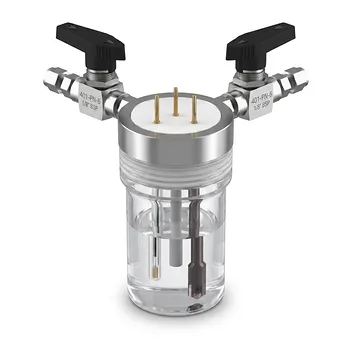
- Corrosion Resistant PTFE Electrochemical Cell for New Energy Research Inert Insulating Customizable Lab Reaction Vessel
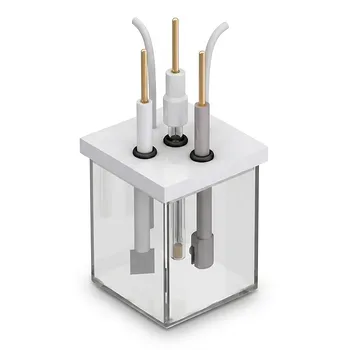
- Square PTFE Electrochemical Cell for Silicon Wafer Processing and Hydrofluoric Acid Resistance in Semiconductor and New Energy Research
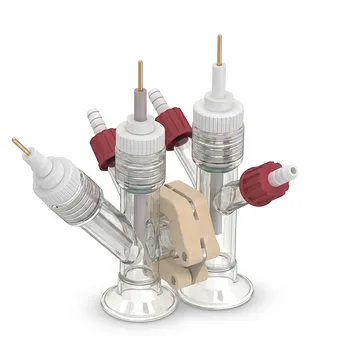
- All PTFE Exchangeable Membrane Electrochemical Cell Dual Chamber Three Electrode Photoelectrochemical Cell for Laboratory Trace Analysis
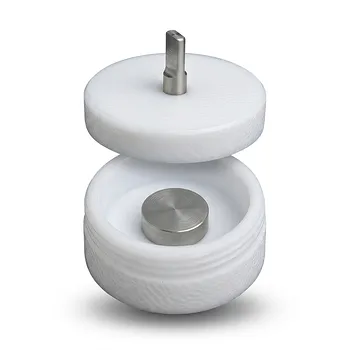
- PTFE Flat Plate Working Electrode Electrochemical Cell for Sheet Samples Corrosion Testing and SEM Sample Preparation
- Corrosion Resistant PTFE Photoelectrochemical Cell High Purity All PTFE Three Electrode Test Cell with Quartz Window
People Also Ask
- How do custom PTFE electrochemical cells improve the accuracy of stability testing for alkaline catalysts compared to glass cells?
- How does the hydrophobicity of PTFE benefit electrochemical measurements? Enhance Stability and Precision in Your Lab
- Why must seawater electrolysis test cells have high corrosion resistance? Protect catalyst stability & data accuracy.
- What are the key steps for structural integrity in molded PTFE lab reaction vessels? Master fine powder processing.
- How do hydrogen-containing and halogenated solvents differ in their ability to cause swelling in PTFE laboratory vessels? Key Differences Explained