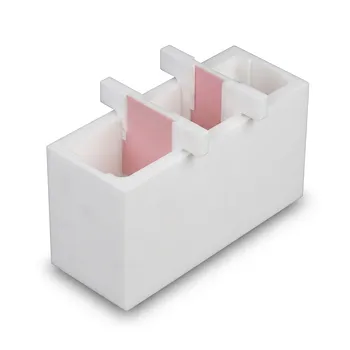
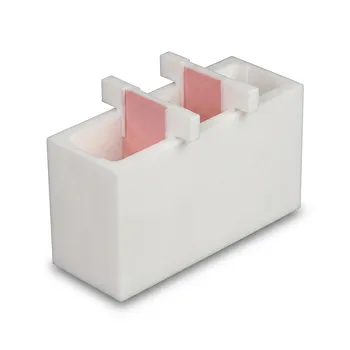
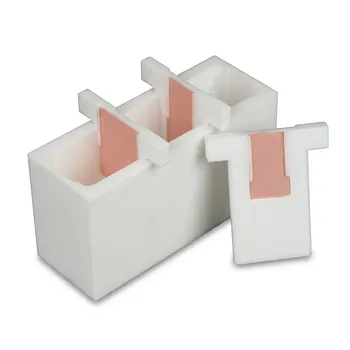
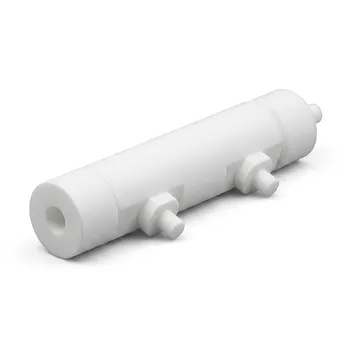
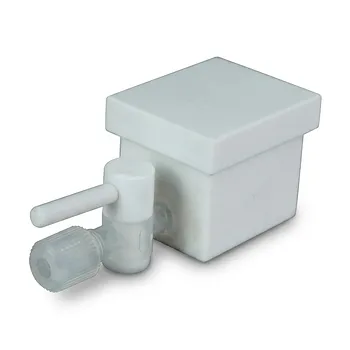
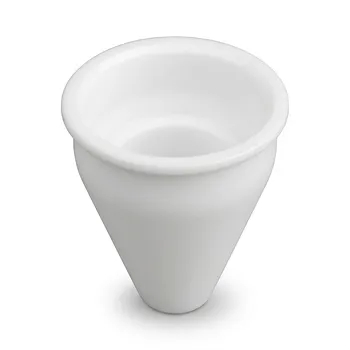
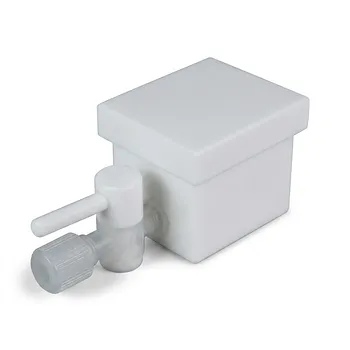
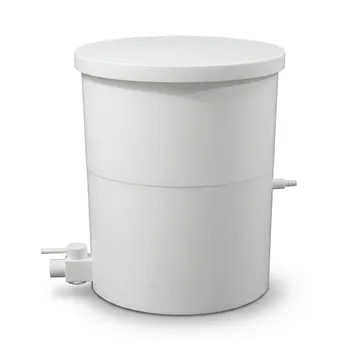
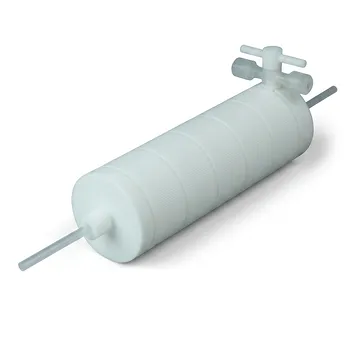
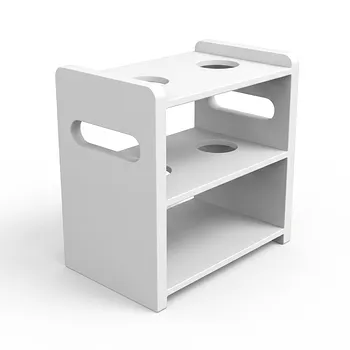
Custom PTFE electrochemical cells provide superior accuracy by eliminating chemical contamination and maintaining structural precision. While glass cells slowly dissolve in alkaline environments, releasing silicate impurities that poison catalyst surfaces, PTFE remains chemically inert. This ensures that the degradation observed during long-term stability testing is a result of the catalyst's inherent properties rather than external environmental interference.
Core Takeaway: The transition from glass to custom PTFE cells is essential for alkaline stability testing because it prevents silicate-induced catalyst poisoning and uses precision CNC machining to ensure consistent electrode geometry, leading to high-fidelity electrochemical data.
Eliminating Chemical Contamination in Alkaline Media
The Danger of Silicate Leaching
Glass cells are susceptible to slow dissolution when exposed to strong basic environments. This process releases silicates into the electrolyte, which can adsorb onto the catalyst surface and artificially degrade its activity.
Preserving Electrolyte Purity
Custom PTFE (Polytetrafluoroethylene) is highly resistant to strong alkaline corrosion and hydrofluoric acid. By using an inert material, researchers ensure the electrolyte remains pure during long-term stability tests (e.g., 100+ hours), providing a truly authentic measurement of catalyst performance.
Avoiding Side Reactions
PTFE possesses a wide electrochemical window and superior electrical insulation. This prevents the cell body itself from participating in redox reactions during cyclic voltammetry or charge-discharge testing, which would otherwise skew the results.
Precision Engineering and Structural Stability
Consistent Electrode Geometry
Customized PTFE cells are manufactured using high-precision CNC machining. This allows for the exact placement of mounting holes, ensuring that the spacing between the working, counter, and reference electrodes remains constant throughout the experiment.
Preventing Electrolyte Leakage
The physical toughness and "sealability" of PTFE allow for tight-fitting components that prevent electrolyte leakage. This is critical for maintaining a constant reaction volume and preventing the electrolyte concentration from changing due to evaporation.
Uniform Current Distribution
Precise control over the internal geometry of the cell ensures uniform current distribution. Without this structural stability, fluctuations in electrode positioning can lead to inconsistent data and unreliable impedance spectroscopy results.
Enhancing Signal Integrity and Reliability
Minimizing Background Noise
The excellent electrical insulation properties of PTFE effectively isolate the electrochemical system from external signal interference. This leads to a reduction in background current, which is vital when measuring weak signals or investigating sensitive electrocatalytic mechanisms.
Long-Term Operational Durability
Unlike fragile glass, PTFE is physically robust and does not deform under standard laboratory conditions. Its ability to withstand long-term immersion in various electrolytes without structural degradation makes it the ideal material for rigorous battery and catalyst research.
Understanding the Trade-offs
Material Opacity and Visibility
The primary disadvantage of PTFE compared to glass is its opacity. Researchers cannot visually monitor the reaction for bubble formation or electrode changes in real-time, which may necessitate secondary sensors or specific design windows.
Design Complexity and Cost
Custom CNC-machined cells require specialized fabrication, making them more expensive and time-consuming to produce than standard off-the-shelf glass containers. However, this initial investment is often offset by the increased reliability and reproducibility of the resulting data.
How to Apply This to Your Project
When choosing between glass and custom PTFE for your electrochemical setup, consider the specific requirements of your testing protocol and the pH of your environment.
- If your primary focus is long-term alkaline stability (pH > 10): Utilize a custom PTFE cell to prevent silicate contamination and ensure the electrolyte remains chemically pure over hundreds of hours.
- If your primary focus is high-precision impedance or CV data: Invest in a CNC-machined PTFE structure to guarantee fixed electrode spacing and eliminate background interference currents.
- If your primary focus is visual monitoring of gas evolution: Stick with high-quality glass or consider a "hybrid" cell design that incorporates a small quartz window into a PTFE body.
By prioritizing chemical inertness and structural precision, you ensure that your stability data reflects the true potential of your catalyst.
Summary Table:
| Feature | Glass Electrochemical Cells | Custom PTFE Electrochemical Cells |
|---|---|---|
| Chemical Stability | Susceptible to alkaline corrosion | Highly inert to strong bases and HF |
| Contamination | Leaches silicates (catalyst poisoning) | Zero leaching; preserves electrolyte purity |
| Structural Precision | Standard shapes; limited precision | High-precision CNC-machined geometry |
| Electrical Insulation | Moderate insulation | Superior; minimizes background noise |
| Durability | Fragile and prone to breakage | Physically robust; no structural degradation |
| Monitoring | Transparent for visual observation | Opaque; requires secondary sensors |
Elevate Your Stability Testing with KINTEK Precision Engineering
Don't let silicate contamination compromise your research. KINTEK specializes in high-performance fluoropolymer solutions, offering an exhaustive range of laboratory supplies crafted from PTFE and PFA.
From high-purity trace analysis instruments and cleaning tanks to advanced reaction apparatus—including custom electrochemical cells, battery testing fixtures, and hydrothermal synthesis liners—our end-to-end custom CNC fabrication ensures your setup meets exact technical specifications. Whether you need complex non-standard machined parts or high-volume orders for everyday labware like beakers, tubing, and fittings, we deliver the reliability your data demands.
Ready to upgrade your lab? Contact us today to discuss your custom PTFE requirements and discover how our absolute focus on high-performance materials can enhance your experimental accuracy.
References
- Álvaro Seijas‐Da Silva, Gonzalo Abellán. Scalable synthesis of NiFe-layered double hydroxide for efficient anion exchange membrane electrolysis. DOI: 10.1038/s41467-025-61356-2
This article is also based on technical information from Kintek Knowledge Base .
Related Products
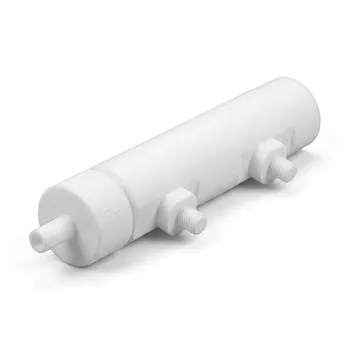
- Corrosion Resistant PTFE Electrochemical Cell for New Energy Research Inert Insulating Customizable Lab Reaction Vessel
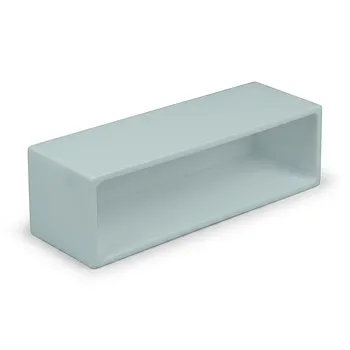
- Square PTFE Electrochemical Cell for Silicon Wafer Processing and Hydrofluoric Acid Resistance in Semiconductor and New Energy Research
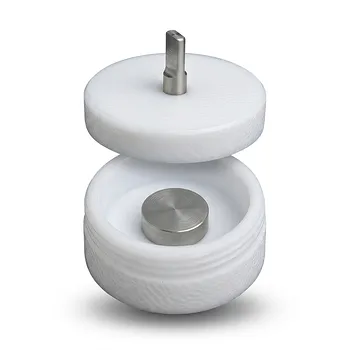
- White PTFE Electrolytic Cell with Movable Slider and Insulated Lid for Fluorine Corrosion Resistance
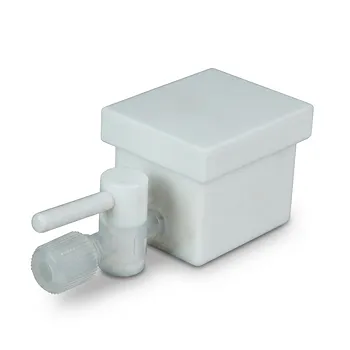
- Custom PTFE Electrolytic Cell Corrosion Resistant Low Background Reaction Vessel with Inlet Outlet Ports
- High Purity Custom PTFE Reaction Cell Electrolytic Tank for Semiconductor and Polysilicon Industrial Applications
People Also Ask
- How does the hydrophobicity of PTFE benefit electrochemical measurements? Enhance Stability and Precision in Your Lab
- What makes PTFE an ideal construction material for custom electrochemical cells and electronic analytical instrumentation housings? Discover superior chemical resistance and electrical insulation
- Why must seawater electrolysis test cells have high corrosion resistance? Protect catalyst stability & data accuracy.
- What are the key steps for structural integrity in molded PTFE lab reaction vessels? Master fine powder processing.
- How do hydrogen-containing and halogenated solvents differ in their ability to cause swelling in PTFE laboratory vessels? Key Differences Explained