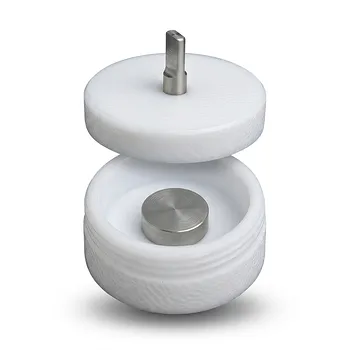
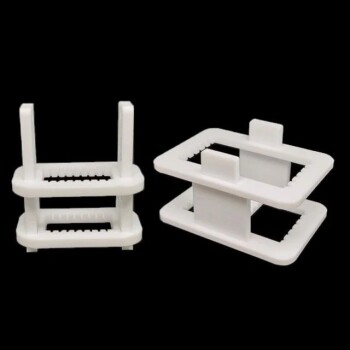
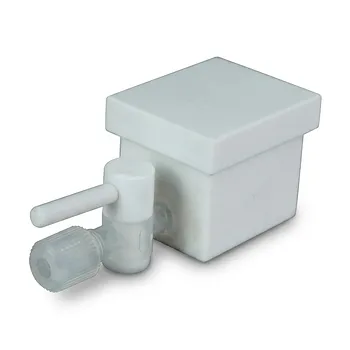
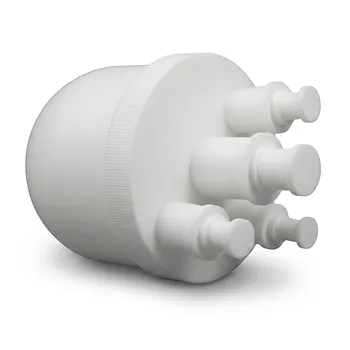
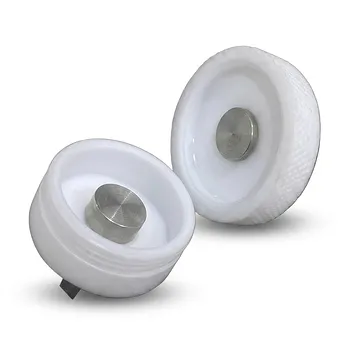
A three-electrode glass electrochemical cell provides a controlled, transparent, and standardized environment specifically designed to isolate and measure the intrinsic kinetic properties of a catalyst. By utilizing a dedicated working, reference, and counter electrode, the system eliminates potential measurement errors caused by electrode polarization. This setup ensures that data such as overpotential, Tafel slopes, and electrochemical impedance accurately reflect the catalyst's performance rather than system-wide inefficiencies.
Core Takeaway: The three-electrode glass cell is the industry standard for OER assessment because it decouples the potential control from the current-carrying circuit, allowing for the precise measurement of a catalyst's intrinsic activity under constant thermal and chemical conditions.
Precise Control of Electrochemical Potential
Decoupling the Reference and Counter Electrodes
The primary advantage of this configuration is the physical separation of the working electrode (the catalyst) from the counter electrode and the reference electrode. This architecture ensures that the high currents typically generated during OER do not pass through the reference electrode.
By preventing current flow through the reference electrode, the system eliminates potential polarization bias. This allows researchers to record Linear Sweep Voltammetry (LSV) curves that are scientifically accurate and reliable.
Integration with Rotating Disk Electrodes (RDE)
Precision-designed interfaces within the glass cell allow for the seamless integration of Rotating Disk Electrodes. RDE setups are critical for controlling mass transport at the electrode surface.
Using an RDE in a glass cell enables the accurate screening of catalysts synthesized under different processes. This ensures that the measured current density is a true reflection of the material's surface chemistry rather than diffusion limitations.
Environmental Stability and Observation
Visual Monitoring of Gas Evolution
The high transparency of glass cells is a functional requirement for OER, not just an aesthetic choice. It allows researchers to observe the evolution of oxygen gas bubbles in real-time.
Efficient bubble management is vital because trapped bubbles can shield the electrode surface, leading to significant measurement errors. A well-designed cell facilitates the escape of these bubbles to maintain a consistent active surface area.
Chemical and Thermal Regulation
OER testing often requires concentrated alkaline (e.g., 1.0 M KOH) or acidic (e.g., sulfuric acid) electrolytes. Glass cells provide the necessary chemical inertness to prevent the leaching of impurities that could interfere with catalyst performance.
Jacketed, double-walled glass cells allow for the circulation of constant-temperature water. Maintaining a fixed temperature, such as 30 °C, is essential for kinetic studies to eliminate thermal effects on reaction rates.
Understanding the Trade-offs
The Risk of Impurity Leaching
While glass is generally inert, extremely corrosive environments or high-temperature alkaline solutions can lead to the leaching of silicon or other species. In specialized cases, such as seawater electrolysis testing, the materials must be verified for extreme chemical stability to avoid false positives in catalyst activity.
Spatial Arrangement and IR Drop
The physical distance between the working electrode and the reference electrode (the Luggin capillary placement) is critical. If the spatial arrangement is not fixed and precise, the uncompensated resistance (IR drop) can vary between experiments.
Improper sealing can also lead to electrolyte evaporation over long-term stability tests. This changes the electrolyte concentration and can skew durability data if not strictly controlled.
How to Apply This to Your Project
To maximize the accuracy of your OER assessments, tailor your cell configuration to your specific research objective:
- If your primary focus is intrinsic kinetic data: Prioritize a three-electrode setup with a Luggin capillary and RDE compatibility to minimize polarization and mass transport issues.
- If your primary focus is temperature-dependent studies: Utilize a jacketed glass cell with a circulating water bath to ensure a constant thermal environment across all samples.
- If your primary focus is long-term durability: Ensure the cell includes integrated sealing components to prevent electrolyte evaporation and maintain a constant pH throughout the test.
By strictly controlling these experimental conditions, you ensure that your OER data is both reproducible and comparable to global standards.
Summary Table:
| Feature | Experimental Condition Provided | Impact on OER Research |
|---|---|---|
| Electrode Separation | Decouples reference/counter circuits | Eliminates polarization bias for accurate Tafel slopes |
| Glass Transparency | Visual gas evolution monitoring | Prevents electrode shielding by managing bubble escape |
| Jacketed Design | Constant temperature regulation | Eliminates thermal interference on kinetic reaction rates |
| RDE Integration | Controlled mass transport | Ensures measured current reflects true surface chemistry |
| Chemical Inertness | High-purity glass/electrolyte interface | Prevents impurity leaching and ensures data reproducibility |
Elevate Your Electrochemical Research with KINTEK
Precision in OER and catalyst assessment starts with the right materials. At KINTEK, we specialize in high-performance fluoropolymer solutions designed to withstand the most demanding laboratory environments. From everyday basic labware like PTFE beakers, crucibles, and reagent bottles to specialized high-purity trace analysis instruments, we provide the chemical inertness your research demands.
Our expertise extends to comprehensive fluid transfer components (tubing, fittings, valves), sample prep tools (filters, pipettes, tweezers), and advanced reaction apparatus. Whether you need standard PFA/PTFE components or custom-machined electrochemical cells and battery testing fixtures crafted through our end-to-end CNC fabrication, KINTEK delivers absolute precision with a focus on high-performance materials.
Ready to optimize your lab setup? Contact us today to discuss your custom project or volume order!
References
- Genevieve C. Moss, Rhiyaad Mohamed. Perchlorate Fusion–Hydrothermal Synthesis of Nano‐Crystalline IrO <sub>2</sub> : Leveraging Stability and Oxygen Evolution Activity. DOI: 10.1002/smll.202412237
This article is also based on technical information from Kintek Knowledge Base .
Related Products
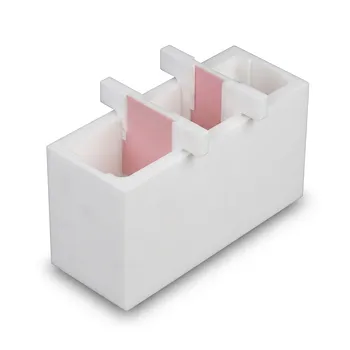
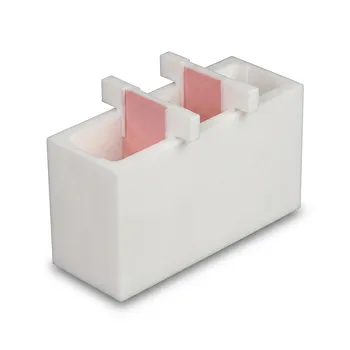
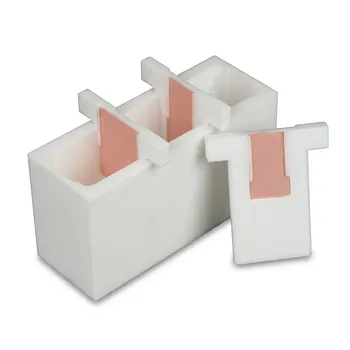
- Corrosion Resistant PTFE Electrochemical Cell for New Energy Research Inert Insulating Customizable Lab Reaction Vessel
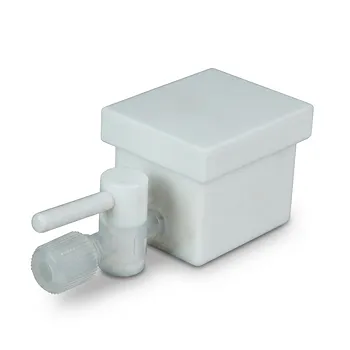
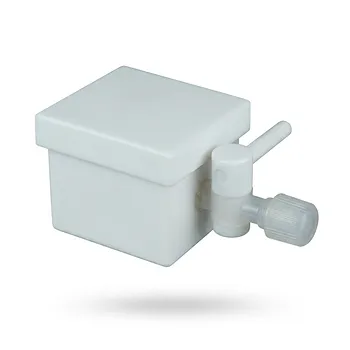
- Custom PTFE Corrosion Resistant Insulating Electrophoresis Reaction Cell with Septum and Valves for Low Background Trace Analysis
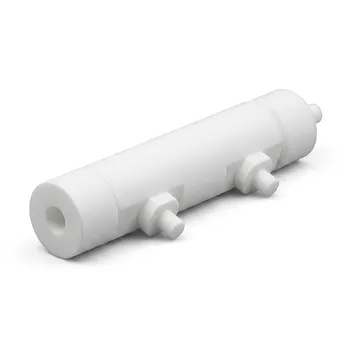
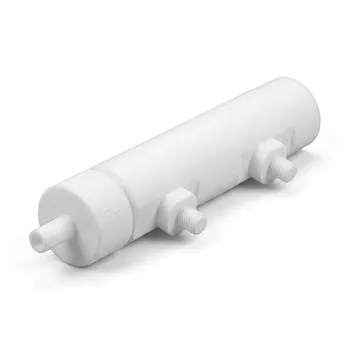
- Custom PTFE Electrolytic Cell Corrosion Resistant Low Background Reaction Vessel with Inlet Outlet Ports
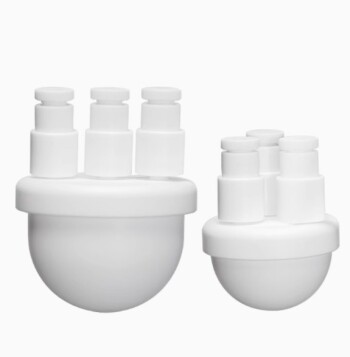
- Customizable PTFE Three Neck Flasks for Advanced Chemical Applications
- Square PTFE Electrochemical Cell for Silicon Wafer Processing and Hydrofluoric Acid Resistance in Semiconductor and New Energy Research
People Also Ask
- How do custom PTFE electrochemical cells improve the accuracy of stability testing for alkaline catalysts compared to glass cells?
- How does the hydrophobicity of PTFE benefit electrochemical measurements? Enhance Stability and Precision in Your Lab
- What makes PTFE an ideal construction material for custom electrochemical cells and electronic analytical instrumentation housings? Discover superior chemical resistance and electrical insulation
- Why must seawater electrolysis test cells have high corrosion resistance? Protect catalyst stability & data accuracy.
- What are the key steps for structural integrity in molded PTFE lab reaction vessels? Master fine powder processing.