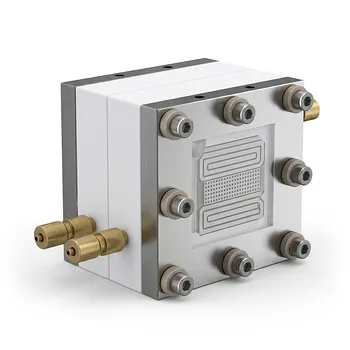
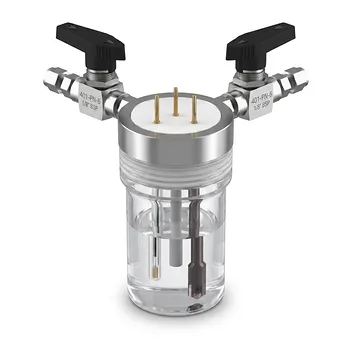
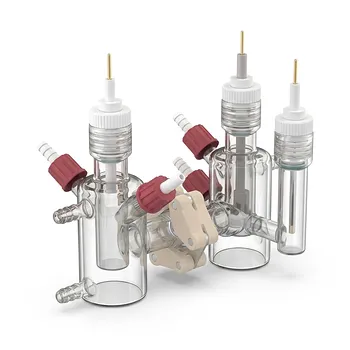
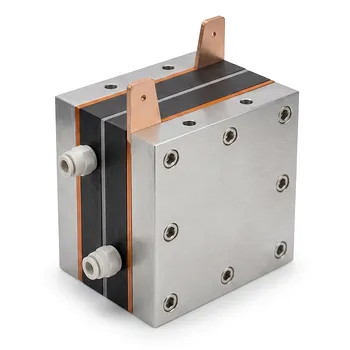
Fluorinated polymers are used in specialized laboratory electrochemical cells and electrical test fixtures because they combine low dielectric constant, high insulation strength, chemical inertness, and thermal stability. Fluorine-containing groups reduce molecular polarizability and disrupt polymer-chain packing, creating more free volume and less electrical response to an applied field. The result is low dielectric loss, minimal leakage current, reduced signal interference, and reliable performance around aggressive electrolytes and high-frequency instrumentation.
The central advantage is electrical isolation without sacrificing chemical or thermal durability. Fluorinated polymers help ensure that measured electrochemical signals come from the test system rather than from dielectric losses, stray currents, moisture, or contamination from the fixture itself.
Why Low Dielectric Constant Matters
It Reduces Electrical Polarization
A dielectric becomes polarized when its charges shift in response to an electric field. Fluorinated polymers limit this response because the electrons in carbon-fluorine bonds are tightly bound and comparatively difficult to displace.
Lower polarizability reduces the material's dielectric constant and helps the fixture remain electrically quiet during sensitive measurements.
It Limits Signal Loss and Cross-Talk
A low dielectric constant reduces the amount of electrical energy stored in the insulating material. Combined with low dielectric loss, this helps prevent signal attenuation, phase distortion, and unwanted coupling between nearby conductors.
These properties are especially valuable in high-frequency analytical equipment and electrochemical systems measuring small currents or voltages.
It Supports Stable High-Frequency Performance
Fluorinated polymers can maintain relatively low dielectric response across high-frequency operating ranges. Reported values vary by polymer structure, processing method, frequency, temperature, and measurement method, but specialized materials can achieve dielectric constants near or below 3 at 1 MHz.
The exact value should therefore be treated as a material-specific design parameter rather than a universal property of every fluoropolymer.
How Fluorine Produces These Properties
Bulky Fluorinated Groups Increase Free Volume
Groups such as trifluoromethyl (-CF3) and hexafluoroisopropylidene units occupy substantial molecular volume. They disrupt tight chain packing and reduce molecular symmetry in ways that can create additional empty space within the polymer matrix.
This increased fractional free volume lowers the density of polarizable material per unit volume, contributing to a lower dielectric constant.
Carbon-Fluorine Bonds Have Low Polarizability
Fluorine is highly electronegative, and the electrons associated with carbon-fluorine bonds are held tightly. They are less responsive to an external electric field than the electrons in many more easily polarized chemical groups.
This suppresses electronic polarization and helps reduce dielectric loss, particularly in demanding electrical and high-frequency applications.
Hydrophobicity Limits Moisture Effects
Fluorinated surfaces generally have low surface energy and absorb little moisture. That matters because absorbed water can increase dielectric response, electrical leakage, and measurement variability.
By limiting humidity-related changes, fluoropolymers help maintain more consistent insulation and signal behavior in laboratory environments.
Why Electrochemical Cells Need More Than Insulation
Chemical Inertness Protects the Measurement
Electrochemical cells may contain acidic, oxidizing, corrosive, or otherwise reactive electrolytes. Materials such as PTFE and PFA resist attack under many of these conditions and are less likely to degrade or contaminate the test environment.
This helps ensure that the measured electrochemical response reflects the electrode and electrolyte system rather than side reactions with the vessel or fixture.
Low Contamination Supports Trace Analysis
High-purity fluoropolymer components can be used for vessels, fittings, probe holders, and fluid-transfer paths. Their chemical resistance and low moisture uptake reduce the risk of introducing trace contaminants into sensitive experiments.
That is important when testing batteries, fuel cells, sensors, or other systems where very small chemical changes can affect the result.
Thermal Stability Preserves Geometry
Many high-performance fluoropolymers retain useful mechanical and electrical properties across a broad temperature range. Specialized fluorinated polymers can also provide high glass-transition temperatures, depending on their backbone and substituents.
Dimensional stability helps maintain consistent electrode spacing, sealing pressure, and fixture alignment during thermal cycling or elevated-temperature testing.
How Electrical Test Fixtures Benefit
High Insulation Reduces Leakage Current
A high-resistivity fluoropolymer electrically isolates electrodes, probes, terminals, and conductive components. This reduces stray current paths that could otherwise alter electrochemical readings or create errors in electrical tests.
High dielectric strength also helps the material withstand substantial electric fields before breakdown. The practical breakdown voltage depends on thickness, defects, geometry, temperature, and operating environment.
Electrical Isolation Improves Signal Integrity
In precision fixtures, the insulating structure is part of the measurement system. Low dielectric constant and low loss reduce parasitic capacitance and unwanted energy dissipation around signal paths.
The result can be lower signal delay, less cross-talk, and more predictable behavior in high-impedance or high-frequency measurements.
Machining Enables Application-Specific Designs
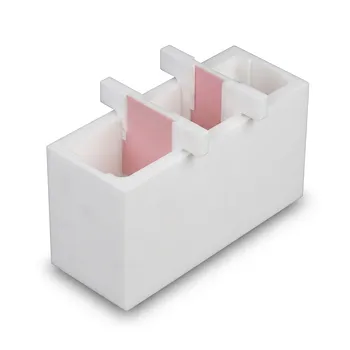
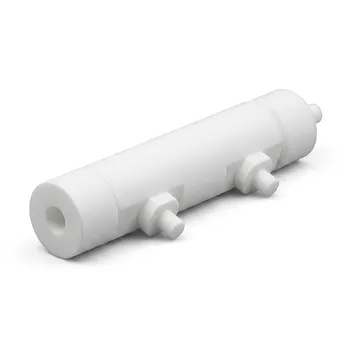
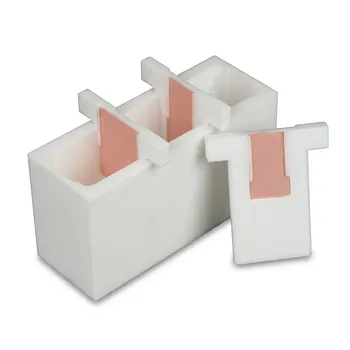
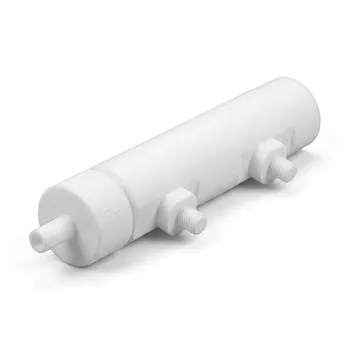
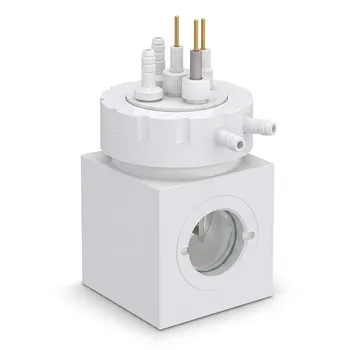
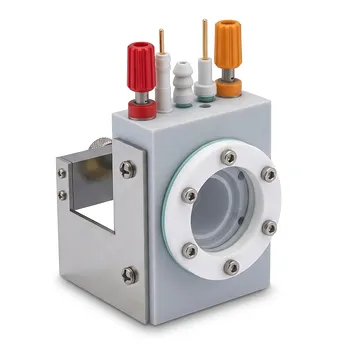
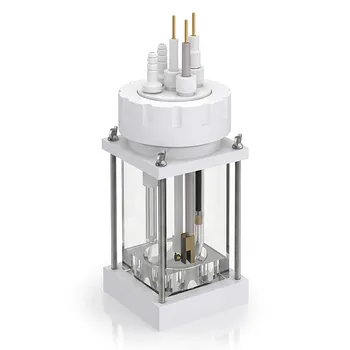
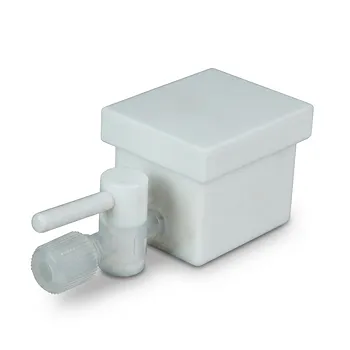
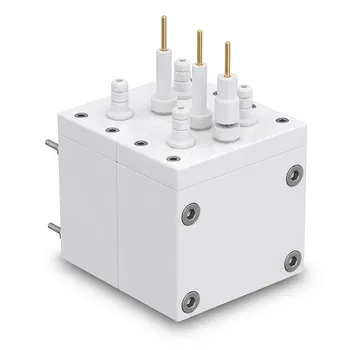
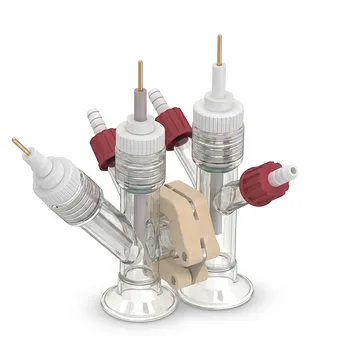
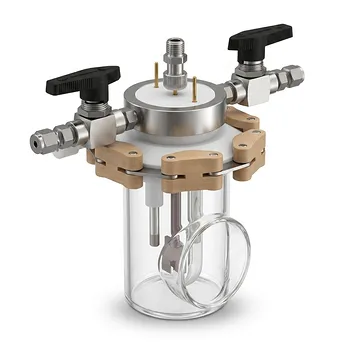
PTFE, PFA, and related fluoropolymers can be manufactured into custom cells, insulating spacers, probe holders, seals, and fluid-handling components. Custom geometry allows designers to control electrode spacing, fluid volume, isolation distances, and exposed surface area.
Material selection still requires attention to creep, stiffness, sealing requirements, and machining tolerances.
Understanding the Trade-offs
Low Dielectric Constant Is Not the Only Selection Criterion
A material with an exceptionally low dielectric constant may not provide the required stiffness, wear resistance, dimensional stability, or chemical compatibility for a particular fixture.
The correct choice balances dielectric behavior with the actual voltage, frequency, temperature, load, electrolyte, and cleaning conditions.
Dielectric Values Depend on Test Conditions
Published dielectric constants are not interchangeable without checking the test frequency, temperature, specimen condition, and measurement standard. Values reported for different fluoropolymers can vary significantly, and some references may describe thin films or specialized structures rather than bulk machined parts.
Design calculations should use supplier data measured under conditions that resemble the intended application.
Fluoropolymers Can Have Mechanical Limitations
Materials such as PTFE offer excellent chemical resistance but can exhibit creep, relatively low stiffness, and dimensional changes under sustained load or temperature. These characteristics may affect clamping, sealing, electrode alignment, and long-term fixture repeatability.
Where mechanical rigidity is critical, the design may require reinforcement, structural support, or a different fluorinated material.
Surface and Processing Quality Still Matter
Voids, scratches, contamination, sharp edges, and machining damage can reduce insulation reliability or create unwanted electrochemical sites. High-purity service may also require controlled cleaning, handling, and storage procedures.
The polymer's nominal electrical properties cannot compensate for poor component design or inadequate manufacturing control.
Making the Right Choice for Your Goal
The best material and geometry depend on whether the dominant requirement is signal integrity, chemical resistance, high-voltage isolation, or thermal durability.
- If your primary focus is low-noise, high-frequency measurement: Choose a fluorinated polymer with verified low dielectric constant and dielectric loss at the operating frequency, and minimize parasitic capacitance through fixture geometry.
- If your primary focus is electrochemical compatibility: Prioritize high-purity PTFE, PFA, or another chemically suitable fluoropolymer that will not react with or contaminate the electrolyte.
- If your primary focus is high-voltage insulation: Verify dielectric strength, insulation resistance, creepage distance, and breakdown performance at the actual thickness, temperature, and environment.
- If your primary focus is dimensional stability: Evaluate creep, thermal expansion, stiffness, and sealing behavior alongside the electrical specifications.
Fluorinated polymers are effective because they provide electrically quiet, chemically resistant, and thermally stable isolation where measurement accuracy depends on controlling every unwanted current and dielectric effect.
Summary Table:
| Property | Why It Matters | Key Benefits |
|---|---|---|
| Low Dielectric Constant | Reduces electrical polarization and signal loss | Minimal signal interference, stable high-frequency performance |
| High Insulation Strength | Prevents leakage currents and electrical breakdown | Reliable isolation, accurate measurements |
| Chemical Inertness | Resists aggressive electrolytes and solvents | Prevents contamination, extends component life |
| Thermal Stability | Maintains performance across temperature ranges | Dimensional stability, consistent results |
| Hydrophobicity | Minimizes moisture absorption | Stable dielectric behavior, reduced variability |
| Custom Machinability | Allows application-specific designs | Tailored geometry for optimal performance |
Optimize your electrochemical cells and test fixtures with our high-performance fluoropolymers. Our PTFE and PFA solutions ensure low dielectric constant, high insulation, and unmatched chemical resistance. Whether you need custom machined parts or standard labware, we deliver precision and reliability. Contact us today to discuss your requirements and get a tailored quote.
Related Products
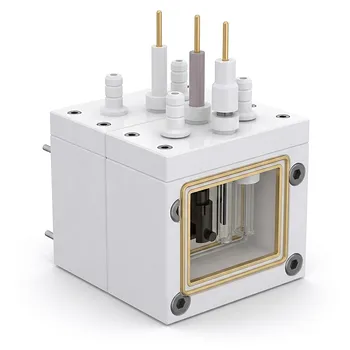
- Corrosion Resistant PTFE Electrochemical Cell for New Energy Research Inert Insulating Customizable Lab Reaction Vessel
- Custom PTFE Electrolytic Cell Corrosion Resistant Low Background Reaction Vessel with Inlet Outlet Ports
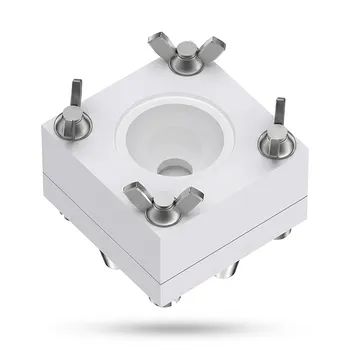
- Square PTFE Electrochemical Cell for Silicon Wafer Processing and Hydrofluoric Acid Resistance in Semiconductor and New Energy Research
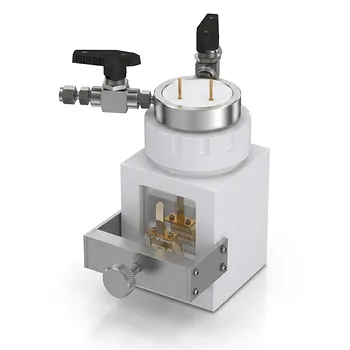
- White PTFE Electrolytic Cell with Movable Slider and Insulated Lid for Fluorine Corrosion Resistance
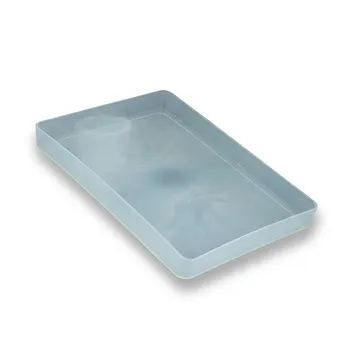
- Customizable PFA Square Tray Corrosion Resistant High Temperature Large Petri Dish Electrolytic Cell
People Also Ask
- How do custom PTFE electrochemical cells improve the accuracy of stability testing for alkaline catalysts compared to glass cells?
- How does the hydrophobicity of PTFE benefit electrochemical measurements? Enhance Stability and Precision in Your Lab
- What makes PTFE an ideal construction material for custom electrochemical cells and electronic analytical instrumentation housings? Discover superior chemical resistance and electrical insulation
- Why must seawater electrolysis test cells have high corrosion resistance? Protect catalyst stability & data accuracy.
- What are the key steps for structural integrity in molded PTFE lab reaction vessels? Master fine powder processing.