The standard three-electrode configuration is used to isolate and precisely measure the electrochemical performance of $(NH_4)2V{10}O_{25} \cdot 8H_2O$ by decoupling potential control from current flow. This setup allows researchers to determine the material's hydrogen storage capacity and redox behavior accurately by eliminating the "noise" or interference that would otherwise be caused by the counter electrode's polarization.
The primary purpose of this configuration is to provide a stable reference point that ensures the measured potential reflects only the reactions occurring at the working electrode. This isolation is critical for distinguishing between the energy required for hydrogen storage and the energy lost to system inefficiencies.
Decoupling Potential and Current
The Role of the Reference Electrode
In a two-electrode system, the potential is measured across the entire cell, making it impossible to distinguish which electrode is responsible for a specific voltage change. The three-electrode system introduces a reference electrode (RE), such as Ag/AgCl, which maintains a constant, known potential.
This allows the working electrode (WE)—the $(NH_4)2V{10}O_{25} \cdot 8H_2O$—to be monitored independently. Researchers can then observe the exact potential at which hydrogen evolution or absorption begins without the data being skewed by other components.
Managing High Current Flow
The counter electrode (CE), typically made of platinum (Pt), is responsible for completing the circuit and carrying the bulk of the current. Because the reference electrode draws negligible current, it does not polarize, ensuring the baseline potential remains fixed.
This separation ensures that the electrical work being measured is strictly related to the charge transfer and hydrogen storage mechanisms of the vanadium-based material.
Eliminating Measurement Interference
Overcoming Counter Electrode Polarization
Counter electrode polarization occurs when the chemical reactions at the auxiliary electrode create a voltage drop that masks the true behavior of the material under study. In evaluating hydrogen storage, this interference could lead to an overestimation of the energy required for storage or an underestimation of the material's efficiency.
By using a three-electrode cell, the potentiostat adjusts the voltage between the WE and CE to maintain the desired potential at the WE relative to the RE. This effectively "subtracts" the polarization of the counter electrode from the measurement.
Compensating for Solution Resistance
The configuration also helps mitigate the impact of ohmic drop (voltage loss) caused by the resistance of the electrolyte, such as 2 M KOH. While the three-electrode setup does not eliminate all resistance, it significantly improves the accuracy of linear sweep voltammetry (LSV) and specific capacitance calculations.
This precision is vital for characterizing the redox reversibility and kinetic parameters of the hydrogen storage reaction within $(NH_4)2V{10}O_{25} \cdot 8H_2O$.
Understanding the Trade-offs
System Complexity and Material Selection
While the three-electrode setup provides superior data accuracy, it requires careful selection of the reference electrode based on the pH of the electrolyte. Using an incompatible RE, such as using an Ag/AgCl electrode in highly aggressive or specific chemical environments without a salt bridge, can introduce junction potential errors.
Practical Scaling Limitations
This configuration is an analytical tool for laboratory characterization rather than a blueprint for a final commercial battery or storage device. In a practical application, the added weight and complexity of a reference electrode are undesirable; therefore, the insights gained here must be translated back into optimized two-electrode systems for real-world use.
How to Apply This to Your Evaluation
Recommendations for Precise Measurement
- If your primary focus is determining inherent material capacity: Use a three-electrode setup with a platinum counter electrode to ensure that the measured storage capacity is not limited by the auxiliary electrode's surface area.
- If your primary focus is understanding redox kinetics: Utilize the reference electrode to perform cyclic voltammetry (CV), which will allow you to pinpoint the exact potentials of the vanadium redox couples responsible for hydrogen storage.
- If your primary focus is long-term cycling stability: Monitor the potential of the working electrode relative to the Ag/AgCl reference to detect if the $(NH_4)2V{10}O_{25} \cdot 8H_2O$ is degrading or if the electrolyte is breaking down.
The three-electrode configuration remains the gold standard for transforming raw electrochemical data into a clear understanding of a material's fundamental hydrogen storage potential.
Summary Table:
| Component | Primary Function | Evaluation Benefit |
|---|---|---|
| Working Electrode (WE) | Host for $(NH_4)2V{10}O_{25} \cdot 8H_2O$ | Enables isolated study of hydrogen absorption/desorption kinetics. |
| Reference Electrode (RE) | Provides constant potential (e.g., Ag/AgCl) | Eliminates measurement drift and ensures accurate redox potential data. |
| Counter Electrode (CE) | Completes the circuit (e.g., Platinum) | Prevents electrode polarization from interfering with the WE signal. |
| Electrolyte (e.g., KOH) | Facilitates ion transport | High conductivity reduces ohmic drop for better LSV and CV precision. |
Elevate Your Electrochemical Research with KINTEK Precision
To achieve the high-precision results required for advanced hydrogen storage research, your lab environment must be built on reliability and purity. KINTEK specializes in manufacturing high-performance laboratory supplies crafted from PTFE and PFA, ensuring that your electrochemical setups—from the simplest beakers and reagent bottles to complex custom reaction apparatus—remain uncontaminated and chemically resistant.
Whether you need standard labware (measuring cylinders, crucibles, and digestion tubes) or specialized components for your three-electrode configuration, we provide:
- Comprehensive Fluid Transfer: High-purity tubing, fittings, and valves.
- Sample Prep & Filtration: Separatory funnels, filters, pipettes, and precision tweezers.
- Advanced Reaction Tools: Standard and custom electrochemical cells, battery testing fixtures, and electrode accessories.
- Bespoke Fabrication: End-to-end custom CNC machining for non-standard parts tailored to your unique experimental design.
Don't let equipment limitations skew your data. Let KINTEK deliver the high-performance fluoropolymer solutions your research demands. Contact us today to discuss your custom lab requirements!
References
- Poria Gomrokchi, Masoud Salavati‐Niasari. Effect of solvent composition on a one-dimensional (NH<sub>4</sub>)<sub>2</sub>V<sub>10</sub>O<sub>25</sub>·8H<sub>2</sub>O electroactive material for electrochemical hydrogen storage application. DOI: 10.1039/d5ra03066h
This article is also based on technical information from Kintek Knowledge Base .
Related Products
- Corrosion Resistant PTFE Electrochemical Cell for New Energy Research Inert Insulating Customizable Lab Reaction Vessel
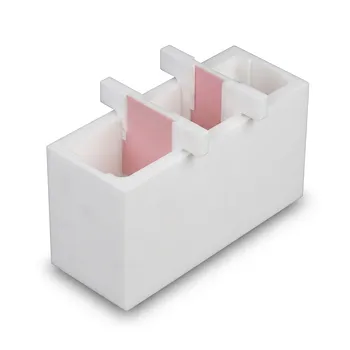
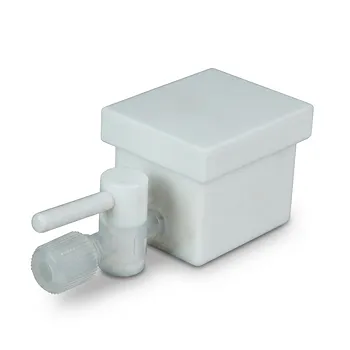
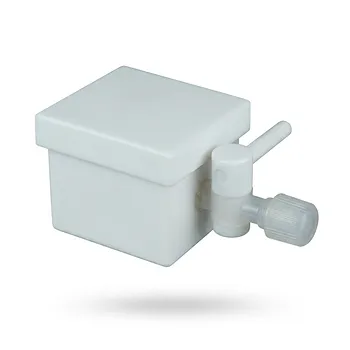
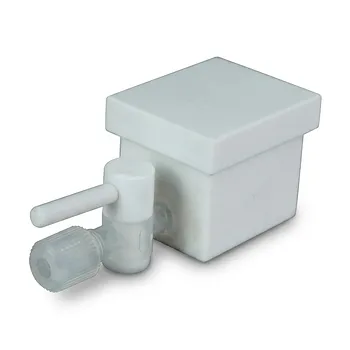
- Square PTFE Electrochemical Cell for Silicon Wafer Processing and Hydrofluoric Acid Resistance in Semiconductor and New Energy Research
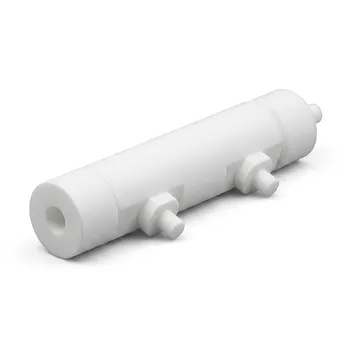
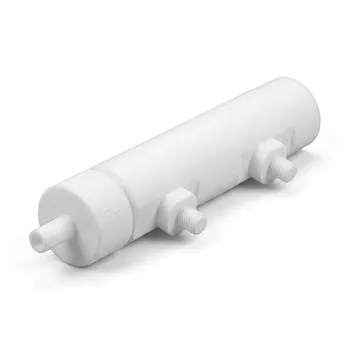
- Custom PTFE Electrolytic Cell Corrosion Resistant Low Background Reaction Vessel with Inlet Outlet Ports
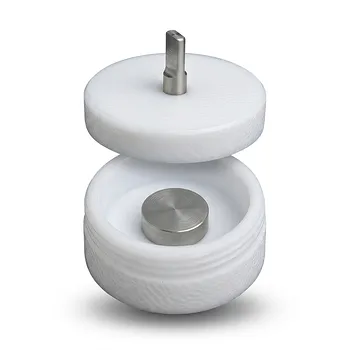
- White PTFE Electrolytic Cell with Movable Slider and Insulated Lid for Fluorine Corrosion Resistance
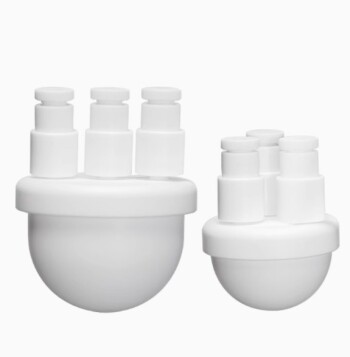
- Customizable PTFE Three Neck Flasks for Advanced Chemical Applications
People Also Ask
- How do custom PTFE electrochemical cells improve the accuracy of stability testing for alkaline catalysts compared to glass cells?
- How does the hydrophobicity of PTFE benefit electrochemical measurements? Enhance Stability and Precision in Your Lab
- What makes PTFE an ideal construction material for custom electrochemical cells and electronic analytical instrumentation housings? Discover superior chemical resistance and electrical insulation
- Why must seawater electrolysis test cells have high corrosion resistance? Protect catalyst stability & data accuracy.
- What are the key steps for structural integrity in molded PTFE lab reaction vessels? Master fine powder processing.