All Questions
How Do Electrochemical Testing Devices Demonstrate The Structural Advantages Of Mg-Al Hydrotalcite? - Catalytic Efficiency
Discover how electrochemical testing validates Mg-Al hydrotalcite’s layered structure and catalytic efficiency for water electrolysis and H2/O2 evolution.
What Are The Technical Advantages Of A Three-Electrode Testing System? Master Precision In Electrochemical Analysis
Discover how a three-electrode system using Pt and Ag/AgCl electrodes eliminates iR drops and ensures high-precision electrochemical measurements.
What Design Considerations Are Necessary For Electrochemical Test Cells Used In Battery Research? Key Factors For Precision
Master battery research with optimized test cell designs: Focus on mechanical pressure, chemical inertness (PTFE/PFA), and hermetic sealing.
What Role Does The Electrolyte And Separator Play In An Electrochemical Test Cell? Master Ionic Flow And Safety
Learn how electrolytes and separators manage ionic flow and safety in electrochemical cells to ensure precise, reproducible research results.
What Are The Specific Roles Of The Working, Reference, And Counter Electrodes In A Three-Electrode Test Cell? Explained
Learn the vital roles of working, reference, and counter electrodes in electrochemical cells for precise measurement and circuit stability.
What Is The Significance Of The Nernst Equation In Determining Electrochemical Cell Potential? Mastering Real-World Voltage
Learn how the Nernst equation calculates real-world electrochemical potential by factoring in concentration, temperature, and equilibrium states.
How Do The Anode And Cathode Function Within An Electrochemical Test Cell During Redox Reactions? Explained
Explore the roles of the anode and cathode in redox reactions. Learn about oxidation, reduction, and ion flow in galvanic and electrolytic cells.
What Materials Are Typically Used For The Construction Of Electrochemical Test Cell Containers And Why? Guide To Ptfe
Learn why PTFE, PFA, and glass are used for electrochemical cells to prevent contamination and ensure accurate measurements in corrosive media.
What Is The Primary Function Of An Electrochemical Test Cell In Laboratory Research? Enhance Precision And Accuracy
Learn how electrochemical test cells provide precision control and material validation for accurate research and battery development.
How Does The Chemical Inertness Of Ptfe Benefit Laboratory-Scale Battery Testing? Ensure High-Purity Research Results.
Learn how PTFE's chemical inertness prevents contamination and swelling in battery testing, ensuring accurate electrochemical measurements.
How Do Electrochemical Test Cells Facilitate The Discovery Of New Chemical Materials? Accelerate Research & Precision
Discover how electrochemical test cells streamline new material discovery with standardized environments, rapid screening, and high-precision data.
How Do Temperature-Controlled Electrochemical Test Cells Benefit The Evaluation Of Energy Systems For Extreme Environments?
Learn how temperature-controlled electrochemical test cells validate thermal stability and safety for energy systems in extreme environments.
What Role Do Electrochemical Test Cells Play In Analytical Chemistry And Sensor Development? Master Precision Testing
Learn how electrochemical test cells enable precise redox analysis and sensor validation through stable, high-insulation environments.
In What Ways Are Electrochemical Test Cells Adapted For Fuel Cell And Electrolyzer Benchmarking? Optimize Your Research.
Learn how flow-through architectures, precision electrode positioning, and fluoropolymer materials optimize fuel cell and electrolyzer benchmarking.
Why Are Inert Materials Like Ptfe And Glass Preferred For Electrochemical Test Cells? Protect Your Data Integrity
Learn how inert materials like PTFE and glass prevent contamination, resist aggressive media, and ensure accuracy in electrochemical testing.
How Do Electrochemical Test Cells Accelerate The Study Of Corrosion And Materials Degradation? Speed Up Lab Discovery
Discover how electrochemical test cells provide rapid, high-speed quantitative analysis to significantly shorten material research cycles.
What Is The Purpose Of Specialized High-Pressure Electrochemical Test Cells In Solid-State Battery Development? Unlock Accuracy
Discover how high-pressure electrochemical test cells ensure interface stability and data accuracy in solid-state battery research and development.
How Are Electrochemical Test Cells Utilized In The Research And Development Of Battery And Energy Storage Technologies?
Discover how electrochemical test cells accelerate battery R&D through material screening, interfacial analysis, and solid-state simulation.
What Are The Primary Functions And Components Of Laboratory-Scale Electrochemical Test Cells? A Precision Research Guide
Learn about the core components and functions of electrochemical test cells, from electrode setups to corrosion-resistant fluoropolymer housing.
Related Products

Spherical Electrochemical Corrosion Test Cell with Luggin Capillary and Specimen Holder
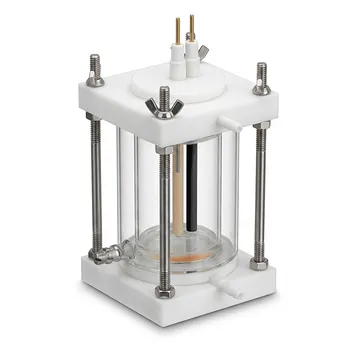
Electrochemical Coating Evaluation Test Cell and Flat Sample Corrosion Testing Vessel
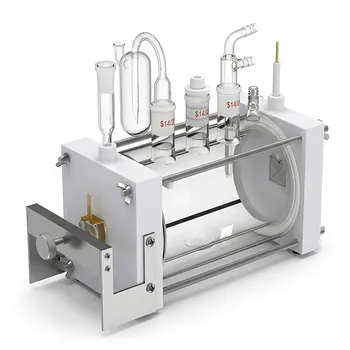
Flat Plate Corrosion Test Electrochemical Cell Jacketed Glass Labware for Sheet Specimen Metallurgy Analysis

Acid Resistant PTFE Button Cell Battery Test Fixture Customizable Machining High Purity Electrochemical Testing Clamp

PTFE Electrochemical Electrode Holder for Thickened Samples with Platinum Contact Sheet