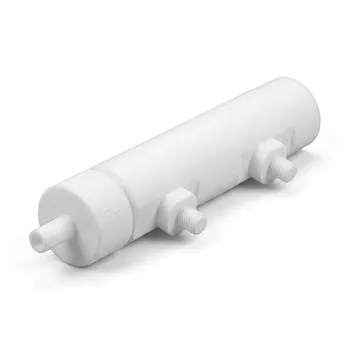
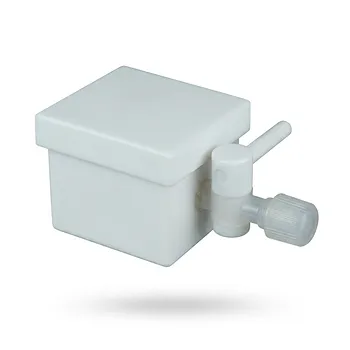
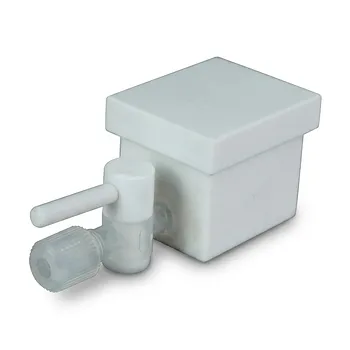
Laboratory-scale electrochemical test cells are precision instruments designed to isolate, control, and quantify redox reactions by housing electrodes and electrolytes in specific geometries. Their primary functions include the characterization of material performance through techniques like cyclic voltammetry (CV) and electrochemical impedance spectroscopy (EIS), while their core components—the working, counter, and reference electrodes—provide the hardware framework necessary for reproducible data collection.
The central purpose of an electrochemical test cell is to provide a stable, controlled environment that isolates specific electrode processes from environmental interference. By precisely managing electrode geometry and electrical pathways, these cells allow researchers to translate fundamental chemical reactions into accurate, quantifiable data.
The Primary Functions of Electrochemical Test Cells
Precision Material Characterization
The fundamental role of these cells is to study electrode kinetics and reaction mechanisms under highly controlled conditions. They enable analytical techniques such as linear sweep voltammetry and galvanostatic cycling, which are essential for determining the efficiency and longevity of new chemical formulations.
Rapid Screening and Iteration
Laboratory cells allow for the rapid screening of new chemistries using small sample sizes, which significantly reduces material waste and cost. This allows researchers to perform parallel testing on multiple configurations, accelerating the cycle from discovery to prototype validation.
Environmental Simulation
Advanced cells are designed to simulate actual operating environments, such as those found in fuel cells or high-pressure battery systems. They often incorporate features for temperature control, compression, and the maintenance of inert atmospheres (typically within a glovebox) to exclude moisture and oxygen.
Core Components and Hardware
The Electrode Configuration
Most laboratory cells utilize a three-electrode configuration to ensure measurement accuracy. The Working Electrode (WE) is where the reaction of interest occurs; the Counter Electrode (CE) completes the circuit to balance current; and the Reference Electrode (RE) provides a stable potential benchmark, eliminating interference from counter electrode polarization.
Housing and Structural Materials
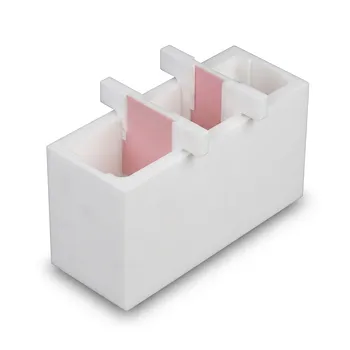
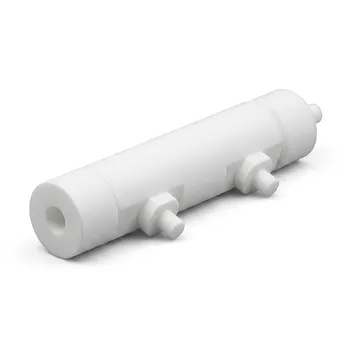
High-performance cells are typically fabricated from fluoropolymer materials or specialized glass, which offer high insulation and superior corrosion resistance. This structural stability ensures that the relative positions of the electrodes remain fixed, which is critical for maintaining a uniform current distribution.
Precision Mechanical Support
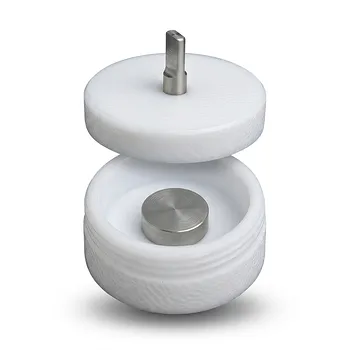
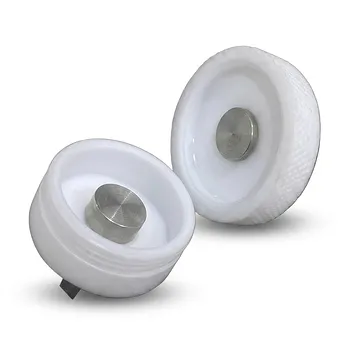
Specialized fixtures provide uniform physical pressure to battery materials or catalyst-coated membranes through flow plates and sealing gaskets. This high-precision hardware reduces contact resistance and system errors, ensuring that the data reflects the material's intrinsic properties rather than mechanical inconsistencies.
Understanding the Trade-offs
Two-Electrode vs. Three-Electrode Setups
While a two-electrode system is simpler and mirrors real-world battery commercial formats, it cannot distinguish between the individual contributions of the anode and cathode. The three-electrode system provides superior scientific insight but requires more complex hardware and can be more difficult to assemble without introduces leaks or impurities.
Scale vs. Realism
Laboratory-scale cells excel at isolating variables but may not perfectly capture the mass transport limitations or thermal gradients present in large-scale industrial systems. Researchers must balance the need for pure scientific data with the practical realities of how materials behave when scaled up to full-size prototypes.
Material Compatibility
Using a universal cell for all chemistries can lead to cross-contamination or material degradation. Corrosion-resistant materials like PTFE are excellent for most electrolytes, but they may have temperature limitations or react with specific highly aggressive chemical species.
How to Apply This to Your Research
Making the Right Choice for Your Goal
- If your primary focus is fundamental catalyst activity: Utilize a three-electrode analytical cell with a high-surface-area counter electrode to isolate the working electrode's performance.
- If your primary focus is battery cycle life testing: Use a two-electrode coin cell or split-cell fixture to simulate commercial form factors and monitor capacity retention over time.
- If your primary focus is fuel cell or flow battery development: Select a specialized fixture equipped with flow plates and precise compression control to simulate active mass transport.
By aligning your choice of cell geometry and component materials with your specific analytical needs, you ensure that your electrochemical data is both scientifically rigorous and practically relevant.
Summary Table:
| Feature/Component | Description | Key Advantage |
|---|---|---|
| Working Electrode | Site of the primary redox reaction | Provides accurate material performance data |
| Reference Electrode | Stable potential benchmark | Eliminates interference from electrode polarization |
| Fluoropolymer Housing | High-purity PTFE/PFA construction | Superior corrosion resistance and zero contamination |
| Material Characterization | CV, EIS, and Galvanostatic cycling | Essential for determining reaction kinetics and life |
| Mechanical Support | Precision fixtures and sealing gaskets | Minimizes contact resistance and ensures reproducibility |
Optimize Your Electrochemical Research with KINTEK
Precision in electrochemical testing begins with the integrity of your hardware. KINTEK specializes in manufacturing high-performance laboratory supplies crafted exclusively from PTFE and PFA, ensuring your experiments are free from contamination and corrosion.
Whether you require everyday basic labware (beakers, crucibles, reagent bottles, and tubing) or advanced specialized apparatus—including standard or custom electrochemical cells, battery testing fixtures, electrode accessories, and microwave digestion vessels—our end-to-end custom CNC fabrication is ready to meet your exact specifications. From high-volume consumable orders like O-rings and stirring bars to complex, non-standard bespoke laboratory setups, we deliver the durability and chemical inertness your research demands.
Ready to upgrade your lab setup? Contact us today to discuss your custom fabrication needs!
Related Products
- Corrosion Resistant PTFE Electrochemical Cell for New Energy Research Inert Insulating Customizable Lab Reaction Vessel
- Acid Resistant PTFE Button Cell Battery Test Fixture Customizable Machining High Purity Electrochemical Testing Clamp
- Square PTFE Electrochemical Cell for Silicon Wafer Processing and Hydrofluoric Acid Resistance in Semiconductor and New Energy Research
- White PTFE Electrolytic Cell with Movable Slider and Insulated Lid for Fluorine Corrosion Resistance
- Custom PTFE Reaction Box Opaque White Square Electrochemical Cell Tank
People Also Ask
- How do custom PTFE electrochemical cells improve the accuracy of stability testing for alkaline catalysts compared to glass cells?
- How does the hydrophobicity of PTFE benefit electrochemical measurements? Enhance Stability and Precision in Your Lab
- Why must seawater electrolysis test cells have high corrosion resistance? Protect catalyst stability & data accuracy.
- What are the key steps for structural integrity in molded PTFE lab reaction vessels? Master fine powder processing.
- Why pretreat an electrochemical cell with nitrogen for HER? Eliminate Oxygen to Ensure Precise Kinetic Data