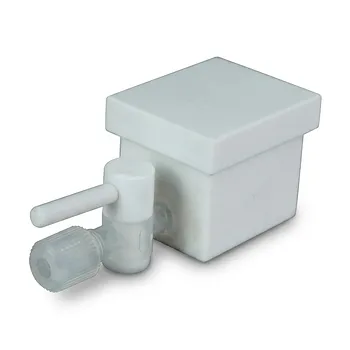
The electrolyte and separator function as the internal transport and safety infrastructure of an electrochemical test cell. The electrolyte acts as an ionic conductor, facilitating the movement of ions between the anode and cathode to maintain charge neutrality during redox reactions. The separator provides a physical barrier that prevents electrical short-circuiting and solution mixing while allowing ions to pass through its porous structure.
Core Takeaway: Together, the electrolyte and separator enable a completed internal circuit by permitting ionic flow while strictly preventing electron flow between electrodes. This balance is fundamental to isolating electrochemical reactions and obtaining precise, reproducible measurements of material performance.
The Electrolyte: The Conduit for Ionic Charge
Facilitating Ion Migration and Charge Neutrality
The primary role of the electrolyte is to serve as an ionic conductor that bridges the gap between the positive and negative electrodes.
As redox reactions occur, electrons flow through the external circuit, creating a charge imbalance that must be compensated for internally.
The electrolyte allows ions—whether in aqueous, organic, or solid-state form—to migrate between electrodes, ensuring the cell remains electrically neutral and the reaction can continue.
Defining the Electrochemical Stability Window
In a testing environment, the electrolyte is not just a medium but a subject of study.
The electrochemical stability window defines the voltage range within which the electrolyte remains chemically inert and does not decompose.
Researchers use specialized test cells to quantify this window, as it dictates the maximum operating voltage and potential energy density of the electrochemical system.
Influence on Measurement Accuracy
The electrolyte’s properties directly impact analytical techniques like Cyclic Voltammetry (CV) and Electrochemical Impedance Spectroscopy (EIS).
Precise control of the electrolyte environment allows for the accurate measurement of ionic conductivity and polarization phenomena.
By integrating a reference electrode into the cell design, the electrolyte enables the isolation of specific electrode kinetics from the overall cell potential.
The Separator: The Barrier for Internal Integrity
Preventing Electrical Short-Circuits
The separator acts as a physical safeguard, typically a porous membrane, frit, or gel, that keeps the anode and cathode from touching.
Without this barrier, the electrodes would undergo a direct electrical short, leading to rapid discharge, heat generation, and potential cell failure.
In battery test cells specifically, the separator's mechanical integrity is a critical safety feature that prevents catastrophic thermal events during cycling.
Regulating Internal Resistance
While the separator must block electrons, it must not excessively hinder the flow of ions.
The separator’s thickness, porosity, and tortuosity are major factors in defining the internal resistance of the test cell.
High internal resistance leads to voltage drops (IR drop), which can mask the true electrochemical behavior of the materials being tested.
Maintaining Solution Compartmentalization
In certain analytical setups, the separator is used to prevent the mixing of different chemical species between the anode and cathode compartments.
This is often achieved using a glass frit or ion-exchange membrane to ensure that reaction products from one electrode do not interfere with the processes at the other.
This isolation is vital for studying sensitive reaction mechanisms and obtaining clean data during long-term cycling.
Understanding the Trade-offs and Pitfalls
The Conflict Between Conductivity and Safety
There is a constant trade-off between the porosity of the separator and the safety of the cell.
A highly porous separator reduces internal resistance and improves power performance but may increase the risk of dendrite growth and short-circuiting.
Conversely, a denser separator improves safety but can lead to significant polarization phenomena, skewing the results of rate-capability tests.
Chemical Compatibility and Degradation
Electrolytes and separators must be chemically compatible with both the electrodes and the cell housing.
Aggressive organic solvents or acidic aqueous electrolytes can degrade separator materials over time, leading to structural failure or increased resistance.
In a test cell environment, any degradation products from the separator or electrolyte can introduce impurities, resulting in anomalous peaks or "noise" in electrochemical measurements.
Applying Component Knowledge to Your Research
Making the Right Choice for Your Goal
To achieve the most accurate data, you must align your component selection with your specific testing objectives.
- If your primary focus is high-power performance: Select an electrolyte with high ionic conductivity and a separator with high porosity to minimize internal resistance.
- If your primary focus is material stability and kinetics: Use a three-electrode cell configuration with a highly stable, high-purity electrolyte to isolate the working electrode's potential.
- If your primary focus is safety and thermal characterization: Prioritize separators with high mechanical strength and thermal "shutdown" features to simulate real-world failure modes.
Mastering the interaction between the electrolyte and separator is the key to transforming a simple test cell into a high-precision analytical instrument.
Summary Table:
| Component | Primary Function | Impact on Test Accuracy |
|---|---|---|
| Electrolyte | Facilitates ion migration & maintains charge neutrality | Defines stability window & ionic conductivity measurements |
| Separator | Provides physical barrier to prevent electrical shorts | Influences internal resistance (IR drop) & species isolation |
Elevate Your Electrochemical Research with KINTEK
Precise data starts with high-performance materials. KINTEK specializes in manufacturing virtually all imaginable laboratory supplies crafted from PTFE and PFA, ensuring absolute chemical inertness and durability for your electrochemical setups.
From everyday basic labware (beakers, crucibles, and reagent bottles) and high-purity trace analysis instruments to specialized standard or custom electrochemical cells, battery testing fixtures, and hydrothermal synthesis liners—we have you covered. Whether you need comprehensive fluid transfer components (tubing, valves, fittings) or complex bespoke CNC-fabricated parts, our end-to-end manufacturing maintains an exclusive focus on high-performance fluoropolymers to protect your samples from contamination.
Ready to optimize your lab's performance? Contact us today to discuss your custom requirements and discover the KINTEK advantage!
Related Products
- Corrosion Resistant PTFE Electrochemical Cell for New Energy Research Inert Insulating Customizable Lab Reaction Vessel
- Acid Resistant PTFE Button Cell Battery Test Fixture Customizable Machining High Purity Electrochemical Testing Clamp
- Square PTFE Electrochemical Cell for Silicon Wafer Processing and Hydrofluoric Acid Resistance in Semiconductor and New Energy Research
- Custom PTFE Reaction Box Opaque White Square Electrochemical Cell Tank
- White PTFE Electrolytic Cell with Movable Slider and Insulated Lid for Fluorine Corrosion Resistance
People Also Ask
- How do custom PTFE electrochemical cells improve the accuracy of stability testing for alkaline catalysts compared to glass cells?
- How does the hydrophobicity of PTFE benefit electrochemical measurements? Enhance Stability and Precision in Your Lab
- What makes PTFE an ideal construction material for custom electrochemical cells and electronic analytical instrumentation housings? Discover superior chemical resistance and electrical insulation
- Why must seawater electrolysis test cells have high corrosion resistance? Protect catalyst stability & data accuracy.
- What are the key steps for structural integrity in molded PTFE lab reaction vessels? Master fine powder processing.