Electrochemical test cells accelerate corrosion studies by transforming long-term observation into high-speed quantitative analysis. By using advanced polarization techniques, these cells generate precise data on corrosion rates and passivation behavior in just hours, whereas traditional immersion tests often require weeks or months of waiting.
Electrochemical test cells bridge the gap between material discovery and validation by providing a controlled environment for rapid, sensitive measurement of early-stage degradation. This hardware-driven approach ensures data reproducibility while significantly shortening research and development cycles through immediate, actionable feedback.
Rapid Detection of Sub-Surface Degradation
High-Speed Quantitative Data Collection
Traditional methods rely on visual inspection and weight-loss measurements over long durations. Electrochemical cells use potentiodynamic and cyclic polarization to provide quantitative insights into corrosion rates and susceptibility to localized attacks almost instantly.
Detecting Early-Stage Passive Film Breakdown
These cells are highly sensitive to microscopic changes, such as the breakdown of a material's passive film. This allows researchers to identify potential failures long before visible damage appears on the specimen's surface.
Identifying Localized Vulnerabilities
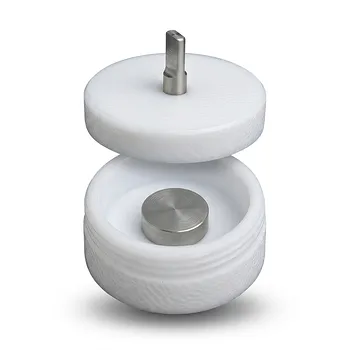
Specialized setups, like the Avesta-type pitting cell, are designed specifically to isolate and measure susceptibility to pitting or crevice corrosion. This targeted approach eliminates the guesswork associated with general immersion testing.
Engineered Precision and Environmental Control
Controlled Surface Area Exposure
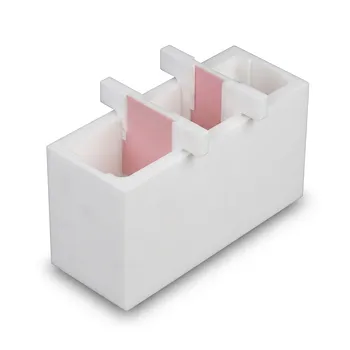
Custom-fabricated cells, often created via CNC machining or 3D printing, ensure that the working electrode exposes a precise surface area, such as exactly 1 cm². This precision is critical for calculating accurate current densities and ensuring data integrity during Electrochemical Impedance Spectroscopy (EIS).
Eliminating Environmental Interference
By utilizing advanced sealing and optimized electrode spacing, these cells effectively reduce Ohmic drop and external noise. This creates a standardized physical environment that is essential for obtaining precise cyclic voltammetry curves.
Specialized Atmosphere Management
Electrochemical cells facilitate testing in controlled environments, such as inside a glovebox to exclude moisture or oxygen. This allows for the rapid screening of new chemistries under specific atmospheric conditions that mimic real-world service environments.
Efficiency in Material Discovery and Scaling
Small Sample Size and Reduced Waste
The design of these cells allows for the testing of small material samples, which significantly reduces material waste and associated costs. This is particularly beneficial when working with expensive or experimental alloys.
Parallel Testing and Rapid Iteration
The standardized geometry of modern test cells allows researchers to perform parallel testing on multiple units simultaneously. This concurrency accelerates the iteration cycle from initial lab-scale discovery to prototype validation.
Hardware Customization for Specific Needs
Using materials like PLA or fluoropolymers, researchers can design internal geometries that meet unique experimental requirements. This flexibility ensures superior mechanical support and chemical stability throughout the duration of the test.
Understanding the Trade-offs and Constraints
Complexity of Hardware Optimization
Achieving accurate results requires meticulous attention to electrode spacing and sealing. Improper setup can lead to significant Ohmic drop or environmental interference, which may skew the resulting polarization curves.
Laboratory Acceleration vs. Real-World Synergy
While accelerated tests provide rapid data, they may not always capture the complex, synergistic effects of long-term environmental exposure. Users must be careful not to over-extrapolate short-term electrochemical results to multi-decade service lives without secondary validation.
Material Compatibility and Cell Integrity
The materials used to construct the cell (such as 3D-printed plastics) must be strictly compatible with the electrolyte chemistry. Using an incompatible cell material can lead to chemical leaching, which contaminates the test and produces false data.
Making the Right Choice for Your Goal
To maximize the utility of electrochemical test cells, align your hardware selection with your specific research objectives:
- If your primary focus is rapid material screening: Use standardized flat cells to perform parallel potentiodynamic scans, allowing you to discard underperforming alloys in a matter of days.
- If your primary focus is localized corrosion sensitivity: Deploy Avesta-type cells or specialized pitting cells to isolate the transition from passive to active states.
- If your primary focus is high-precision fundamental research: Invest in custom-fabricated CNC or 3D-printed cells to ensure exact surface area exposure and minimized Ohmic drop.
By integrating these high-speed analytical tools into your workflow, you replace passive observation with active, data-driven material development.
Summary Table:
| Feature | How it Accelerates Research | Key Techniques |
|---|---|---|
| Quantitative Data | Replaces weeks of immersion with hours of testing. | Potentiodynamic & Cyclic Polarization |
| Surface Sensitivity | Detects microscopic film breakdown before visible damage. | Electrochemical Impedance Spectroscopy (EIS) |
| Precise Geometry | Ensures accurate current density for data reproducibility. | CNC Machining & Specialized Pitting Cells |
| Environmental Control | Simulates real-world conditions in controlled atmospheres. | Glovebox Integration & Atmosphere Management |
Elevate Your Material Analysis with KINTEK
Accelerate your research and development with KINTEK’s high-performance electrochemical solutions. We specialize in manufacturing a comprehensive range of laboratory supplies crafted from PTFE and PFA, ensuring unmatched chemical resistance and precision.
From everyday essentials like beakers, crucibles, and reagent bottles to advanced standard and custom electrochemical cells, battery testing fixtures, and hydrothermal synthesis liners, our products are designed for the most demanding environments.
Why choose KINTEK?
- Expert CNC Fabrication: We deliver everything from complex non-standard machined parts to bespoke laboratory setups.
- Comprehensive Range: High-purity trace analysis instruments, fluid transfer components (tubing, valves), and sample prep tools.
- Fluoropolymer Specialists: Absolute focus on high-performance materials for superior durability.
Contact us today to discuss your custom project or high-volume order!
Related Products
- Corrosion Resistant PTFE Electrochemical Cell for New Energy Research Inert Insulating Customizable Lab Reaction Vessel
- Acid Resistant PTFE Button Cell Battery Test Fixture Customizable Machining High Purity Electrochemical Testing Clamp
- Square PTFE Electrochemical Cell for Silicon Wafer Processing and Hydrofluoric Acid Resistance in Semiconductor and New Energy Research
- White PTFE Electrolytic Cell with Movable Slider and Insulated Lid for Fluorine Corrosion Resistance
- Custom PTFE Reaction Box Opaque White Square Electrochemical Cell Tank
People Also Ask
- How do custom PTFE electrochemical cells improve the accuracy of stability testing for alkaline catalysts compared to glass cells?
- How does the hydrophobicity of PTFE benefit electrochemical measurements? Enhance Stability and Precision in Your Lab
- Why must seawater electrolysis test cells have high corrosion resistance? Protect catalyst stability & data accuracy.
- What are the key steps for structural integrity in molded PTFE lab reaction vessels? Master fine powder processing.
- Why pretreat an electrochemical cell with nitrogen for HER? Eliminate Oxygen to Ensure Precise Kinetic Data