The anode and cathode serve as the two critical terminals where chemical energy is converted to electrical energy (or vice versa) through spatially separated half-reactions. In every electrochemical test cell, the anode is the site of oxidation where electrons are lost, while the cathode is the site of reduction where electrons are gained. This separation forces electrons to travel through an external circuit, creating a measurable current while ions move through an internal electrolyte to balance the charge.
Core Takeaway: Anodes and cathodes facilitate redox reactions by separating the exchange of electrons into two distinct physical locations. This configuration allows for the control of electron flow through external circuits and ion movement through electrolytes, enabling the storage or harvest of energy.
The Mechanics of the Anode and Cathode
Oxidation at the Anode
The anode is defined by the chemical process of oxidation. In this half-reaction, chemical species lose electrons, which are then released into the electrode material.
Because the anode gives up electrons, it acts as the source of electron flow for the rest of the external circuit. The specific material of the anode determines the potential at which this oxidation occurs.
Reduction at the Cathode
The cathode is the site where reduction takes place. Here, chemical species in the electrolyte or the electrode itself gain the electrons that have traveled through the circuit.
This gain of electrons completes the chemical "circuit." Without a cathode to accept these electrons, the oxidation at the anode would immediately cease due to charge buildup.
The Role of the External Circuit
Electrons cannot move through the liquid electrolyte effectively; they require a conductive path. The external circuit provides this path, allowing electrons to flow from the anode to the cathode.
This flow is what we measure as electrical current. By placing a load or a sensor in this circuit, we can harness work or collect data on the chemical reactions occurring within the cell.
Maintaining Charge Neutrality
Internal Ion Migration
As electrons leave the anode and arrive at the cathode, an imbalance of charge begins to form. To prevent the reaction from stopping, ions must migrate through the internal electrolyte.
Cations (positive ions) move toward the cathode, while anions (negative ions) move toward the anode. This internal movement of matter ensures the overall system remains electrically neutral.
The Necessity of the Electrolyte
The electrolyte acts as a medium that is electrically insulating to electrons but conductive to ions. This properties-split is vital for ensuring that the electrons take the "long way" through our external wires.
If the electrolyte allowed electrons to pass directly between the electrodes, the cell would short-circuit. This would result in the energy being released as heat rather than useful electricity.
Distinguishing Between Cell Types
Spontaneous Energy in Galvanic Cells
In a galvanic (voltaic) cell, the redox reactions occur spontaneously. The chemical energy inherent in the materials is naturally released, driving electrons from the anode to the cathode to power a device.
In this setup, the anode is considered the negative terminal and the cathode is the positive terminal. This is the fundamental principle behind standard household batteries.
Driven Reactions in Electrolytic Cells
An electrolytic cell functions by using an external power source to drive a non-spontaneous reaction. You are essentially "forcing" the chemistry to happen in reverse or creating products that wouldn't form naturally.
In these cells, the external power source dictates the flow. While the anode is still the site of oxidation, its polarity is assigned as positive because it is connected to the positive terminal of the power supply.
Understanding the Trade-offs and Pitfalls
The Confusion of Polarity
A common mistake is assuming the anode is "always negative" or "always positive." Polarity changes depending on whether the cell is producing energy (galvanic) or consuming it (electrolytic).
To avoid errors, always identify the electrode by the chemical reaction (oxidation vs. reduction) rather than the sign printed on the terminal.
Material Degradation and Passivation
Electrodes are not always chemically inert. In many test cells, the anode may physically dissolve over time as it oxidizes, or the cathode may become "plated" with new material.
If an insulating layer (passivation) forms on the electrode surface, the flow of electrons will be restricted. This leads to a drop in performance and can skew experimental results in a laboratory setting.
How to Apply This to Your Project
When designing or analyzing an electrochemical test cell, your approach should be dictated by your end goal.
- If your primary focus is energy storage (Batteries): Ensure your anode and cathode materials have a high potential difference to maximize voltage and capacity.
- If your primary focus is material synthesis (Electrolysis): Focus on the stability of the electrodes to ensure they don't degrade while you are forcing non-spontaneous reactions.
- If your primary focus is chemical sensing: Use "inert" electrodes like platinum or gold that facilitate the transfer of electrons without participating in the chemical reaction themselves.
Mastering the spatial separation of these reactions is the key to controlling the power of electrochemistry.
Summary Table:
| Feature | Anode | Cathode |
|---|---|---|
| Reaction Type | Oxidation (Loss of $e^-$) | Reduction (Gain of $e^-$) |
| Electron Flow | Source (Electrons leave) | Sink (Electrons enter) |
| Ion Attraction | Anions (Negative ions) | Cations (Positive ions) |
| Galvanic Polarity | Negative (-) | Positive (+) |
| Electrolytic Polarity | Positive (+) | Negative (-) |
Elevate Your Electrochemical Research with KINTEK
Precision in redox studies requires high-performance materials that resist corrosion and contamination. KINTEK specializes in manufacturing virtually all imaginable laboratory supplies crafted from high-purity PTFE and PFA.
Whether you need standard labware (beakers, reagent bottles, centrifuge tubes) or advanced derivative and reaction apparatus such as:
- Standard and Custom Electrochemical Cells
- Battery Testing Fixtures & Electrode Accessories
- Fluid Transfer Components (tubing, fittings, valves)
- High-Purity Trace Analysis Instruments
Backed by end-to-end custom CNC fabrication, we deliver everything from complex non-standard machined parts to high-volume orders. Ensure your test cells maintain absolute integrity with our high-performance fluoropolymer solutions.
Contact KINTEK today to discuss your custom laboratory setup!
Related Products
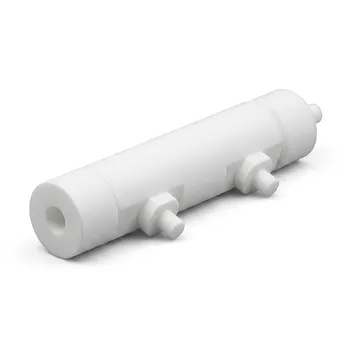
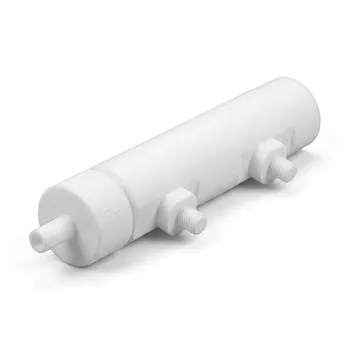
- Corrosion Resistant PTFE Electrochemical Cell for New Energy Research Inert Insulating Customizable Lab Reaction Vessel
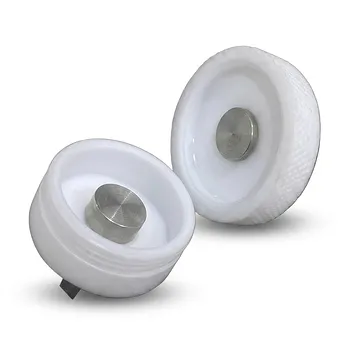
- Acid Resistant PTFE Button Cell Battery Test Fixture Customizable Machining High Purity Electrochemical Testing Clamp
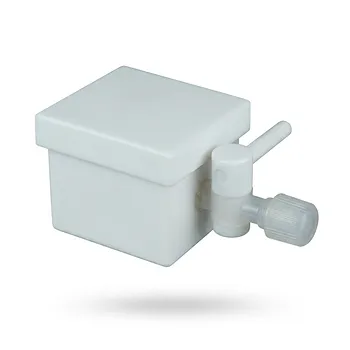
- Square PTFE Electrochemical Cell for Silicon Wafer Processing and Hydrofluoric Acid Resistance in Semiconductor and New Energy Research
- White PTFE Electrolytic Cell with Movable Slider and Insulated Lid for Fluorine Corrosion Resistance
- Custom PTFE Reaction Box Opaque White Square Electrochemical Cell Tank
People Also Ask
- How do custom PTFE electrochemical cells improve the accuracy of stability testing for alkaline catalysts compared to glass cells?
- How does the hydrophobicity of PTFE benefit electrochemical measurements? Enhance Stability and Precision in Your Lab
- What makes PTFE an ideal construction material for custom electrochemical cells and electronic analytical instrumentation housings? Discover superior chemical resistance and electrical insulation
- Why must seawater electrolysis test cells have high corrosion resistance? Protect catalyst stability & data accuracy.
- What are the key steps for structural integrity in molded PTFE lab reaction vessels? Master fine powder processing.