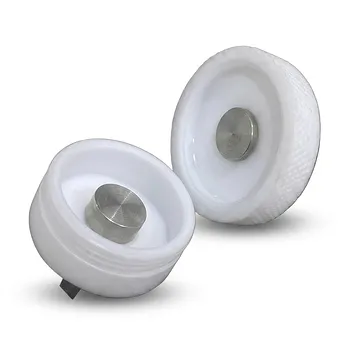
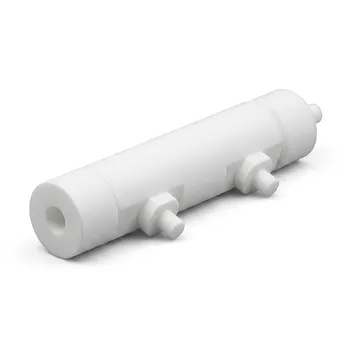
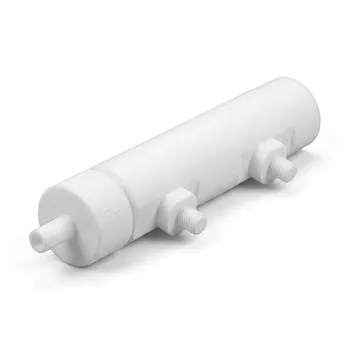
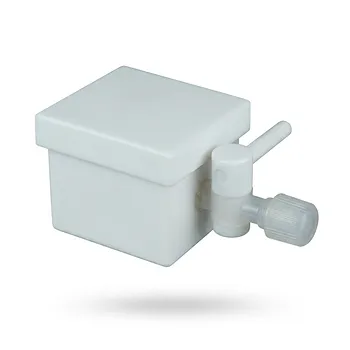
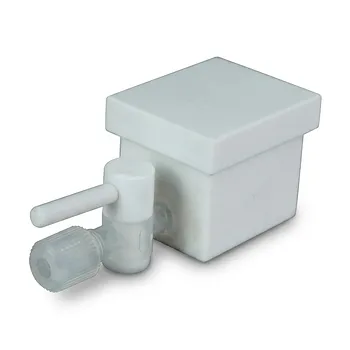
The primary function of an electrochemical test cell is to provide a highly controlled, reproducible environment for studying and quantifying electrochemical reactions. It acts as a standardized physical interface that allows researchers to isolate specific electrode processes, measure reaction kinetics, and characterize material performance by applying precise electrical signals.
Core Takeaway: An electrochemical test cell serves as the bridge between chemical theory and measurable data, providing the stability and precision necessary to validate new chemistries, materials, and electronic mechanisms under rigorous laboratory conditions.
Precision Control of Reaction Environments
Isolating Specific Electrode Processes
The test cell allows researchers to separate the reactions occurring at the working electrode from those at the counter electrode. By utilizing two-electrode or three-electrode configurations connected to a potentiostat, the cell ensures that measurements reflect the true behavior of the material under study rather than system noise.
Maintaining Environmental Integrity
Advanced test cells provide a sealed environment that can be integrated into gloveboxes to exclude moisture and oxygen. This level of control is critical for studying air-sensitive materials, such as those used in lithium-ion batteries or specialized catalysts, ensuring that external contaminants do not skew results.
Fixed Geometries for Reproducibility
Standardized cell designs maintain precise electrode spacing and uniform physical pressure across the active materials. This consistency minimizes variations in ohmic resistance and ensures that data collected today can be accurately compared to results obtained in future trials.
Characterization and Material Validation
Quantifying Reaction Kinetics
Researchers use test cells to perform analytical techniques like Cyclic Voltammetry (CV) and Electrochemical Impedance Spectroscopy (EIS). These methods allow for the determination of diffusion coefficients, electron-transfer rates, and the formal potentials of redox-active species.
Assessing Electrolyte Performance
Specialized cells are the core hardware for measuring ionic conductivity and the electrochemical stability window of new electrolytes. By fixing the migration path of ions between electrodes, the cell enables the accurate study of polarization phenomena and ion transport mechanisms.
Accelerating Discovery with Small-Scale Testing
Test cells are designed for small sample sizes, which significantly reduces material waste and associated costs during the early stages of research. This allows for rapid parallel testing of multiple chemistries, speeding up the transition from lab-scale discovery to prototype validation.
Understanding the Trade-offs
Lab-Scale vs. Industrial Reality
While test cells provide excellent precision, the conditions inside a small laboratory cell often differ from large-scale industrial reactors. Factors like heat dissipation, mass transport limitations, and current distribution may behave differently when scaled up, requiring additional validation.
The Complexity of Reference Electrodes
In a three-electrode setup, the placement of the reference electrode is critical; if positioned incorrectly, it can introduce artifacts known as uncompensated resistance. Researchers must balance the need for precise potential control with the physical constraints of the cell geometry.
Maintenance and Contamination Risks
Reusable cells require meticulous cleaning between experiments to prevent cross-contamination. Even trace amounts of previous analytes can lead to "ghost peaks" or altered reaction kinetics, potentially compromising the integrity of a study.
Selecting the Right Cell for Your Goal
How to Apply This to Your Project
Choosing the correct electrochemical cell depends entirely on the specific parameters you need to measure and the sensitivity of your materials.
- If your primary focus is material screening: Utilize standardized, small-volume analytical cells to minimize material waste while performing rapid cyclic voltammetry or galvanostatic cycling.
- If your primary focus is battery development: Prioritize cells that offer constant, high-precision physical pressure and airtight sealing to ensure stable electrical contact and protection from the environment.
- If your primary focus is sensor characterization: Select a cell design that allows for minimal sample preparation and high sensitivity to detect low concentrations of organic or biological analytes.
By selecting a test cell that aligns with your specific experimental requirements, you ensure that your data is both a true reflection of the chemistry and a solid foundation for future technological scaling.
Summary Table:
| Function | Key Benefit | Common Techniques |
|---|---|---|
| Precision Control | Isolates electrode processes & maintains environment integrity | CV, EIS, Chronoamperometry |
| Material Validation | Quantifies reaction kinetics & assesses electrolyte stability | Galvanostatic Cycling, Potentiometry |
| Standardization | Ensures reproducibility through fixed, precise geometries | Ionic Conductivity, Redox Testing |
| Small-Scale Testing | Reduces material waste & accelerates screening | High-throughput material discovery |
Elevate Your Research with KINTEK’s High-Performance Fluoropolymer Solutions
At KINTEK, we understand that precision in electrochemical research starts with the quality of your equipment. We specialize in manufacturing a comprehensive range of laboratory supplies crafted from high-performance PTFE and PFA.
From everyday basic labware (beakers, measuring cylinders, crucibles, reagent bottles, and digestion tubes) and high-purity trace analysis instruments to advanced derivative apparatus like standard or custom electrochemical cells, battery testing fixtures, and electrode accessories, KINTEK is your single source for excellence.
Why partner with KINTEK?
- Custom Fabrication: Backed by end-to-end custom CNC fabrication for complex, non-standard machined parts and bespoke lab setups.
- Full Spectrum Inventory: Everything from fluid transfer components (tubing, valves) and sample prep tools (filters, pipettes) to general consumables (O-rings, seal tapes).
- Specialized Focus: Absolute expertise in high-performance fluoropolymers for demanding chemical environments.
Ready to optimize your laboratory with custom-engineered solutions or high-volume orders? Contact KINTEK today and let our experts support your next breakthrough!
Related Products
- Corrosion Resistant PTFE Electrochemical Cell for New Energy Research Inert Insulating Customizable Lab Reaction Vessel
- Acid Resistant PTFE Button Cell Battery Test Fixture Customizable Machining High Purity Electrochemical Testing Clamp
- Square PTFE Electrochemical Cell for Silicon Wafer Processing and Hydrofluoric Acid Resistance in Semiconductor and New Energy Research
- White PTFE Electrolytic Cell with Movable Slider and Insulated Lid for Fluorine Corrosion Resistance
- Custom PTFE Reaction Box Opaque White Square Electrochemical Cell Tank
People Also Ask
- How do custom PTFE electrochemical cells improve the accuracy of stability testing for alkaline catalysts compared to glass cells?
- How does the hydrophobicity of PTFE benefit electrochemical measurements? Enhance Stability and Precision in Your Lab
- What makes PTFE an ideal construction material for custom electrochemical cells and electronic analytical instrumentation housings? Discover superior chemical resistance and electrical insulation
- Why must seawater electrolysis test cells have high corrosion resistance? Protect catalyst stability & data accuracy.
- What are the key steps for structural integrity in molded PTFE lab reaction vessels? Master fine powder processing.