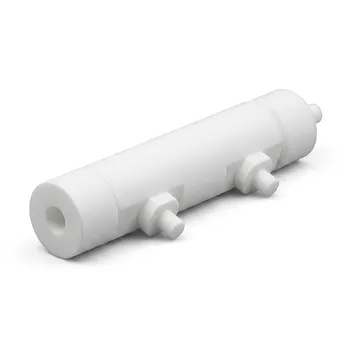
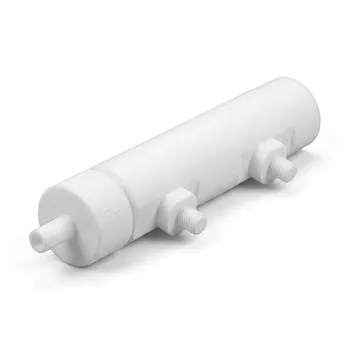
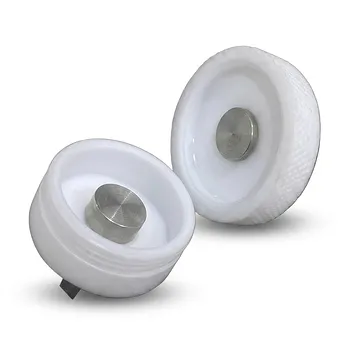
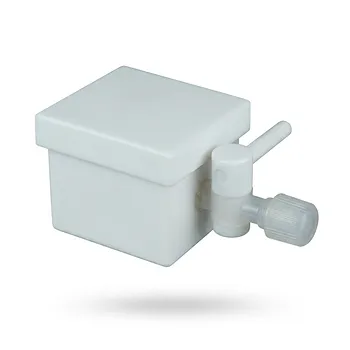
Electrochemical cells function as the indispensable laboratory environment where battery chemistry is measured and validated. By providing a sealed, stable, and chemically inert vessel, these cells allow researchers to isolate the behavior of active materials from external variables. This ensures that data from tests like cyclic voltammetry (CV) and electrochemical impedance spectroscopy (EIS) accurately reflect the material's performance rather than environmental interference.
The electrochemical cell is the critical hardware foundation that translates chemical potential into measurable electrical data. Its primary role is to provide a standardized, high-precision environment that ensures repeatability and accuracy by eliminating leakage, corrosion, and structural instability.
Providing a Controlled Reaction Environment
Atmospheric Isolation and Leak Prevention
High-precision electrochemical cells use advanced sealing components, often made of PTFE (Teflon) or PFA, to create an airtight environment. This isolation is critical because many battery materials are highly sensitive to oxygen and moisture, which can cause degradation or side reactions.
Reliable sealing also prevents electrolyte leakage, ensuring that the chemical composition of the cell remains constant throughout the testing period. This stability allows for the accurate recording of electrochemical characteristics during long-term charge-discharge cycle testing.
Chemical Inertness and Corrosion Resistance
The use of high-performance fluoropolymers ensures that the cell body itself does not participate in the electrochemical reaction. These materials offer excellent dielectric properties and electrical insulation, preventing internal short circuits or signal leakage.
By maintaining a chemically inert environment, the cell ensures that all collected data—such as charge-discharge curves—is derived solely from the active materials under study. This eliminates the risk of "false" signals caused by the corrosion of the testing fixture itself.
Ensuring Structural Precision for Data Integrity
Fixed Electrode Spacing and Geometry
A primary role of the electrochemical cell is to maintain fixed electrode spacing and a constant geometry between the working, counter, and reference electrodes. This structural stability ensures a uniform current distribution across the surface of the battery materials.
Consistent spacing is essential for reproducibility, as even minor shifts in electrode position can change the internal resistance and distort performance data. Precision-machined fixtures provide the repeatability required for rigorous scientific peer review.
Mechanical Pressure and Contact Resistance
Specialized cell designs, such as Swagelok-style or coin cells, apply constant and uniform physical pressure to the electrode stack. This pressure is vital for minimizing contact resistance between the active material and the current collector.
Proper mechanical support also facilitates the stable formation of the Solid Electrolyte Interphase (SEI) layer. By establishing stable electrical signal transmission channels, the cell reduces system errors and allows for more accurate material characterization.
Understanding the Trade-offs
Material Limitations and Maintenance
While fluoropolymers like PTFE offer excellent resistance, they can undergo cold flow (deformation) under extreme mechanical pressure over time. This may necessitate periodic replacement or recalibration of the cell fixtures to maintain dimensional accuracy.
Complexity vs. Standardization
Customized cells provide high precision but often require meticulous assembly to ensure the seals are perfectly seated. In contrast, standardized coin cells are faster to assemble but offer less flexibility for incorporating reference electrodes or specialized sensors for in-depth analysis.
Selecting the Right Cell for Your Research
How to Apply This to Your Project
To obtain the highest quality data, you must align your cell selection with your specific testing objectives and material requirements.
- If your primary focus is sensitive material discovery: Use high-purity PFA or PTFE cells with robust compression fittings to ensure a total seal against atmospheric contamination.
- If your primary focus is fundamental kinetic studies (CV/EIS): Prioritize cells with fixed three-electrode geometries to ensure precise potential control and uniform current distribution.
- If your primary focus is commercial scalability testing: Utilize standardized coin cell or pouch cell formats that mimic the mechanical pressures found in production-grade batteries.
Investing in high-precision electrochemical hardware is the most effective way to ensure that your research findings are built on a foundation of technical accuracy and scientific integrity.
Summary Table:
| Key Feature | Primary Role in Testing | Benefit to Researcher |
|---|---|---|
| Atmospheric Isolation | Seals out moisture and oxygen | Prevents degradation of sensitive materials |
| Chemical Inertness | Non-reactive PTFE/PFA cell body | Eliminates corrosion and background noise |
| Fixed Geometry | Maintains precise electrode spacing | Ensures reproducibility and uniform current |
| Mechanical Pressure | Optimizes physical contact | Minimizes resistance for clear data signals |
Elevate Your Battery Research with KINTEK's High-Performance Solutions
Precision in battery characterization starts with the quality of your hardware. KINTEK specializes in manufacturing high-purity PTFE and PFA laboratory supplies, engineered specifically for the most demanding electrochemical environments. From standard electrochemical cells and battery testing fixtures to electrode accessories and hydrothermal synthesis liners, our products ensure your data reflects true material performance without environmental interference.
Whether you need everyday labware—like beakers, crucibles, and reagent bottles—or advanced components such as high-purity trace analysis instruments, filtration tools, and comprehensive fluid transfer parts (tubing, fittings, valves), KINTEK has you covered. Backed by end-to-end custom CNC fabrication, we deliver everything from complex non-standard machined parts to high-volume orders of consumables like stirring bars, O-rings, and gaskets.
Ready to optimize your testing accuracy with high-performance fluoropolymers? Contact our experts today to discuss your custom project or lab requirements!
References
- Pusit Pookmanee, Thipsuda Pookmanee. Green Hydrothermal Synthesis of Dual‐Phase Submicron Cu <sub>2</sub> O‐CuO Particles Using Corn Husk Extract for Enhanced Antibacterial Applications. DOI: 10.1002/slct.202502184
This article is also based on technical information from Kintek Knowledge Base .
Related Products
- Corrosion Resistant PTFE Electrochemical Cell for New Energy Research Inert Insulating Customizable Lab Reaction Vessel
- Square PTFE Electrochemical Cell for Silicon Wafer Processing and Hydrofluoric Acid Resistance in Semiconductor and New Energy Research
- White PTFE Electrolytic Cell with Movable Slider and Insulated Lid for Fluorine Corrosion Resistance
- Custom PTFE Reaction Box Opaque White Square Electrochemical Cell Tank
- Custom PTFE Electrolytic Cell Corrosion Resistant Low Background Reaction Vessel with Inlet Outlet Ports
People Also Ask
- How do custom PTFE electrochemical cells improve the accuracy of stability testing for alkaline catalysts compared to glass cells?
- How does the hydrophobicity of PTFE benefit electrochemical measurements? Enhance Stability and Precision in Your Lab
- What makes PTFE an ideal construction material for custom electrochemical cells and electronic analytical instrumentation housings? Discover superior chemical resistance and electrical insulation
- Why must seawater electrolysis test cells have high corrosion resistance? Protect catalyst stability & data accuracy.
- What are the key steps for structural integrity in molded PTFE lab reaction vessels? Master fine powder processing.