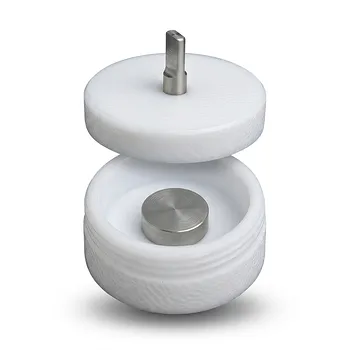
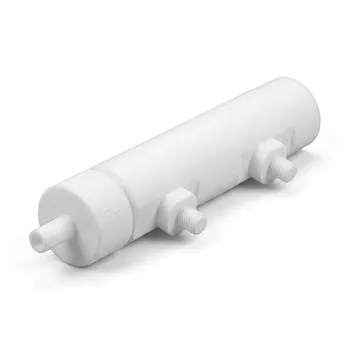
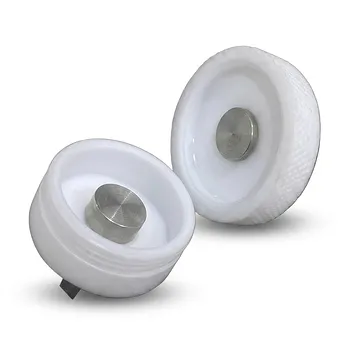
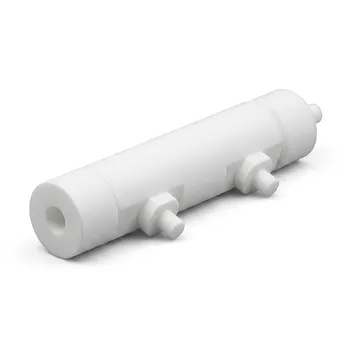
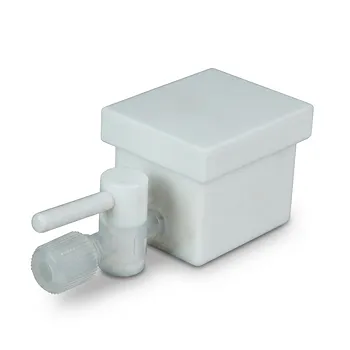
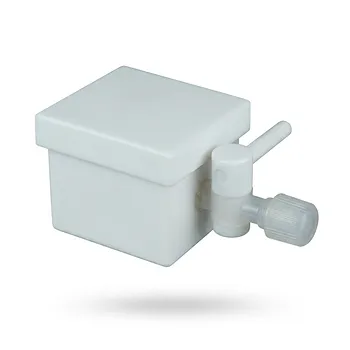
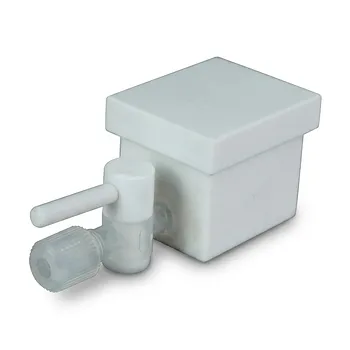
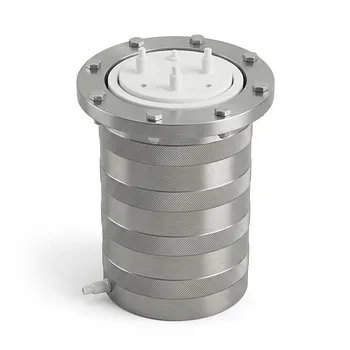
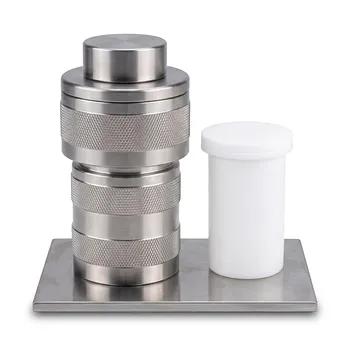
Specialized high-pressure electrochemical test cells serve as the critical mechanical backbone for solid-state battery research. They simulate the intense stack compression required to maintain physical contact between solid components that lack the natural "wetting" ability of liquid electrolytes. These cells allow researchers to evaluate ionic conductivity and interface stability under realistic operating conditions, ensuring that electrochemical data reflects the true potential of the materials.
The primary purpose of high-pressure test cells is to maintain intimate physical contact between solid-state components by providing constant, uniform mechanical load. This prevents interface delamination during volume changes and ensures that electrochemical measurements are not distorted by high contact resistance.
Overcoming the Limitations of Solid-Solid Interfaces
Simulating Realistic Stack Compression
In a solid-state system, the cathode, electrolyte, and anode are all solids that must remain in constant contact to function. Stack compression provided by specialized cells mimics the pressure found in full-scale battery packs, which is essential for optimizing the mechanical and electrochemical interface.
Compensating for Volume Fluctuations
Active materials undergo significant volume expansion and contraction during the intercalation and de-intercalation of ions. High-pressure cells use metal plungers and pressurizing frames to provide a pressure feedback mechanism that prevents these components from pulling apart during cycling.
Inhibiting Interface Delamination
Without external pressure, the interfaces between particles can separate, leading to a total loss of capacity. Specialized fixtures maintain a stable reaction interface, which significantly improves capacity retention and extends the overall cycle life of the battery.
Enhancing Data Accuracy and Reliability
Minimizing Contact Resistance
Uniform and constant pressure reduces the contact resistance between the solid electrolyte and the electrodes. This ensures that the collected electrochemical signals accurately reflect the energy storage characteristics of the material rather than physical connection errors.
Standardizing the Testing Environment
High-precision cells provide a standardized environment that isolates the reaction from external atmospheric interference. By using high-performance polymer sealing components like PTFE or PFA, these cells prevent electrolyte degradation and ensure reproducible results across different labs.
Facilitating Precision Measurements
These cells are designed for high-resolution techniques such as Electrochemical Impedance Spectroscopy (EIS). By establishing stable signal transmission channels, they allow researchers to precisely analyze interfacial resistance and charge transfer at the milligram scale.
Understanding the Trade-offs
Mechanical Stress vs. Structural Integrity
While high pressure (e.g., 10 MPa) is necessary for contact, excessive force can cause internal short circuits or mechanical failure of the solid electrolyte. Researchers must balance the need for contact with the risk of crushing fragile ceramic or polymer components.
Complexity and Assembly Overhead
Specialized high-pressure molds are significantly more complex to assemble than standard coin cells or pouch cells. The requirement for precise torque application and pressure monitoring increases the time required for cell preparation and the potential for human error.
How to Apply This to Your Project
When selecting or configuring an electrochemical test cell, your choice should align with your specific research objectives:
- If your primary focus is fundamental material characterization: Use high-precision cells with constant-pressure fixtures to ensure that your ionic conductivity data is not skewed by poor physical contact.
- If your primary focus is long-term cycle stability: Prioritize cells with pressure feedback mechanisms to compensate for the volume changes that occur during repeated charging and discharging.
- If your primary focus is commercial scalability: Utilize these cells to identify the minimum effective pressure required for your material set, as this will dictate the mechanical requirements of the final battery pack.
Effective solid-state battery development requires treating mechanical pressure not as a secondary variable, but as a fundamental component of the electrochemical system itself.
Summary Table:
| Key Function | Research Benefit | Mechanism |
|---|---|---|
| Stack Compression | Maintains essential solid-solid contact | Simulated mechanical load |
| Volume Compensation | Prevents delamination during cycling | Pressure feedback frames |
| Resistance Reduction | Accurate EIS and conductivity data | Uniform metal plungers |
| Environmental Seal | Prevents electrolyte degradation | High-performance PTFE/PFA seals |
Elevate Your Solid-State Research with KINTEK Precision
Achieving reliable electrochemical data requires a perfect synergy between chemistry and mechanical stability. KINTEK specializes in high-performance fluoropolymer laboratory supplies, offering an exhaustive range of products crafted from PTFE and PFA to meet the rigorous demands of battery development.
From advanced electrochemical cells, battery testing fixtures, and hydrothermal synthesis liners to essential components like high-purity tubing, O-rings, and custom CNC-machined parts, we provide everything you need to maintain a stable reaction interface. Whether you require everyday labware (beakers, crucibles, pipettes) or complex, non-standard bespoke setups, our end-to-end fabrication ensures absolute focus on performance and purity.
Ready to optimize your testing environment? Contact us today to discuss your specific project requirements and let our experts deliver the high-volume or custom-machined solutions your lab deserves.
Related Products
- Acid Resistant PTFE Button Cell Battery Test Fixture Customizable Machining High Purity Electrochemical Testing Clamp
- High Purity Custom PTFE Reaction Cell Electrolytic Tank for Semiconductor and Polysilicon Industrial Applications
- Corrosion Resistant PTFE Electrochemical Cell for New Energy Research Inert Insulating Customizable Lab Reaction Vessel
- Square PTFE Electrochemical Cell for Silicon Wafer Processing and Hydrofluoric Acid Resistance in Semiconductor and New Energy Research
- Corrosion Resistant PTFE Coin Cell Battery Testing Clamps and Acid Proof Custom Fluoropolymer Battery Fixtures
People Also Ask
- How does the chemical inertness of PTFE benefit laboratory-scale battery testing? Ensure high-purity research results.
- In what ways do PTFE battery testing fixtures enhance laboratory throughput and reliability? Maximize Research Efficiency
- In what industrial manufacturing contexts are PTFE battery clamps or fixtures utilized? Optimize Battery Production.
- What is the thermal operating range for PTFE battery clamps in electrochemical research? Stability from -200°C to +260°C
- What are the primary functions and material compositions of PTFE battery clamps? Ensure Precision & Chemical Resistance