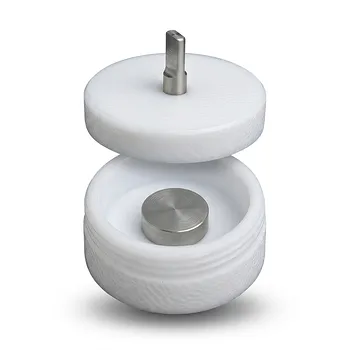
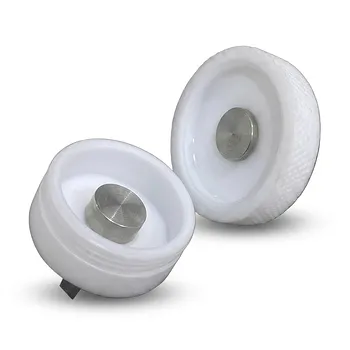
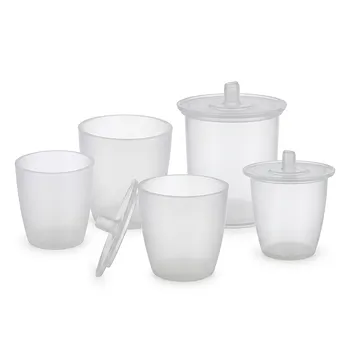
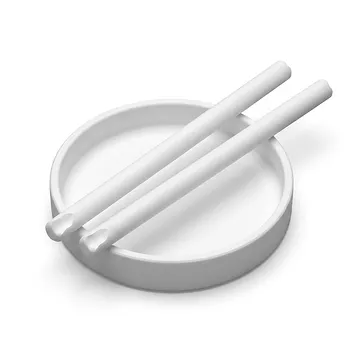
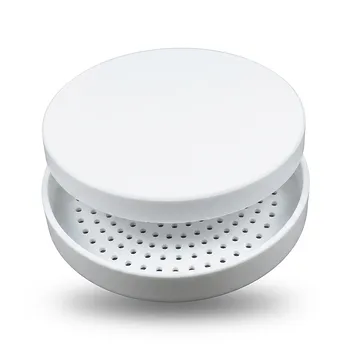
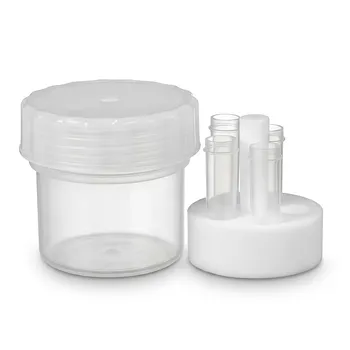
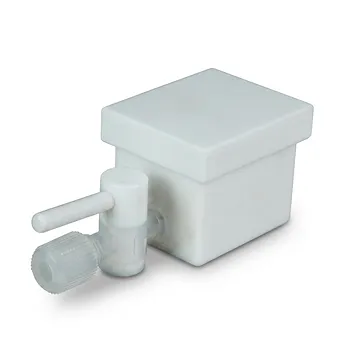
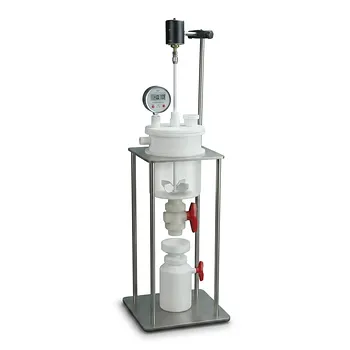
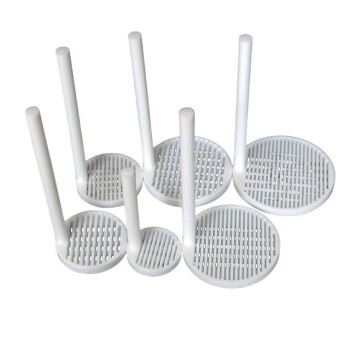
PTFE testing fixtures are the backbone of precise electrochemical measurement. They are required because they combine near-perfect electrical insulation with extreme chemical inertness, ensuring that the test environment does not interfere with delicate signals. By using customized designs, researchers can achieve the exact mechanical pressure and electrolyte sealing necessary for reliable, repeatable battery performance data.
Core Takeaway: Customized PTFE fixtures eliminate "experimental noise" by providing a chemically inert and electrically isolated environment. Their customization allows for precise physical control over electrode interfaces, ensuring that the collected data reflects the material's true energy storage characteristics rather than apparatus flaws.
Ensuring Signal Integrity through Isolation
Superior Electrical Insulation
PTFE provides excellent electrical insulation that is critical for preventing short circuits or parasitic current interference. This isolation ensures that the measured current flows exclusively through the intended electrochemical path.
Wide Electrochemical Window
The material possesses a very wide electrochemical window, meaning it does not participate in redox reactions during testing. This allows researchers to perform high-voltage cyclic voltammetry or charge-discharge cycles without the fixture itself contributing to the signal.
Resistance to Electrolyte Corrosion
Battery electrolytes are often highly corrosive and chemically aggressive. PTFE’s inherent chemical resistance maintains the fixture's structural integrity during long-term cycling, preventing contamination of the electrolyte.
Precision Mechanical Integration
Controlled Contact Pressure
Customized fixtures utilize specialized structures to apply uniform and constant contact pressure to the test samples. This optimization minimizes voltage drops and thermal effects caused by unstable contact resistance at the electrode interface.
Airtight Electrolyte Sealing
High-precision CNC machining allows for designs that provide a perfect seal based on specific battery architectures. This prevents electrolyte evaporation and leakage, which would otherwise shift the concentration of the solution and distort testing precision.
Optimized Electrode Spacing
Customization allows for the exact placement of electrodes, ensuring precise spacing in two-electrode or three-electrode configurations. This level of control is essential for maintaining a high signal-to-noise ratio in complex reaction conditions.
Understanding the Trade-offs
Material Softness and Deformation
While PTFE is chemically robust, it is a relatively soft plastic that can undergo "creep" or deformation under high mechanical loads. Over-tightening customized fixtures can lead to structural changes that may eventually compromise the seal or electrode spacing.
Thermal Expansion Limitations
PTFE has a higher coefficient of thermal expansion than many metals or ceramics. In experiments involving significant temperature fluctuations, the material may expand or contract, potentially altering the contact pressure on the battery components.
Cost and Manufacturing Complexity
Precision CNC machining of PTFE is more expensive and time-consuming than using standardized off-the-shelf testing cells. However, this cost is usually justified by the significant reduction in data variance and the prevention of failed long-term experiments.
Making the Right Choice for Your Research
To achieve the best results in your battery or electrochemical studies, consider how the fixture design aligns with your specific testing parameters.
- If your primary focus is high-voltage stability testing: Prioritize fixtures with a confirmed wide electrochemical window and maximum electrical isolation to avoid parasitic reactions.
- If your primary focus is long-term cycle life: Select customized PTFE housings that offer superior electrolyte sealing to prevent evaporation over weeks or months of testing.
- If your primary focus is sensitive kinetic measurements: Utilize high-precision machined fixtures that guarantee exact electrode spacing and uniform contact pressure to minimize ohmic resistance.
By investing in a fixture tailored to your specific electrode geometry and chemical environment, you ensure that your data is a true reflection of material performance.
Summary Table:
| Key Feature | Functional Advantage | Impact on Research |
|---|---|---|
| Chemical Inertness | Resists aggressive electrolytes | Eliminates contamination & parasitic reactions |
| Electrical Insulation | High dielectric strength | Prevents short circuits & experimental noise |
| CNC Customization | Precision-machined dimensions | Ensures uniform pressure & exact electrode spacing |
| Airtight Sealing | High-precision fit | Prevents electrolyte evaporation in long-term tests |
Precision-Engineered PTFE Solutions for Your Laboratory
At KINTEK, we understand that breakthrough research requires more than just standard tools. We specialize in high-performance fluoropolymer materials, offering everything from everyday basic labware—such as beakers, crucibles, and reagent bottles—to advanced customized electrochemical cells and battery testing fixtures.
Whether you need high-purity trace analysis instruments, complex fluid transfer components (tubing, valves, fittings), or bespoke CNC-machined reaction apparatus like microwave digestion vessels and microchannel reactors, our end-to-end fabrication ensures your equipment meets the exact demands of your research. From PFA digestion tubes and filters to specialized PTFE stirring bars, O-rings, and gaskets, we deliver the reliability your data deserves.
Ready to eliminate experimental noise and achieve superior repeatability? Contact KINTEK today for custom-machined fluoropolymer solutions tailored to your unique specifications.
References
- Chiayee Salih Ajaj. Green Synthesis of Carbon Quantum Dots with Good Photoluminescence Properties from <i>Prosopis farcta</i> and Their Applications as Fe <sup>3+</sup> Ion Detectors and Optical Nanothermometers. DOI: 10.1002/slct.202405433
This article is also based on technical information from Kintek Knowledge Base .
Related Products
- Acid Resistant PTFE Button Cell Battery Test Fixture Customizable Machining High Purity Electrochemical Testing Clamp
- Corrosion Resistant PTFE Coin Cell Battery Testing Clamps and Acid Proof Custom Fluoropolymer Battery Fixtures
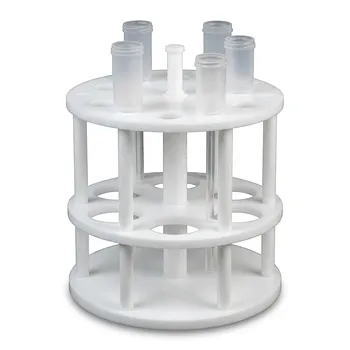
- Custom PFA Microcolumn Racks and PTFE Machined Low Background Corrosion Resistant Laboratory Fixtures
- Custom PTFE Test Tubes Corrosion Resistant Low Background Fluoropolymer Labware 50ml 30ml
- Custom PTFE Laboratory Cleaning Basket Carrier High Purity Acid Base Resistant Wafer Holder Low Background Contamination Free Chemical Bath Rack
People Also Ask
- In what ways do PTFE battery testing fixtures enhance laboratory throughput and reliability? Maximize Research Efficiency
- How does the chemical inertness of PTFE benefit laboratory-scale battery testing? Ensure high-purity research results.
- In what industrial manufacturing contexts are PTFE battery clamps or fixtures utilized? Optimize Battery Production.
- What is the thermal operating range for PTFE battery clamps in electrochemical research? Stability from -200°C to +260°C
- What are the primary functions and material compositions of PTFE battery clamps? Ensure Precision & Chemical Resistance