The working, reference, and counter electrodes function as a specialized team to isolate and measure electrochemical behavior. In this configuration, the working electrode is the site of the reaction being studied, the reference electrode acts as a stable voltage anchor, and the counter electrode completes the electrical circuit to allow current to flow without affecting the measurement.
The three-electrode system is designed to decouple the measurement of potential from the flow of current. By using a dedicated reference point, researchers can accurately monitor the working electrode’s performance while ensuring that the chemical processes occurring at the other electrodes do not interfere with the data.
The Working Electrode: The Subject of Investigation
The Site of the Redox Reaction
The working electrode (WE) is where the specific electrochemical process of interest occurs. Whether you are testing a new catalyst for the Hydrogen Evolution Reaction (HER) or evaluating a battery material like sodium cobalt phosphate, all relevant data is derived from this interface.
Defining Intrinsic Properties
Because the system isolates this electrode, you can measure its intrinsic parameters with high precision. This includes determining the material's specific capacitance, cyclic stability, and electrochemical impedance under specific conditions.
The Reference Electrode: The Constant Voltage Anchor
Providing a Stable Baseline
The reference electrode (RE) provides a known, constant chemical potential that does not change during the experiment. Common examples include the Silver/Silver Chloride (Ag/AgCl) electrode or the Saturated Calomel Electrode (SCE), which serve as a universal "ruler" for measuring voltage.
Preventing Polarization Errors
A critical characteristic of the RE is that it is designed to draw negligible current. By drawing almost no current, it avoids polarization, ensuring that the potential baseline remains "fixed" and accurate throughout the test.
The Counter Electrode: Completing the Circuit
Balancing the Faradaic Process
The counter electrode (CE), or auxiliary electrode, exists to complete the electrical circuit with the working electrode. If an oxidation reaction occurs at the WE, the CE facilitates an opposing redox reaction to balance the total charge in the cell.
Utilizing Inert and Conductive Materials
To prevent the CE from influencing the results, it is typically made of highly conductive and chemically inert materials like platinum (Pt) or graphite rods. This ensures that the CE provides efficient current transmission without introducing its own complex chemical interference into the electrolyte.
Understanding the Trade-offs and Pitfalls
The Risk of Counter Electrode Interference
While the CE is intended to be "invisible," it can sometimes fail if its surface area is too small. If the CE cannot keep up with the current demanded by the WE, the system may reach a voltage limit, or the CE may release byproducts that migrate to the WE and contaminate the results.
Maintaining the Reference Electrode
Reference electrodes are not "set and forget" components; they can drift over time if the internal filling solution is contaminated. If the liquid junction of the RE becomes blocked or the concentration changes, your entire voltage scale will shift, leading to false readings of the material's activity.
How to Apply This to Your Project
When setting up your three-electrode cell, your choice of materials and configuration should be dictated by your specific experimental environment.
- If your primary focus is high-current applications (e.g., HER/ORR): Ensure your counter electrode has a significantly larger surface area than your working electrode to prevent current bottlenecks.
- If your primary focus is acidic or alkaline stability: Select a reference electrode compatible with your electrolyte, such as an SCE for acidic media or Ag/AgCl for neutral-to-alkaline systems, to prevent potential drift.
- If your primary focus is measuring intrinsic catalyst activity: Use a rotating disk electrode setup to achieve precise mass transfer control, ensuring that the measured current is not limited by how fast reactants reach the working electrode.
Properly balancing the roles of these three electrodes ensures that the data you collect is a true reflection of your material's performance rather than an artifact of the test environment.
Summary Table:
| Electrode Type | Primary Role | Key Requirement | Common Materials |
|---|---|---|---|
| Working (WE) | Site of the redox reaction being studied | High purity and defined surface area | Platinum, Glassy Carbon, Gold |
| Reference (RE) | Provides a stable, constant voltage baseline | Negligible current flow to prevent drift | Ag/AgCl, SCE, Hg/HgO |
| Counter (CE) | Completes the electrical circuit | Inert and larger area than the WE | Platinum wire/mesh, Graphite |
| Electrolyte | Facilitates ion transport | High ionic conductivity and stability | Acidic, alkaline, or neutral solutions |
Optimize Your Electrochemical Setup with KINTEK Precision
Ensure the integrity of your research with high-performance laboratory supplies from KINTEK. We specialize in high-performance fluoropolymer materials, offering everything from everyday labware (beakers, crucibles, reagent bottles, and centrifuge tubes) to advanced reaction apparatus like custom electrochemical cells and battery testing fixtures.
Our expertise extends to:
- Fluid Transfer & Filtration: Tubing, fittings, valves, and separatory funnels.
- Precision Components: Custom CNC-fabricated PTFE/PFA parts, stirring bars, O-rings, and gaskets.
- Advanced Tools: Microwave digestion vessels, hydrothermal synthesis liners, and microchannel reactors.
Whether you need high-volume consumables or bespoke, non-standard machined parts, KINTEK provides end-to-end solutions tailored to your specific experimental environment. Contact us today to discuss your project requirements!
Related Products
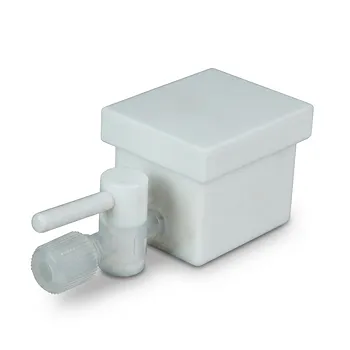
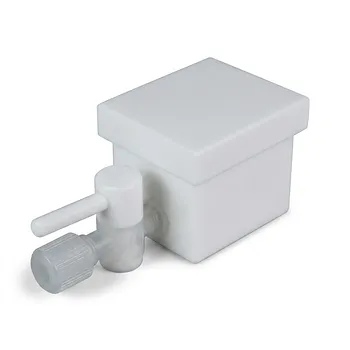
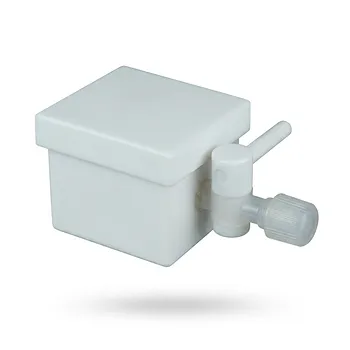
- Custom PTFE Corrosion Resistant Insulating Electrophoresis Reaction Cell with Septum and Valves for Low Background Trace Analysis
- Custom PTFE Laboratory Apparatus Corrosion Resistant Low Background Reaction Cells Precision CNC Fabrication
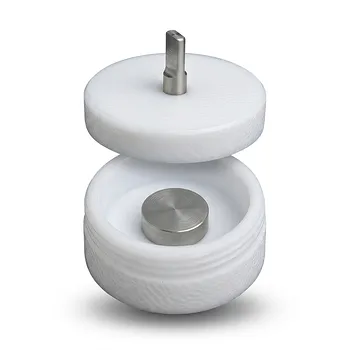
- Acid Resistant PTFE Button Cell Battery Test Fixture Customizable Machining High Purity Electrochemical Testing Clamp
- White PTFE Electrolytic Cell with Movable Slider and Insulated Lid for Fluorine Corrosion Resistance
- Flame Retardant Electrophoresis Cell Corrosion Resistant PTFE Evaporating Dish Customizable White Hydrolysis Cell
People Also Ask
- What industries use custom PTFE parts and for what purposes? Solve Critical Challenges with High-Performance Materials
- What industries benefit most from custom PTFE parts? Solve Extreme Environment Challenges
- What design considerations are important for custom PTFE parts? Design for Performance & Reliability
- What advantages do custom PTFE parts offer for industrial efficiency? Boost Uptime & Cut Costs
- What are the key properties of Teflon (PTFE) used in custom parts? | Achieve Peak Performance