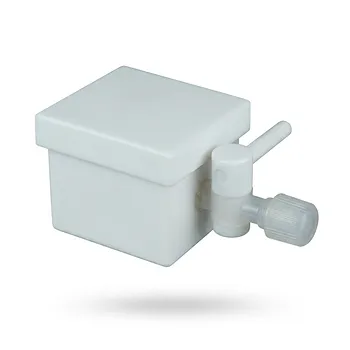
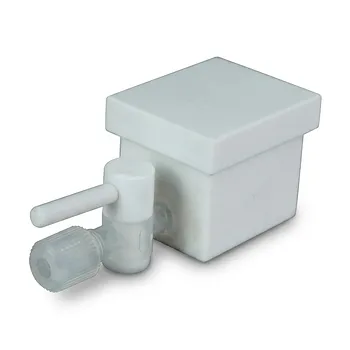
Electrochemical test cells are the essential laboratory bridge between material discovery and industrial-scale energy storage. They serve as standardized, controlled environments where researchers can evaluate the electrochemical properties of anodes, cathodes, and electrolytes using only milligram-scale samples. By isolating specific variables, these cells provide the precise data necessary to predict how new chemistries will perform in real-world battery systems.
Core Takeaway: Electrochemical test cells provide a sealed, pressurized, and chemically inert environment required to characterize battery components accurately. They are the primary tools for measuring capacity, rate capability, and interfacial resistance during the R&D phase.
Evaluating Core Material Performance
Rapid Assessment of Active Materials
Test cells are designed to evaluate electrode materials, such as anodes and cathodes, using very small quantities of active material. This allows researchers to screen hundreds of different chemical compositions without the need for mass-production quantities.
Characterizing Retention and Rate Capability
These cells are utilized for capacity retention cycling, which tracks how much energy a battery can hold over hundreds of charges and discharges. They also facilitate rate capability assessments to determine how quickly a material can deliver or accept power.
Performance Benchmarking in Small Formats
Researchers typically use small-format configurations like coin-type, pouch, or Swagelok-style fixtures. These formats allow for the standardized evaluation of electrolytes, separators, and additives across various systems, including lithium-ion, sodium-ion, and redox flow.
Analyzing Interfacial Dynamics and Kinetics
Utilizing Electrochemical Impedance Spectroscopy (EIS)
Test cells enable EIS analysis, a critical technique for measuring internal resistance and charge transfer. This allows researchers to understand how ions move through the electrolyte and across the interface between the electrode and the electrolyte.
Three-Electrode Configurations for Precision
While two-electrode cells are common, three-electrode test cells allow researchers to isolate the potential of a single electrode. This precision is vital for identifying which component (the anode or the cathode) is responsible for performance degradation.
Observing Reaction Mechanisms
By providing a stable environment, these cells allow for the recording of stable, high-signal-to-noise ratio data. This is essential for accurately mapping the electrochemical reaction mechanisms occurring within the cell during operation.
Mechanical Integrity and Environmental Control
The Necessity of Robust Sealing
Battery materials are often highly sensitive to oxygen and moisture, requiring air-tight operation. High-precision cells use O-rings, compression fittings, and specialized polymer sealing to protect the internal reaction from atmospheric interference.
Managing Mechanical Pressure
Applying consistent mechanical pressure to the electrode stack is critical for minimizing contact resistance. In lithium-ion systems, this pressure ensures the stable formation of the solid electrolyte interphase (SEI), which is essential for battery longevity.
Chemical Resistance with PTFE and PFA
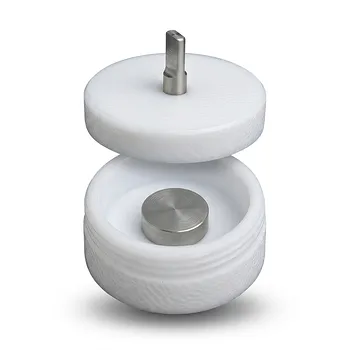
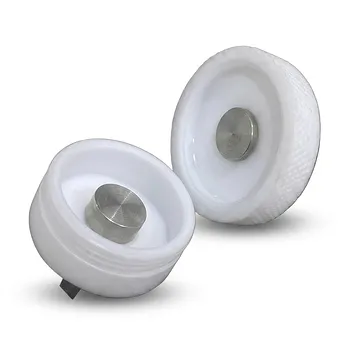
The internal components of test cells are often precision-machined from high-performance polymers like PTFE or PFA. These materials provide excellent electrical insulation and are highly resistant to the corrosive nature of modern electrolytes.
Advanced Applications in Solid-State Systems
Simulating Stack Compression
In solid-state battery development, specialized high-pressure cells are used to simulate stack compression. Because solid-state components do not have liquid electrolytes to fill gaps, high mechanical loads are required to ensure contact between the solid particles.
Evaluating Interface Stability
Force-monitored cells allow researchers to evaluate how the interface between solid components changes under different operating conditions. This data is critical for optimizing the mechanical contact required for efficient ion transport.
Understanding the Trade-offs
Scaling Discrepancies
While test cells provide excellent data for material characterization, the performance observed in a milligram-scale coin cell does not always translate perfectly to large-scale EV batteries. Factors like heat dissipation and electrolyte distribution behave differently at scale.
Assembly Sensitivity
The accuracy of the data is highly dependent on the precision of the cell assembly. Slight variations in manual pressure or the alignment of the electrode stack can introduce errors that compromise the reproducibility of the results.
Material Compatibility
While PTFE and PFA are robust, certain extreme temperature or high-voltage experiments may push the limits of these materials. Researchers must carefully select cell materials that are compatible with their specific chemical environment to avoid contamination.
How to Apply This to Your Research
When selecting an electrochemical test cell configuration, your choice should be driven by your specific R&D stage and the nature of the materials being tested.
- If your primary focus is rapid material screening: Use coin-type cells for their cost-effectiveness and ease of assembly when testing small quantities of active material.
- If your primary focus is solid-state battery development: Utilize high-pressure or force-monitored Swagelok-style cells to ensure adequate contact between solid interfaces.
- If your primary focus is detailed kinetic analysis: Implement a three-electrode cell configuration to isolate and study the performance of a specific electrode against a reference.
- If your primary focus is long-term stability and SEI formation: Prioritize cells with high-precision PTFE/PFA seals to prevent electrolyte leakage and atmospheric contamination over months of testing.
Selecting the right electrochemical test cell ensures that your laboratory data provides a reliable foundation for the next generation of energy storage technology.
Summary Table:
| Application Category | Primary Research Goal | Recommended Cell Configuration |
|---|---|---|
| Material Screening | Rapid assessment of new chemical compositions | Coin-type or Pouch cells |
| Kinetic Analysis | Isolating anode/cathode performance via EIS | Three-electrode test cells |
| Solid-State R&D | Simulating stack compression and contact | High-pressure Swagelok-style fixtures |
| Stability Testing | Evaluating SEI formation and cycle life | PTFE/PFA sealed airtight cells |
| Interface Dynamics | Mapping electrochemical reaction mechanisms | Force-monitored high-signal cells |
Elevate Your Battery R&D with KINTEK’s Precision Fluoropolymer Solutions
Ready to bridge the gap between material discovery and industrial-scale energy storage? KINTEK specializes in high-performance labware crafted from PTFE and PFA, specifically designed to withstand the corrosive environments of advanced electrochemical research.
From everyday essentials like beakers, reagent bottles, and digestion tubes to complex fluid transfer components (tubing, fittings, valves) and sample prep tools, we provide the foundation for a clean lab environment. For specialized battery R&D, we offer advanced electrochemical cells, battery testing fixtures, and hydrothermal synthesis liners precision-engineered for accuracy.
Whether you need standard consumables or bespoke, custom CNC-machined parts for non-standard laboratory setups, KINTEK delivers end-to-end fabrication with an absolute focus on material purity and performance.
Maximize your laboratory efficiency today—contact our experts to discuss your custom setup!
Related Products
- Corrosion Resistant PTFE Electrochemical Cell for New Energy Research Inert Insulating Customizable Lab Reaction Vessel
- Acid Resistant PTFE Button Cell Battery Test Fixture Customizable Machining High Purity Electrochemical Testing Clamp
- Square PTFE Electrochemical Cell for Silicon Wafer Processing and Hydrofluoric Acid Resistance in Semiconductor and New Energy Research
- White PTFE Electrolytic Cell with Movable Slider and Insulated Lid for Fluorine Corrosion Resistance
- Custom PTFE Reaction Box Opaque White Square Electrochemical Cell Tank
People Also Ask
- How do custom PTFE electrochemical cells improve the accuracy of stability testing for alkaline catalysts compared to glass cells?
- How does the hydrophobicity of PTFE benefit electrochemical measurements? Enhance Stability and Precision in Your Lab
- Why must seawater electrolysis test cells have high corrosion resistance? Protect catalyst stability & data accuracy.
- What are the key steps for structural integrity in molded PTFE lab reaction vessels? Master fine powder processing.
- Why pretreat an electrochemical cell with nitrogen for HER? Eliminate Oxygen to Ensure Precise Kinetic Data