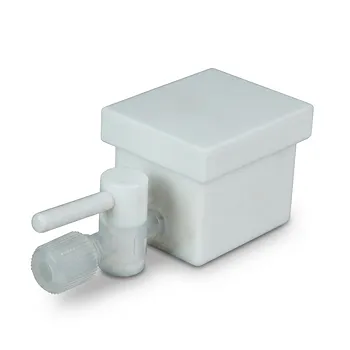
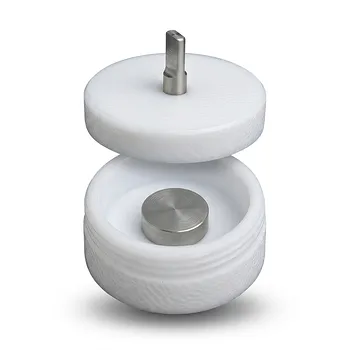
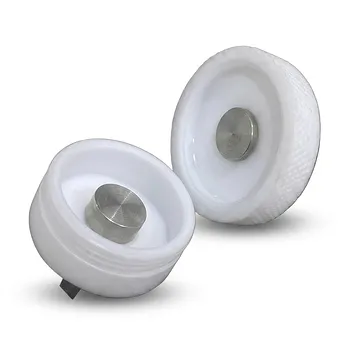
Electrochemical test cells are adapted for benchmarking by utilizing split or flow-through architectures that facilitate a continuous supply of reactants. These designs allow for the precise evaluation of catalysts, flow fields, and membrane-electrode assemblies (MEAs) under dynamic operating conditions. By strictly controlling environmental variables, researchers can generate accurate polarization curves and power-density maps to guide material development.
Core Takeaway: To accurately benchmark fuel cells and electrolyzers, test cells must transition from static environments to flow-through systems that simulate real-world mass transport. This structural adaptation, combined with rigid electrode positioning and corrosion-resistant materials, is the only way to ensure that performance data reflects intrinsic material properties rather than setup-induced errors.
Structural Adaptations for Continuous Operation
The Transition to Flow-Through Architectures
Standard electrochemical cells are often static, but fuel cell and electrolyzer benchmarking requires continuous delivery of fuel and oxidant. Adapted cells use split or flow-through designs to move gases or liquids across the electrode surface constantly. This setup is critical for maintaining steady-state conditions during long-term performance mapping.
Precision in Electrode Positioning
To ensure uniform current distribution, adapted cells are manufactured with high-precision tolerances to fix the relative positions of the working, counter, and reference electrodes. Fixed electrode spacing eliminates variability in ohmic resistance between tests. This structural stability is the hardware foundation required for reproducible cyclic voltammetry and impedance spectroscopy.
Advanced Material Selection
Benchmarking cells are typically fabricated from high-insulation and corrosion-resistant materials, such as fluoropolymers. These materials prevent chemical degradation and ensure that the cell housing does not introduce impurities into the system. High-performance plastics also help eliminate environmental interference, protecting the integrity of weak signals during sensitive measurements.
Environmental Control and Data Fidelity
Managing Mass Transport and Humidity
Performance in energy conversion devices is highly sensitive to the humidity, temperature, and flow rates of the reactants. Adapted test cells integrate with external control systems to maintain these parameters within strict limits. This allows researchers to simulate specific operating environments and evaluate how water management affects the polarization curve.
Mapping Durability and Load Cycling
By providing a stable and sealed environment, these cells allow for accelerated stress testing (AST) and load cycling. Researchers use these adaptations to observe how catalysts and MEAs degrade over thousands of cycles. This data is essential for predicting the operational lifespan of the components in commercial applications.
Ensuring Reliable Sealing
High-precision manufacturing ensures that cells maintain a perfect seal even under varying pressures and temperatures. Reliable sealing prevents reactant leakage, which could lead to inaccurate mass-balance calculations or safety hazards. This mechanical integrity is vital for obtaining trustworthy charge-discharge curves and power-density data.
Understanding the Trade-offs
System Complexity vs. Ease of Use
While flow-through cells provide more realistic data, they significantly increase the complexity of the experimental setup. Managing gas lines, humidifiers, and back-pressure regulators requires more specialized training compared to using a simple beaker cell.
Cost of High-Performance Materials
Using specialized fluoropolymers and gold-plated current collectors increases the initial cost of the hardware. However, choosing cheaper materials often leads to corrosion, which can poison the catalyst and invalidate months of research.
Scaling Limitations
Small-scale lab cells are excellent for catalyst screening, but their flow dynamics may not perfectly mirror full-scale industrial stacks. Researchers must be careful when extrapolating "best-case" lab results to large-scale engineering projects where thermal gradients become more pronounced.
Making the Right Choice for Your Goal
To maximize the value of your electrochemical benchmarking, tailor your cell selection to your specific research objectives:
- If your primary focus is catalyst screening: Use high-precision cells with fixed electrode geometries to ensure that small changes in activity are not masked by setup variability.
- If your primary focus is system durability: Prioritize cells made from ultra-corrosion-resistant fluoropolymers that can withstand prolonged exposure to aggressive electrolytes and thermal cycling.
- If your primary focus is mass transport optimization: Opt for flow-through designs that allow for interchangeable flow fields to test different gas distribution strategies.
The evolution of the electrochemical test cell from a simple container to a precision-engineered flow reactor is what enables the modern transition toward efficient, large-scale hydrogen and fuel cell technologies.
Summary Table:
| Feature | Adaptation for Benchmarking | Research Benefit |
|---|---|---|
| Architecture | Flow-through & Split-cell designs | Simulates real-world mass transport & steady-state conditions |
| Electrode Setup | Fixed, high-precision positioning | Eliminates ohmic variability for reproducible CV and EIS data |
| Material Choice | High-purity Fluoropolymers (PTFE/PFA) | Prevents corrosion and impurity leaching in aggressive media |
| Sealing | Mechanical precision & chemical seals | Ensures data fidelity for charge-discharge & power-density maps |
Elevate Your Electrochemical Research with KINTEK
Precision in fuel cell and electrolyzer benchmarking starts with the integrity of your hardware. KINTEK specializes in high-performance fluoropolymer solutions designed to withstand the most aggressive electrochemical environments.
From everyday basic labware (beakers, measuring cylinders, and reagent bottles) to specialized custom electrochemical cells, battery testing fixtures, and microwave digestion vessels, we provide the tools you need for absolute data fidelity. Our end-to-end custom CNC fabrication allows us to deliver everything from complex non-standard machined parts to high-volume orders of PTFE and PFA components.
Ready to optimize your lab's performance? Contact KINTEK today to discuss your bespoke laboratory setup or to source high-purity consumables tailored to your specific research goals.
Related Products
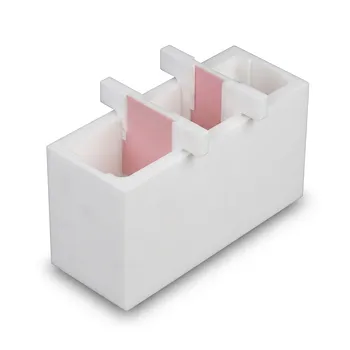
- White PTFE Electrolytic Cell with Movable Slider and Insulated Lid for Fluorine Corrosion Resistance
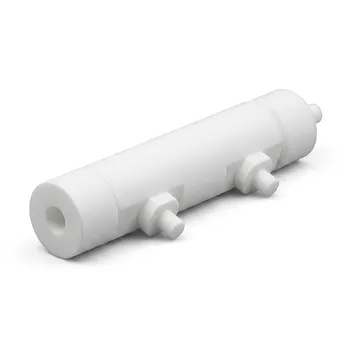
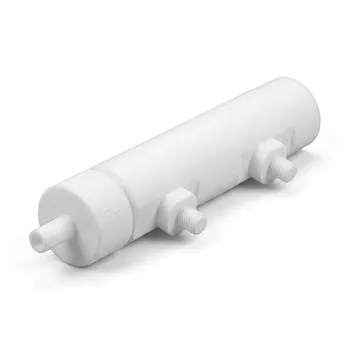
- Custom PTFE Electrolytic Cell Corrosion Resistant Low Background Reaction Vessel with Inlet Outlet Ports
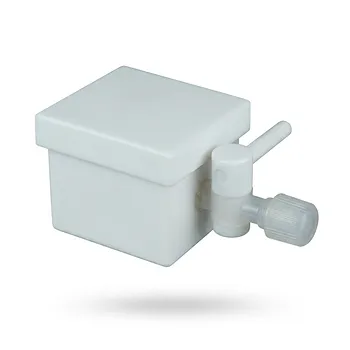
- Square PTFE Electrochemical Cell for Silicon Wafer Processing and Hydrofluoric Acid Resistance in Semiconductor and New Energy Research
- High Purity Custom PTFE Reaction Cell Electrolytic Tank for Semiconductor and Polysilicon Industrial Applications
- Flame Retardant Electrophoresis Cell Corrosion Resistant PTFE Evaporating Dish Customizable White Hydrolysis Cell
People Also Ask
- What makes PTFE an ideal construction material for custom electrochemical cells and electronic analytical instrumentation housings? Discover superior chemical resistance and electrical insulation
- How do custom PTFE electrochemical cells improve the accuracy of stability testing for alkaline catalysts compared to glass cells?
- How does the hydrophobicity of PTFE benefit electrochemical measurements? Enhance Stability and Precision in Your Lab
- How are electrolytic cells utilized in the Hall-Héroult process? Optimizing Purity and Energy Efficiency
- What are the primary components required for the construction of a standard electrolytic cell? Essential Hardware Guide