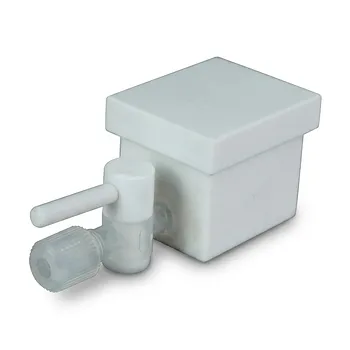
Designing electrochemical test cells for battery research requires a focus on mechanical pressure, chemical inertness, and hermetic sealing. These cells must provide a controlled environment that mimics the physical constraints of a commercial battery while allowing for high-precision data collection on milligrams of material. Key design priorities include maintaining constant electrode spacing, applying uniform pressure for stable interfacial contact, and utilizing corrosion-resistant polymers like PTFE or PFA to ensure long-term stability.
Core Takeaway: The integrity of battery research depends on a cell’s ability to isolate electrochemical reactions from external variables. A well-designed test cell serves as a high-precision vessel that maintains consistent physical pressure and chemical purity, ensuring that the resulting data reflects material performance rather than setup inconsistencies.
Optimizing Mechanical and Interfacial Integrity
Application of Constant Mechanical Pressure
The application of mechanical pressure to the electrode stack is essential to minimize contact resistance between the active material and current collectors. Proper pressure ensures that the solid electrolyte interphase (SEI) forms uniformly and remains stable during the volume expansion of cycling.
Ensuring Uniform Electrode Spacing
Precision-machined internal components maintain a fixed distance between the anode and cathode. This consistency is critical for calculating accurate transport coefficients and ensuring a uniform electric field distribution across the electrolyte.
Facilitating Stable Physical Support
High-precision fixtures provide the necessary physical support to prevent electrode warping or shifting. This structural stability is vital for techniques like Electrochemical Impedance Spectroscopy (EIS), where even minor physical fluctuations can introduce significant noise into the data.
Material Selection for Chemical and Electrical Isolation
Chemical Compatibility with Fluoropolymers
Test cells often utilize PTFE (Teflon) or PFA for internal components because these materials offer superior resistance to corrosive electrolytes and mixed carbonate solvents. These polymers prevent the leaching of impurities that could interfere with sensitive electrochemical measurements.
Electrical Insulation and Signal Integrity
The use of engineering plastics provides excellent electrical insulation, effectively isolating the cell's working electrodes from the external housing. This isolation is necessary to prevent parasitic currents and ensure that measured signals originate solely from the electrochemical reactions under study.
Managing Solvent Swelling and Thermal Stability
Advanced materials like PFA are chosen for their ability to withstand the swelling effects of electrolytes at various temperatures. Maintaining structural dimensions at specific temperatures, such as 303 K, allows for the accurate determination of Onsager transport coefficients and other thermodynamic properties.
Environmental Isolation and Sealing Mechanisms
Achieving Hermetic Operation
Battery materials are often highly sensitive to oxygen and moisture, requiring air-tight operation through robust sealing structures. Compression fittings, O-rings, and precision-threaded caps (common in Swagelok-style cells) prevent atmospheric contamination during long-term cycling.
Handling Internal Pressures and Volatiles
During charge and discharge, internal pressures can rise due to gas evolution or thermal expansion. A high-quality test cell must be designed to contain these pressures without leaking, protecting the integrity of the experiment and the safety of the laboratory environment.
Preventing Electrolyte Leakage
Precision sealing prevents the loss of volatile electrolyte components, which is crucial for maintaining a consistent electrolyte concentration. This ensures that the ionic conductivity and viscosity remain stable throughout the duration of the test.
Understanding the Trade-offs
Reusability vs. Consistency
While Swagelok-style and specialized laboratory fixtures are often reusable, they require meticulous cleaning between experiments to prevent cross-contamination. Conversely, coin cells are disposable and offer high repeatability but lack the ability to easily customize internal pressure or integrate specialized sensors.
Design Complexity vs. Ease of Assembly
Increased precision in cell design, such as adding reference electrodes or specialized windows for in situ analysis, often leads to increased assembly difficulty. Complex seals are more prone to failure if not handled by trained personnel, potentially compromising oxygen-sensitive experiments.
Material Cost vs. Performance
Utilizing high-purity PFA and precision-machined components increases the initial capital cost of the hardware. However, using lower-grade materials can lead to data artifacts and frequent experimental failures, which often prove more expensive in the long term.
Making the Right Choice for Your Goal
To select the appropriate electrochemical test cell, consider the specific requirements of your research material and the type of data you need to collect.
- If your primary focus is electrode material screening: Utilize standard coin-type cells for their high throughput and ease of assembly when working with small amounts of active material.
- If your primary focus is mechanistic studies or EIS: Choose Swagelok-style or specialized plunger cells that allow for controlled mechanical pressure and stable electrical contacts.
- If your primary focus is electrolyte transport properties: Select cells featuring precision-machined PFA components to ensure chemical resistance and fixed electrode geometry for accurate calculations.
- If your primary focus is long-term cycle life: Prioritize cells with high-performance O-ring seals to prevent air ingress and electrolyte evaporation over weeks or months of testing.
By aligning your cell design with your specific experimental objectives, you ensure that your findings are a true reflection of your battery chemistry's potential.
Summary Table:
| Design Consideration | Impact on Research Data | Recommended Material/Feature |
|---|---|---|
| Mechanical Pressure | Minimizes contact resistance and stabilizes SEI | Precision plungers & fixtures |
| Chemical Inertness | Prevents leaching and electrolyte contamination | High-purity PTFE or PFA |
| Hermetic Sealing | Protects moisture-sensitive materials from air | O-rings & compression fittings |
| Electrode Spacing | Ensures uniform electric field distribution | Fixed-distance internal geometry |
| Electrical Isolation | Prevents parasitic currents and signal noise | Engineering plastic components |
Elevate Your Battery Research with KINTEK Precision
Ensure the integrity of your electrochemical data with laboratory hardware designed for absolute purity and performance. KINTEK specializes in high-performance fluoropolymer solutions, manufacturing virtually every lab essential from PTFE and PFA.
Whether you need everyday basic labware (beakers, reagent bottles, digestion tubes), high-purity trace analysis instruments, or comprehensive fluid transfer components (tubing, valves, fittings), we provide the chemical resistance your research demands. Our expertise extends to advanced derivative and reaction apparatus, including custom electrochemical cells, battery testing fixtures, and electrode accessories.
Backed by end-to-end custom CNC fabrication, KINTEK is equipped to deliver everything from complex, non-standard machined parts to high-volume orders for sample prep and filtration tools. Stop compromising on material compatibility and start building with the best.
Ready to optimize your lab setup? Contact KINTEK today for bespoke solutions and high-performance laboratory supplies.
Related Products
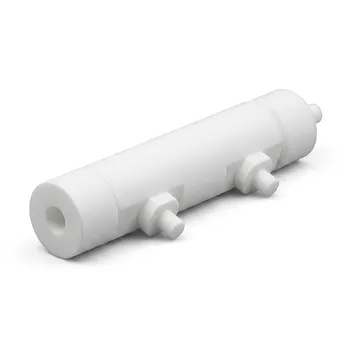
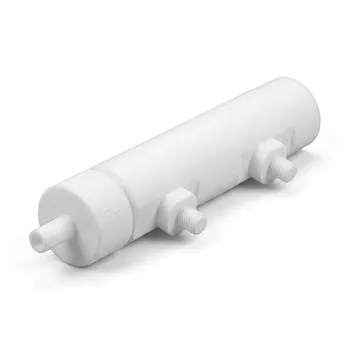
- Corrosion Resistant PTFE Electrochemical Cell for New Energy Research Inert Insulating Customizable Lab Reaction Vessel
- Acid Resistant PTFE Button Cell Battery Test Fixture Customizable Machining High Purity Electrochemical Testing Clamp
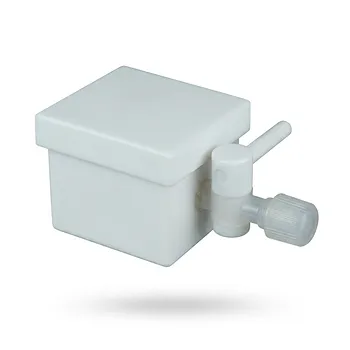
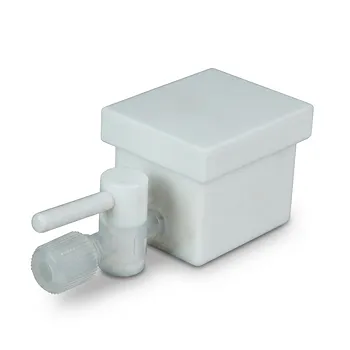
- Square PTFE Electrochemical Cell for Silicon Wafer Processing and Hydrofluoric Acid Resistance in Semiconductor and New Energy Research
- White PTFE Electrolytic Cell with Movable Slider and Insulated Lid for Fluorine Corrosion Resistance
- Custom PTFE Reaction Box Opaque White Square Electrochemical Cell Tank
People Also Ask
- How do custom PTFE electrochemical cells improve the accuracy of stability testing for alkaline catalysts compared to glass cells?
- How does the hydrophobicity of PTFE benefit electrochemical measurements? Enhance Stability and Precision in Your Lab
- What makes PTFE an ideal construction material for custom electrochemical cells and electronic analytical instrumentation housings? Discover superior chemical resistance and electrical insulation
- Why must seawater electrolysis test cells have high corrosion resistance? Protect catalyst stability & data accuracy.
- What are the key steps for structural integrity in molded PTFE lab reaction vessels? Master fine powder processing.