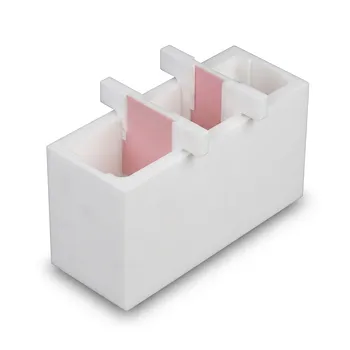
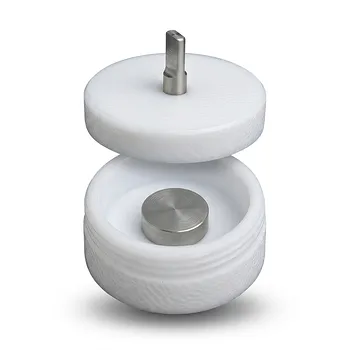
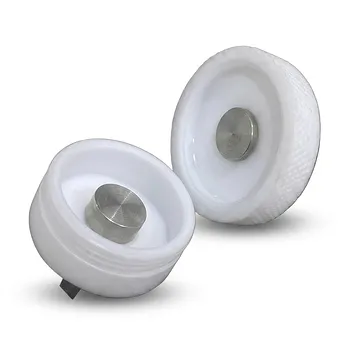
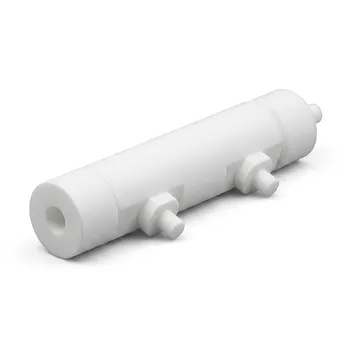
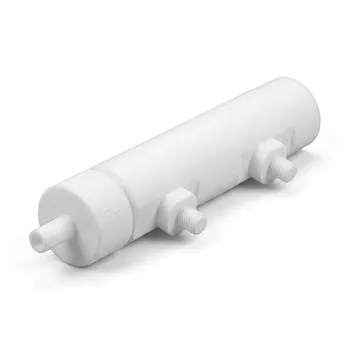
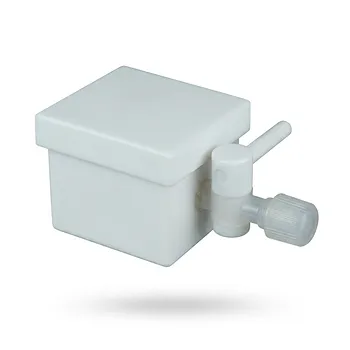
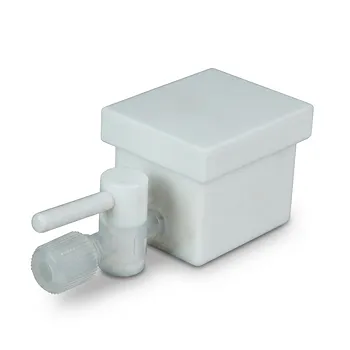
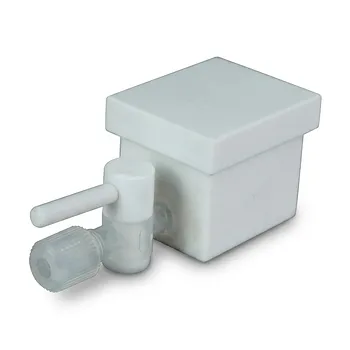
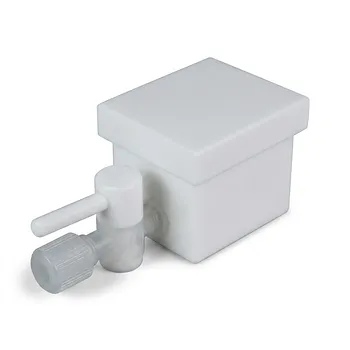
Electrochemical test cells accelerate the discovery of new chemical materials by providing a standardized, highly controlled environment for rapid screening and precise characterization. These specialized devices allow researchers to evaluate the performance of tiny material samples under rigorous conditions, ensuring that results are reproducible and free from environmental contamination. By isolating specific electrochemical reactions, these cells bridge the gap between theoretical molecular design and functional prototype validation.
The central value of electrochemical test cells lies in their ability to standardize the physical environment of a reaction, allowing researchers to isolate the behavior of new materials from external variables. This precision enables rapid iteration and reliable data collection, which are the foundations of modern chemical innovation.
Accelerating the Research Lifecycle
Rapid Screening and Parallel Testing
Electrochemical test cells are designed for high-throughput environments where multiple chemistries must be evaluated simultaneously.
Because these cells require only small sample sizes, researchers can test expensive or scarce new materials without significant financial waste.
This capability allows for faster iteration cycles, moving a discovery from the laboratory bench to a functional prototype in a fraction of the time required by traditional methods.
Environmental Isolation and Control
Many new chemical materials, particularly those used in advanced batteries, are sensitive to moisture and atmospheric oxygen.
Test cells are often designed for assembly within a glovebox, providing a hermetically sealed environment that protects the integrity of the experiment.
The use of high-performance fluoropolymers, such as PTFE and PFA, ensures that the cell body remains chemically inert, preventing side reactions from skewing the data.
Enhancing Data Precision and Accuracy
Standardized Geometry for Reproducibility
The physical design of a test cell is engineered to fix the relative positions of the working, counter, and reference electrodes.
Standardized spacing and mechanical compression ensure a uniform current distribution across the electrode surface.
This structural stability minimizes "Ohmic drop"—the loss of voltage due to internal resistance—ensuring that the measured potential accurately reflects the material’s intrinsic properties.
Isolation of Reaction Kinetics
By utilizing two-electrode or three-electrode configurations, test cells allow researchers to isolate specific processes, such as electrode kinetics or reaction mechanisms.
Analytical techniques like cyclic voltammetry (CV) and electrochemical impedance spectroscopy (EIS) are performed within these cells to quantify electron-transfer rates and diffusion coefficients.
This level of detail is critical for identifying whether a new material meets the performance requirements for sensors, batteries, or corrosion-resistant coatings.
Understanding the Trade-offs
Lab-Scale vs. Industrial Reality
While test cells provide high precision, the conditions within a laboratory cell may not perfectly mirror the stressors of a mass-produced industrial component.
The focus on idealized geometry and small samples can sometimes mask "scale-up" issues, such as thermal management or long-term structural degradation in larger formats.
Material and Equipment Costs
High-performance cells made from specialized corrosion-resistant materials are an investment that adds to the initial laboratory overhead.
However, this cost is typically offset by the reduction in material waste and the prevention of failed experiments caused by low-quality hardware.
Applying Test Cell Technology to Your Project
Recommendations for Material Research
To maximize the utility of electrochemical test cells in your laboratory, consider your primary research objective when selecting hardware.
- If your primary focus is rapid discovery and cost reduction: Utilize small-format cells that require minimal material volumes and support parallel testing setups.
- If your primary focus is high-precision kinetic studies: Invest in three-electrode cells with fixed geometries and high-insulation fluoropolymer bodies to ensure data integrity.
- If your primary focus is environmental stability: Prioritize cells designed for easy glovebox integration and vacuum-tight sealing to exclude atmospheric contaminants.
By leveraging the standardized environment of electrochemical test cells, researchers can transform unpredictable chemical experiments into a streamlined, data-driven discovery process.
Summary Table:
| Key Feature | Benefit | Impact on Research |
|---|---|---|
| Rapid Screening | Minimal sample volume needed | Faster iteration cycles and reduced material waste |
| Environmental Control | Hermetic sealing (Glovebox ready) | Protection for moisture and oxygen-sensitive chemistries |
| Standardized Geometry | Fixed electrode positioning | Enhanced reproducibility and minimized Ohmic drop |
| Inert Construction | High-performance PTFE/PFA bodies | Prevention of chemical contamination and side reactions |
Elevate Your Laboratory Research with KINTEK
Unlock the full potential of your material discovery with KINTEK’s comprehensive range of high-performance laboratory solutions. From everyday basic labware like beakers, crucibles, and reagent bottles to advanced electrochemical test cells, battery testing fixtures, and hydrothermal synthesis liners, we manufacture virtually all imaginable supplies crafted from premium PTFE and PFA.
Whether you require high-purity trace analysis instruments, complex fluid transfer components (tubing, valves, fittings), or bespoke reaction apparatus, KINTEK provides end-to-end custom CNC fabrication to meet your exact specifications. We are equipped to deliver everything from one-off non-standard machined parts to high-volume orders, all backed by an absolute focus on high-performance fluoropolymer materials.
Ready to streamline your lab's efficiency and ensure data precision? Contact us today to discuss your custom requirements and see how KINTEK can support your innovation journey!
Related Products
- Corrosion Resistant PTFE Electrochemical Cell for New Energy Research Inert Insulating Customizable Lab Reaction Vessel
- Acid Resistant PTFE Button Cell Battery Test Fixture Customizable Machining High Purity Electrochemical Testing Clamp
- Square PTFE Electrochemical Cell for Silicon Wafer Processing and Hydrofluoric Acid Resistance in Semiconductor and New Energy Research
- White PTFE Electrolytic Cell with Movable Slider and Insulated Lid for Fluorine Corrosion Resistance
- Corrosion Resistant PTFE Coin Cell Battery Testing Clamps and Acid Proof Custom Fluoropolymer Battery Fixtures
People Also Ask
- How do custom PTFE electrochemical cells improve the accuracy of stability testing for alkaline catalysts compared to glass cells?
- How does the hydrophobicity of PTFE benefit electrochemical measurements? Enhance Stability and Precision in Your Lab
- What makes PTFE an ideal construction material for custom electrochemical cells and electronic analytical instrumentation housings? Discover superior chemical resistance and electrical insulation
- Why must seawater electrolysis test cells have high corrosion resistance? Protect catalyst stability & data accuracy.
- What are the key steps for structural integrity in molded PTFE lab reaction vessels? Master fine powder processing.