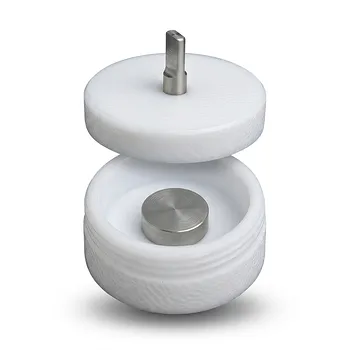
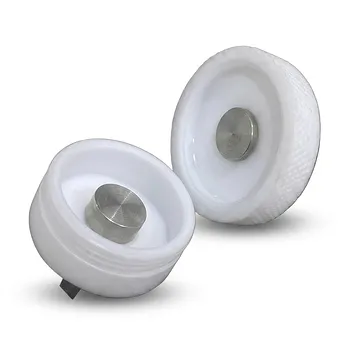
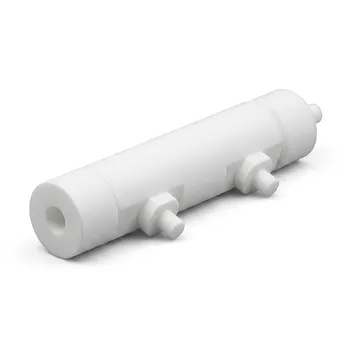
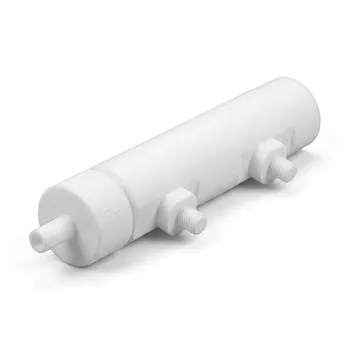
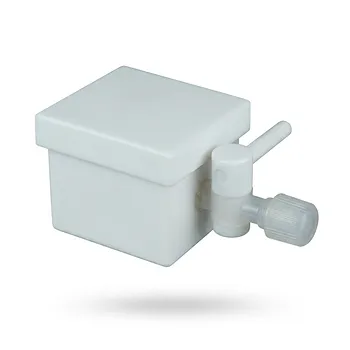
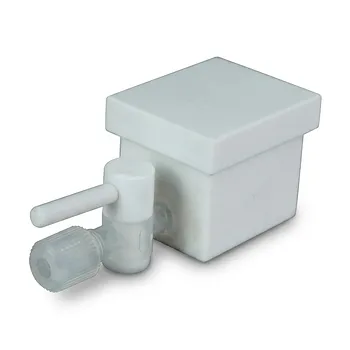
Electrochemical test cells are the fundamental hardware interface where chemical information is converted into measurable electrical signals. In analytical chemistry, they act as controlled environments for characterizing the fundamental properties of molecules, such as redox potentials and reaction kinetics. In sensor development, these cells serve as the essential validation platform for detecting specific analytes, providing the high sensitivity required to measure minute concentrations of biological or inorganic substances.
The core value of an electrochemical test cell lies in its ability to isolate specific redox reactions within a stable, reproducible environment. By precisely controlling electrode geometry and environmental variables, these cells transform complex chemical interactions into accurate, quantifiable data for both fundamental research and prototype validation.
The Role of Test Cells in Analytical Chemistry
Characterizing Molecular Properties
In the field of analytical chemistry, test cells are used to identify the fundamental signatures of redox-active species. They allow researchers to determine critical values such as formal potentials, electron-transfer kinetics, and diffusion coefficients. These parameters are essential for understanding how a substance will behave in various chemical environments.
Quantifying Reaction Mechanisms
Analytical chemists utilize these cells to perform techniques like Cyclic Voltammetry (CV) and Electrochemical Impedance Spectroscopy (EIS). These methods provide a roadmap of how electrons move during a reaction. The test cell ensures that the resulting data reflects the chemistry of the analyte rather than fluctuations in the testing environment.
Minimizing Sample Requirements
Modern test cells are designed to function with minimal sample volumes, which is a significant advantage when dealing with expensive or rare chemicals. This efficiency allows for rapid screening of new chemistries without significant material waste. By using standardized geometries, researchers can ensure that results are reproducible across different laboratories.
Advancing Sensor Development and Validation
Testing Biosensors and Gas Sensors
In sensor development, test cells act as a "proving ground" for new detection technologies, such as glucose biosensors or gas detectors. They measure the current generated from the oxidation or reduction of a target analyte. This direct conversion of chemical concentration to electrical current enables real-time monitoring of specific substances.
Capturing Weak Signals
Detecting low concentrations of organic or biological substances requires the ability to capture weak current signals without background noise. High-quality test cells use materials like PTFE or PFA because of their superior insulation and chemical resistance. These materials prevent electrolyte leakage and eliminate background interference, ensuring that the signal originates solely from the target reaction.
Stability and Reproducibility
Precision-machined test fixtures ensure that the working, counter, and reference electrodes remain in fixed positions. This structural stability is critical for maintaining a uniform current distribution. Without this physical consistency, the data from sensor prototypes would be too "noisy" to determine if a new sensor design is actually effective.
Understanding the Trade-offs
Geometry and Ohmic Drop
The physical distance between electrodes in a test cell can introduce ohmic drop (resistance), which may distort measurements. While specialized three-electrode configurations help mitigate this, researchers must still account for the cell's geometry when interpreting high-current data. A cell optimized for sensitivity might not be the best choice for high-power battery material testing.
Material Compatibility
While fluoropolymers like PTFE offer excellent chemical resistance, they may not be suitable for extreme temperature applications. Furthermore, the sealing mechanisms (such as O-rings) must be carefully chosen to avoid degradation by specific solvents or electrolytes. Choosing the wrong material can lead to sample contamination or cell failure during long-term experiments.
Applying This to Your Research Goals
How to Select the Right Configuration
- If your primary focus is fundamental kinetics: Use a three-electrode analytical cell to ensure the most accurate measurement of the working electrode's potential without interference from the counter electrode.
- If your primary focus is rapid sensor prototyping: Prioritize a cell design that allows for easy electrode replacement and minimal sample volumes to accelerate your iteration cycles.
- If your primary focus is battery material testing: Opt for a sealed, high-precision fixture that can be assembled in a glovebox to protect moisture-sensitive chemistries.
- If your primary focus is trace-level detection: Ensure your cell is made from high-insulation materials like PTFE to minimize background current and maximize your signal-to-noise ratio.
By providing a controlled and stable interface for redox reactions, electrochemical test cells remain the indispensable bridge between chemical theory and practical analytical application.
Summary Table:
| Feature/Role | Analytical Chemistry Application | Sensor Development Application |
|---|---|---|
| Primary Goal | Characterizing molecular properties & kinetics | Validating detection sensitivity & accuracy |
| Key Techniques | Cyclic Voltammetry (CV), EIS | Real-time analyte signal monitoring |
| Material Advantage | High-purity PTFE/PFA prevents contamination | Superior insulation reduces background noise |
| Design Focus | Standardized geometry for reproducibility | Stable electrode positioning for weak signals |
| Sample Volume | Optimized for rare or expensive chemicals | Scalable designs for rapid prototyping |
Elevate Your Laboratory Precision with KINTEK
Maximize the accuracy of your electrochemical research with high-performance labware designed for excellence. At KINTEK, we specialize in high-purity fluoropolymer solutions that provide the ultimate chemical resistance and insulation required for trace analysis and sensor validation.
From everyday basic labware like PTFE beakers, PFA reagent bottles, and digestion tubes to specialized electrochemical cells, battery testing fixtures, and hydrothermal synthesis liners, we offer everything you need for a high-performance lab environment. Our expertise extends to comprehensive fluid transfer components (tubing, fittings, valves) and advanced sample prep tools.
Why Choose KINTEK?
- End-to-End Customization: Our advanced CNC fabrication allows us to deliver everything from complex non-standard machined parts to bespoke laboratory setups.
- High-Performance Materials: We focus exclusively on PTFE and PFA to ensure zero sample contamination.
- Scalable Solutions: Whether you need high-volume consumables or a one-of-a-kind reaction apparatus, we have the capacity to deliver.
Ready to optimize your experimental results? Contact our expert team today to discuss your custom requirements and find the perfect high-performance solutions for your research.
Related Products
- Corrosion Resistant PTFE Electrochemical Cell for New Energy Research Inert Insulating Customizable Lab Reaction Vessel
- Acid Resistant PTFE Button Cell Battery Test Fixture Customizable Machining High Purity Electrochemical Testing Clamp
- Square PTFE Electrochemical Cell for Silicon Wafer Processing and Hydrofluoric Acid Resistance in Semiconductor and New Energy Research
- White PTFE Electrolytic Cell with Movable Slider and Insulated Lid for Fluorine Corrosion Resistance
- Custom PTFE Reaction Box Opaque White Square Electrochemical Cell Tank
People Also Ask
- How do custom PTFE electrochemical cells improve the accuracy of stability testing for alkaline catalysts compared to glass cells?
- How does the hydrophobicity of PTFE benefit electrochemical measurements? Enhance Stability and Precision in Your Lab
- What makes PTFE an ideal construction material for custom electrochemical cells and electronic analytical instrumentation housings? Discover superior chemical resistance and electrical insulation
- Why must seawater electrolysis test cells have high corrosion resistance? Protect catalyst stability & data accuracy.
- What are the key steps for structural integrity in molded PTFE lab reaction vessels? Master fine powder processing.