The three-electrode electrochemical cell is essential for characterizing titanium dioxide (TiO2) because it decouples the measurement of electrical potential from the flow of current. This configuration ensures that the potential applied to the TiO2 film is measured against a stable, independent reference point rather than being obscured by the fluctuations of the circuit. By isolating the working electrode, researchers can capture high-fidelity data on redox behavior, charge transfer kinetics, and the density of active sites without interference from the counter electrode.
The three-electrode system is required to eliminate measurement errors caused by counter electrode polarization. It provides a stable environment that allows for the precise isolation of electrochemical reactions occurring specifically at the TiO2 surface.
The Mechanics of the Three-Electrode Configuration
Separating Potential from Current
In a standard two-electrode system, the electrode intended for study must also complete the circuit, leading to potential shifts as current flows. The three-electrode setup introduces a Working Electrode (WE), which is the TiO2 material, and a Counter Electrode (CE), typically a platinum wire, to handle the bulk of the current.
The Vital Role of the Reference Electrode
The Reference Electrode (RE), such as Ag/AgCl or a Saturated Calomel Electrode, maintains a constant electrochemical potential. Because negligible current flows through the RE, it provides a "static" benchmark against which the potential of the TiO2 can be accurately monitored.
Eliminating Polarization Interference
A significant challenge in electrochemical testing is counter electrode polarization, which creates a voltage drop that can mask the true behavior of the material. The three-electrode configuration physically and electrically isolates these components, ensuring that the measured potential reflects only the events at the TiO2/electrolyte interface.
Impact on TiO2 Property Accuracy
Identifying Redox Peaks and Active Sites
Techniques like Cyclic Voltammetry (CV) rely on the precise mapping of current against potential to identify redox peak currents. Accurate potential control is necessary to determine the number of active sites on the TiO2 surface, which dictates its efficiency in applications like photocatalysis or sensors.
Interfacial Charge Transfer and Kinetics
Characterizing how quickly charges move across the TiO2 interface requires stable impedance data and precise control over the reaction environment. The three-electrode cell allows for the independent measurement of interfacial charge transfer characteristics, which are critical for understanding the material's semiconducting properties.
Precision in Catalytic Environments
For TiO2 used in gas-sensitive or catalytic applications, airtight cells are often used to control the reaction atmosphere. This prevents oxygen infiltration or other contaminants from creating "false" redox waves, ensuring that the observed current is derived solely from the target process, such as carbon dioxide reduction.
Understanding the Trade-offs
Complexity and Setup Sensitivity
While superior in accuracy, three-electrode cells are more complex to assemble and require an electrochemical workstation (potentiostat) to manage the three distinct channels. Improper placement of the reference electrode (the Luggin capillary) can introduce "iR drop" errors, where the resistance of the electrolyte itself affects the reading.
Reference Electrode Compatibility
Choosing the wrong reference electrode for the specific electrolyte can lead to contamination or junction potential errors. For example, using a standard Ag/AgCl electrode in a highly alkaline or acidic environment without proper protection can degrade the electrode and provide drifting, inaccurate data.
Choosing the Right Configuration for Your Research
To achieve the best results when characterizing TiO2 or similar semiconductor materials, consider the following technical priorities:
- If your primary focus is determining intrinsic redox potentials: Utilize a high-quality Silver/Silver Chloride (Ag/AgCl) reference electrode to ensure a stable potential benchmark throughout the scan.
- If your primary focus is long-term cycling stability: Use a chemically inert platinum sheet or wire as the counter electrode to prevent electrode degradation from contaminating the TiO2 sample.
- If your primary focus is testing in extreme pH environments: Select specialized reference electrodes, such as Mercuric Oxide (Hg/HgO) for alkaline media, to ensure the reference potential remains constant and the electrode hardware survives the medium.
Precise electrochemical characterization is the foundation of material science, ensuring that the observed performance of TiO2 is a result of its chemistry rather than a flaw in the testing environment.
Summary Table:
| Component | Role in TiO2 Characterization | Key Benefit |
|---|---|---|
| Working Electrode (WE) | Represents the TiO2 sample | Isolates surface-specific reactions |
| Reference Electrode (RE) | Constant potential benchmark | Ensures stable, drift-free measurement |
| Counter Electrode (CE) | Completes the electrical circuit | Eliminates polarization interference |
| Electrolyte Interface | Facilitates charge transfer | Enables kinetics and redox study |
Elevate Your Material Research with KINTEK’s Precision Labware
Need reliable data for your TiO2 characterization? KINTEK manufactures an exhaustive range of laboratory supplies specifically designed for high-performance electrochemical testing. From standard and custom electrochemical cells, electrode accessories, and battery testing fixtures to specialized hydrothermal synthesis liners and microwave digestion vessels, we provide the tools you need for absolute accuracy.
Our expertise extends to high-performance fluoropolymers like PTFE and PFA, ensuring chemical inertness in extreme pH environments. Whether you require everyday basic labware (beakers, fittings, valves) or bespoke laboratory setups produced via our end-to-end custom CNC fabrication, KINTEK delivers everything from complex non-standard parts to high-volume orders.
Don't let measurement errors compromise your results. Contact KINTEK today to discuss how our fluoropolymer-based solutions and custom-machined components can optimize your electrochemical research!
References
- Rukhsar Bi Neamat Momin, Prof. R. B. Kale. Hydrothermal Synthesis of Low-Cost TiO2: Annealing-Driven Mixed Phase for Enhanced DSSC Performance. DOI: 10.64643/ijirtv12i3-184136-457
This article is also based on technical information from Kintek Knowledge Base .
Related Products
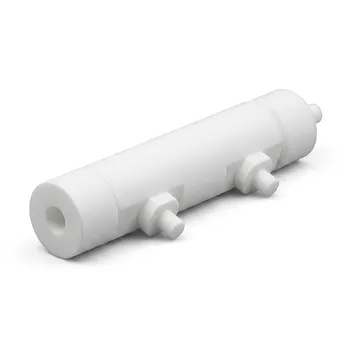
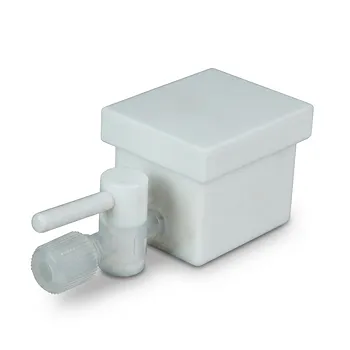
- Corrosion Resistant PTFE Electrochemical Cell for New Energy Research Inert Insulating Customizable Lab Reaction Vessel
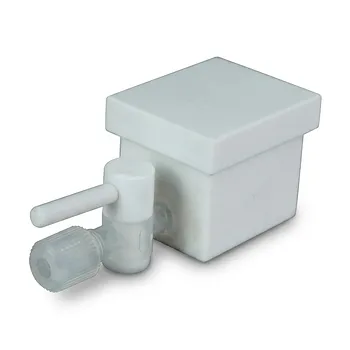
- Custom PTFE Electrolytic Cell Corrosion Resistant Low Background Reaction Vessel with Inlet Outlet Ports
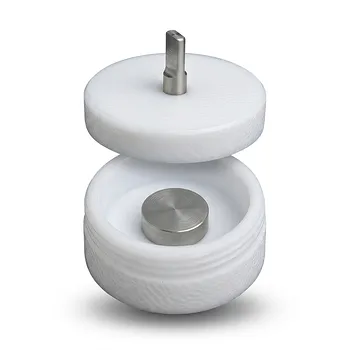
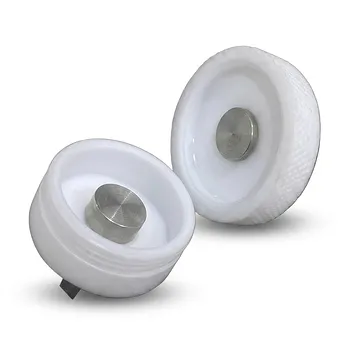
- Acid Resistant PTFE Button Cell Battery Test Fixture Customizable Machining High Purity Electrochemical Testing Clamp
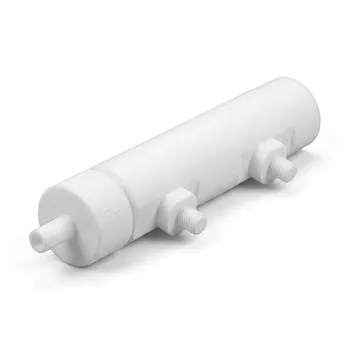
- Custom PTFE Laboratory Apparatus Corrosion Resistant Low Background Reaction Cells Precision CNC Fabrication
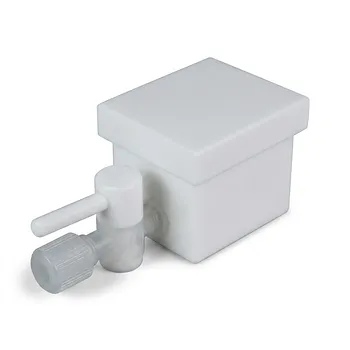
- Custom PTFE Reaction Box Opaque White Square Electrochemical Cell Tank
People Also Ask
- How do custom PTFE electrochemical cells improve the accuracy of stability testing for alkaline catalysts compared to glass cells?
- How does the hydrophobicity of PTFE benefit electrochemical measurements? Enhance Stability and Precision in Your Lab
- What makes PTFE an ideal construction material for custom electrochemical cells and electronic analytical instrumentation housings? Discover superior chemical resistance and electrical insulation
- Why must seawater electrolysis test cells have high corrosion resistance? Protect catalyst stability & data accuracy.
- What are the key steps for structural integrity in molded PTFE lab reaction vessels? Master fine powder processing.