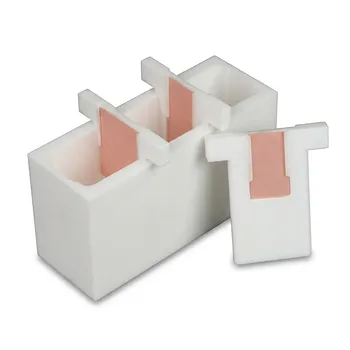
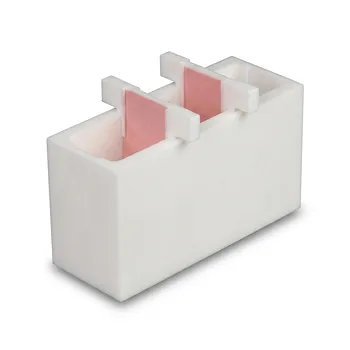
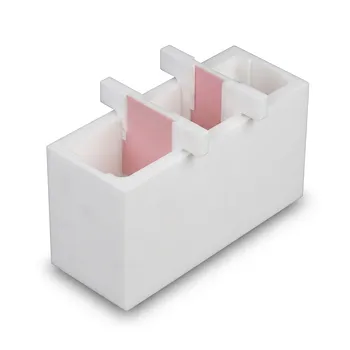
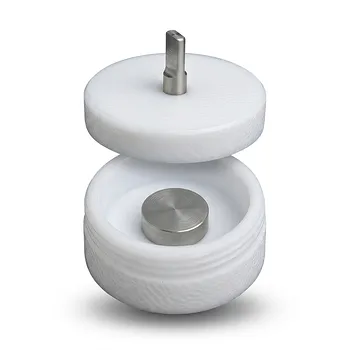
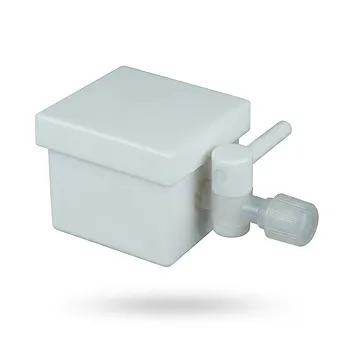
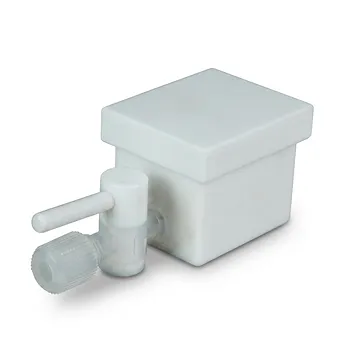
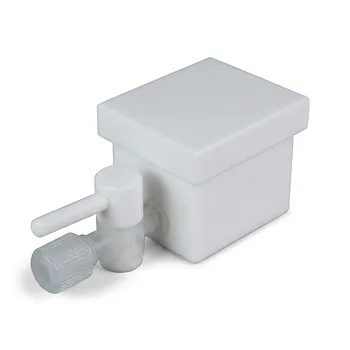
Standardization and precision are the foundations of electrochemical analysis. A specialized electrochemical test cell is necessary for FeOOH electrodes because it provides a controlled environment that ensures full contact between the electrolyte and the electrode material. By integrating precision-designed fixtures and airtight sealing, these cells minimize contact resistance and prevent electrolyte evaporation. This level of control is essential to guarantee the accuracy and repeatability of critical measurements such as Cyclic Voltammetry (CV), Galvanostatic Charge-Discharge (GCD), and Electrochemical Impedance Spectroscopy (EIS).
Specialized electrochemical cells transform a raw material into a measurable system by eliminating environmental variables and mechanical inconsistencies that would otherwise invalidate performance data. Without this specialized hardware, the subtle electrochemical signatures of FeOOH would be masked by parasitic resistances and fluctuating electrolyte concentrations.
Enhancing Data Precision and Repeatability
Minimizing Parasitic Resistances
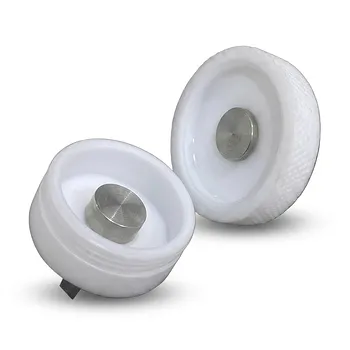
A specialized cell utilizes precision-designed electrode fixtures to ensure superior electrical contact between the current collector and the FeOOH material. This mechanical stability effectively reduces contact resistance, which is critical for obtaining accurate voltage profiles during high-rate testing.
Maintaining Electrolyte Integrity
FeOOH electrodes often require long-duration testing where electrolyte evaporation can lead to significant concentration fluctuations. Specialized sealing structures maintain a constant environment, ensuring that the ionic conductivity and chemical potential of the electrolyte remain stable throughout the experiment.
Ensuring Full Interfacial Contact
To accurately measure the performance of FeOOH, the architecture of the cell must guarantee full contact between the electrolyte and the electrode surface. Specialized cells are designed to eliminate air pockets and ensure uniform wetting, which is vital for calculating accurate gravimetric capacitance.
Optimizing the Physical Testing Environment
Controlled Geometric Configuration
The spatial positioning of the working, reference, and counter electrodes must remain fixed to ensure a uniform electric field distribution. Specialized cells prevent the electrodes from shifting, which eliminates artifacts in the data caused by changes in ohmic drop (i.e., the voltage drop due to electrolyte resistance).
Resistance to Chemical Degradation
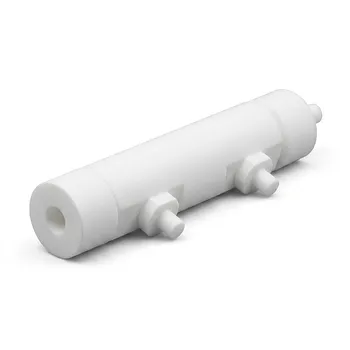
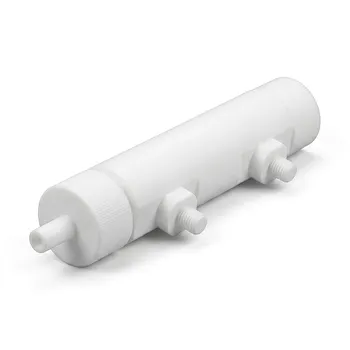
FeOOH testing often involves aggressive alkaline or chloride-rich environments, such as those found in seawater oxidation studies. Cells constructed from high-performance materials like PTFE (Teflon) can withstand these corrosive conditions without leaching impurities that would interfere with the catalyst’s performance.
Simulation of Extreme Conditions
Specialized cells allow researchers to simulate specific operational stresses, such as the high temperatures (up to 160°C) found in Proton Exchange Membrane Fuel Cells. By isolating the FeOOH electrode in a controlled half-cell, engineers can measure Oxygen Reduction Reaction (ORR) curves without interference from the anode.
Understanding the Trade-offs
Design Complexity vs. Throughput
While specialized cells offer high precision, they often require meticulous assembly and cleaning procedures compared to simple beaker-style setups. This complexity can slow down initial screening phases where rapid, qualitative results are prioritized over quantitative depth.
Cost and Material Constraints
High-precision hardware, particularly those utilizing fluoropolymer components or custom corrosion-resistant alloys, carries a significantly higher capital cost. Furthermore, a cell optimized for one specific geometry may lack the flexibility to accommodate different electrode shapes or sizes without custom-machined inserts.
Maintenance and Contamination Risks
The very features that ensure sealing can also trap contaminants if the cell is not rigorously maintained. Residual ions from previous tests can linger in the seals or pores of the cell body, potentially leading to "ghost peaks" in sensitive CV scans.
How to Apply This to Your Project
Recommendations for Research Goals
- If your primary focus is long-term durability: Utilize a cell with high-performance sealing and corrosion-resistant PTFE components to ensure stability over 2,500+ hour seawater tests.
- If your primary focus is kinetic analysis (Tafel slopes): Prioritize a three-electrode cell with a fixed, narrow distance between the working and reference electrodes to minimize uncompensated resistance.
- If your primary focus is material screening: Use a standardized half-cell apparatus that allows for rapid exchange of FeOOH samples while maintaining a consistent electric field distribution.
- If your primary focus is high-temperature performance: Invest in a specialized pressurized or heated cell specifically designed to withstand concentrated phosphoric acid or other non-volatile electrolytes.
The selection of a specialized test cell is not merely a logistical choice, but a fundamental requirement for isolating the intrinsic electrochemical properties of FeOOH from experimental noise.
Summary Table:
| Key Feature | Impact on FeOOH Testing | Core Benefit |
|---|---|---|
| Precision Fixtures | Minimizes parasitic and contact resistance | Accurate voltage profiles and kinetics |
| Airtight Sealing | Prevents electrolyte evaporation and concentration shifts | Long-term stability and repeatability |
| Fixed Geometry | Maintains uniform electric field distribution | Eliminates ohmic drop artifacts |
| PTFE Construction | Resists corrosion in alkaline/seawater environments | Prevents leaching and contamination |
| Interfacial Design | Ensures full wetting of the electrode surface | Accurate gravimetric capacitance data |
Elevate Your Electrochemical Research with KINTEK Precision
Is experimental noise compromising your FeOOH electrode data? At KINTEK, we specialize in transforming complex testing requirements into high-performance hardware. We manufacture a comprehensive range of laboratory supplies exclusively from PTFE and PFA, ensuring absolute chemical inertness and thermal stability for your most demanding applications.
From essential labware like beakers, crucibles, and high-purity trace analysis tools to advanced custom electrochemical cells, battery testing fixtures, and microwave digestion vessels, our end-to-end custom CNC fabrication capabilities mean we can deliver exactly what your project requires. Whether you need standard fluid transfer components—such as tubing, valves, and fittings—or bespoke, non-standard machined parts for unique reactor setups, KINTEK provides the fluoropolymer expertise you can trust.
Ready to optimize your testing environment? Contact our engineering team today to discuss your custom laboratory needs and discover how our high-performance fluoropolymer solutions can enhance your data accuracy.
References
- Muhammad Tahir, Lihong Li. Modulating Intrinsic Sulfate Ions in FeOOH Nanorods for Enhanced Energy Storage and Catalytic Oxygen Evolution. DOI: 10.1002/smll.202412645
This article is also based on technical information from Kintek Knowledge Base .
Related Products
- White PTFE Electrolytic Cell with Movable Slider and Insulated Lid for Fluorine Corrosion Resistance
- Square PTFE Electrochemical Cell for Silicon Wafer Processing and Hydrofluoric Acid Resistance in Semiconductor and New Energy Research
- Corrosion Resistant PTFE Electrochemical Cell for New Energy Research Inert Insulating Customizable Lab Reaction Vessel
- Acid Resistant PTFE Button Cell Battery Test Fixture Customizable Machining High Purity Electrochemical Testing Clamp
- Custom PTFE Electrolytic Cell Corrosion Resistant Low Background Reaction Vessel with Inlet Outlet Ports
People Also Ask
- What makes PTFE an ideal construction material for custom electrochemical cells and electronic analytical instrumentation housings? Discover superior chemical resistance and electrical insulation
- How do custom PTFE electrochemical cells improve the accuracy of stability testing for alkaline catalysts compared to glass cells?
- What parameters govern the electrochemical decomposition of perfluorooctanoic acid (PFOA) in aqueous solutions, and why are custom PTFE electrochemical cells preferred? Key factors include anode material, current density, electrolyte, and cell design.
- How does the hydrophobicity of PTFE benefit electrochemical measurements? Enhance Stability and Precision in Your Lab
- How are electrolytic cells utilized in the Hall-Héroult process? Optimizing Purity and Energy Efficiency