The technical advantage of a three-electrode cell for $V_2O_5$ testing lies in its ability to isolate the working electrode’s potential from the rest of the system. This configuration uses a dedicated reference electrode to ensure that the voltage applied to the vanadium pentoxide film is controlled with absolute precision, unaffected by the polarization or potential drops occurring at the counter electrode.
Core Takeaway: By decoupling the current-carrying circuit from the potential-sensing circuit, a three-electrode system allows researchers to accurately map the ion intercalation and de-intercalation behavior of $V_2O_5$ without interference from internal resistance or counter-electrode instability.
Isolating the Working Electrode Mechanism
Decoupling Potential Control from Current Flow
In a standard two-electrode setup, the system measures the total potential difference across the entire cell. In a three-electrode system, the Reference Electrode (RE) acts as a stable point of comparison that carries no current. This ensures that the potential measured at the Working Electrode (WE)—the $V_2O_5$ film—is the true electrochemical potential driving the reaction.
Eliminating Counter Electrode Polarization
During electrochromic testing, the Counter Electrode (CE) (often platinum wire) must undergo a balancing redox reaction. This process often causes "polarization," where the CE's own potential shifts unpredictably. The three-electrode design prevents these shifts from being incorrectly attributed to the $V_2O_5$ film, ensuring the data reflects only the material being studied.
Precise Mapping of Ion Intercalation
$V_2O_5$ changes color based on the intercalation and de-intercalation of ions (like $Li^+$ or $H^+$) within its lattice. Because this process is highly sensitive to specific voltage windows, the three-electrode setup is essential for identifying the exact redox potentials where these transitions occur.
Minimizing Measurement Errors
Neutralizing Internal Resistance (iR Drop)
Electrolytes and electrical connections possess inherent resistance, which can cause "ohmic drop" or iR drop. This phenomenon typically makes the measured potential appear higher or lower than the actual potential at the electrode surface. The three-electrode configuration minimizes the impact of this uncompensated resistance, providing a cleaner view of the material's intrinsic kinetics.
Maintaining Reference Stability
By ensuring that no significant current passes through the Reference Electrode (such as Ag/AgCl), the electrode remains in a state of thermodynamic equilibrium. This stability is critical for long-term cycling tests, where even a slight drift in reference potential could lead to incorrect conclusions about the $V_2O_5$ film's durability.
Enabling High-Resolution Kinetic Analysis
Because the potential is isolated, researchers can accurately calculate the Tafel slopes and perform Electrochemical Impedance Spectroscopy (EIS). These metrics are vital for understanding the charge transfer rates and diffusion coefficients that dictate how fast a $V_2O_5$ electrochromic window can switch colors.
Understanding the Trade-offs
Complexity and Cost
A three-electrode system is significantly more complex to set up and maintain than a two-electrode cell. It requires a potentiostat capable of managing three channels and necessitates the regular maintenance of the Reference Electrode to prevent electrolyte contamination or frit clogging.
Scaling to Real-World Applications
While superior for material characterization, a three-electrode setup does not represent a finished commercial device. Most end-user electrochromic windows are two-electrode systems; therefore, the high-precision data gathered in a lab may not perfectly mirror the performance of a final product where the counter-electrode behavior is a limiting factor.
How to Apply This to Your Research
Making the Right Choice for Your Goal
- If your primary focus is fundamental material characterization: Use a three-electrode cell to isolate the intrinsic redox mechanisms and ion diffusion rates of $V_2O_5$.
- If your primary focus is determining specific capacitance or Tafel kinetics: Utilize the three-electrode setup to eliminate interference from counter-electrode polarization and iR drop.
- If your primary focus is final device prototyping: Shift to a two-electrode configuration to evaluate how the $V_2O_5$ film interacts with a specific counter-electrode in a complete, sealed system.
By prioritizing the three-electrode configuration during the research phase, you ensure that the observed electrochromic performance is an inherent property of the vanadium pentoxide rather than an artifact of the testing environment.
Summary Table:
| Feature | Advantage for V2O5 Testing |
|---|---|
| Reference Electrode | Isolates working electrode potential for precise redox mapping. |
| Current Decoupling | Prevents counter electrode polarization from affecting results. |
| iR Drop Reduction | Neutralizes internal resistance to reveal intrinsic material kinetics. |
| Kinetic Resolution | Enables high-accuracy EIS and Tafel analysis for ion diffusion. |
Elevate Your Electrochemical Research with KINTEK
Ensure the highest data integrity for your $V_2O_5$ characterization with KINTEK’s high-performance fluoropolymer labware. From everyday basic labware like beakers, crucibles, and reagent bottles to advanced custom electrochemical cells, electrode accessories, and hydrothermal synthesis liners, we provide the precision tools necessary for complex analysis.
KINTEK specializes in high-durability PTFE and PFA supplies, utilizing end-to-end custom CNC fabrication to deliver everything from complex non-standard machined parts to high-volume consumables like O-rings, gaskets, and tubing. Our absolute focus on high-performance materials guarantees chemical resistance and stability for your most sensitive experiments.
Ready to optimize your laboratory setup? Contact KINTEK today to discuss your custom requirements and discover how our bespoke fluoropolymer solutions can enhance your research outcomes.
References
- Bhalchandra K. Mandlekar, Anamika V. Kadam. Vacancy-defect assisted electrochromic applications in V2O5 nanomaterials. DOI: 10.1007/s44373-025-00050-w
This article is also based on technical information from Kintek Knowledge Base .
Related Products
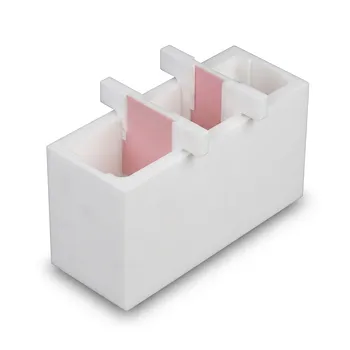
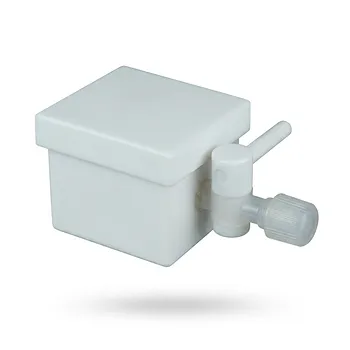
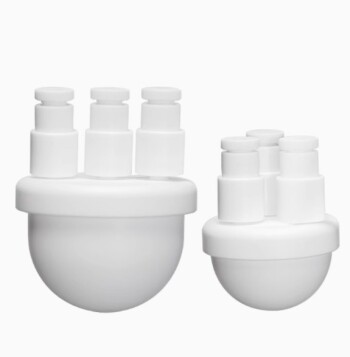
- Corrosion Resistant PTFE Electrochemical Cell for New Energy Research Inert Insulating Customizable Lab Reaction Vessel
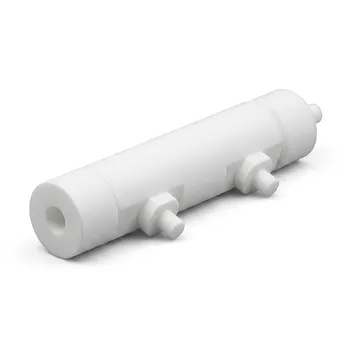
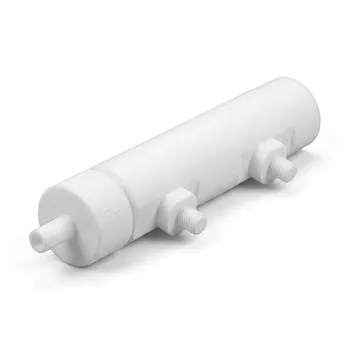
- Custom PTFE Electrolytic Cell Corrosion Resistant Low Background Reaction Vessel with Inlet Outlet Ports
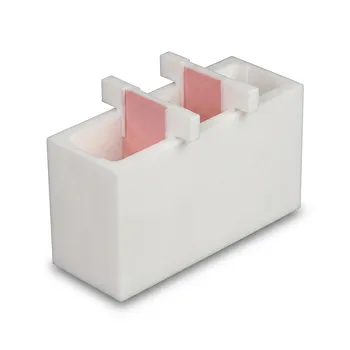
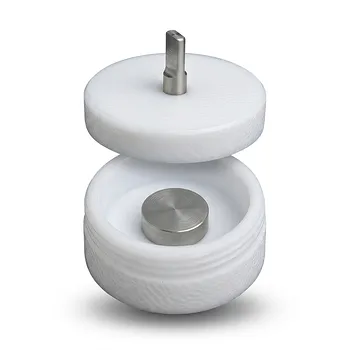
- White PTFE Electrolytic Cell with Movable Slider and Insulated Lid for Fluorine Corrosion Resistance
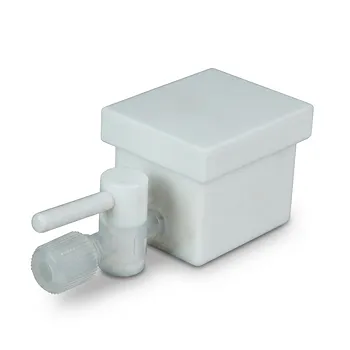
- Square PTFE Electrochemical Cell for Silicon Wafer Processing and Hydrofluoric Acid Resistance in Semiconductor and New Energy Research
- Custom PTFE Corrosion Resistant Insulating Electrophoresis Reaction Cell with Septum and Valves for Low Background Trace Analysis
People Also Ask
- How do custom PTFE electrochemical cells improve the accuracy of stability testing for alkaline catalysts compared to glass cells?
- How does the hydrophobicity of PTFE benefit electrochemical measurements? Enhance Stability and Precision in Your Lab
- What makes PTFE an ideal construction material for custom electrochemical cells and electronic analytical instrumentation housings? Discover superior chemical resistance and electrical insulation
- Why must seawater electrolysis test cells have high corrosion resistance? Protect catalyst stability & data accuracy.
- What are the key steps for structural integrity in molded PTFE lab reaction vessels? Master fine powder processing.