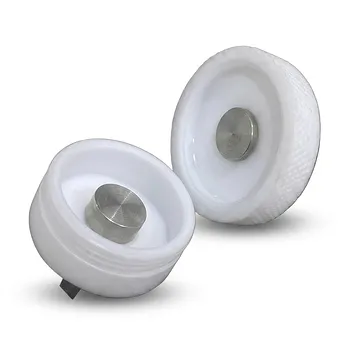
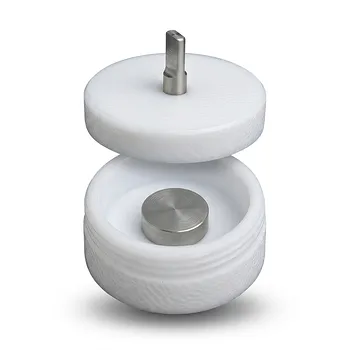
The primary purpose of specialized coin cell test fixtures with aluminum foil windows is to provide a low-attenuation transmission path for X-rays while maintaining a hermetically sealed electrochemical environment. This configuration allows the X-ray beam to penetrate the cell casing and directly irradiate the electrode surface, enabling the real-time observation of crystal structure changes during battery operation.
The use of aluminum foil windows in in situ XRD fixtures bridges the gap between material characterization and functional battery testing. It allows researchers to capture high-fidelity structural data, such as lattice parameter shifts, without disrupting the internal pressure or chemical stability of the cell.
Enabling Real-Time Structural Analysis
Minimal X-Ray Attenuation
Aluminum foil is utilized because its low atomic number and thin profile offer low X-ray attenuation. This ensures that a sufficient number of X-rays reach the active material and return to the detector to produce a clear diffraction pattern.
Direct Electrode Irradiation
The window acts as a dedicated channel that allows the X-ray beam to bypass the thick, opaque stainless steel of a standard coin cell. This setup provides a direct view of the electrode surface, where the critical intercalation and de-intercalation processes occur.
Dynamic Lattice Monitoring
By using these fixtures, researchers can monitor the real-time evolution of lattice parameters, such as the a-axis and c-axis. This is vital for understanding how materials like doped titanium dioxide or NMC cathodes expand and contract during ion movement.
Maintaining Electrochemical Integrity
The Hermetic Seal
Despite the presence of an opening for X-rays, the aluminum foil maintains a hermetic seal. This prevents the electrolyte from leaking or evaporating and protects the internal chemistry from moisture and oxygen contamination.
Internal Mechanical Pressure
Specialized fixtures often incorporate internal components like springs to maintain constant mechanical pressure. This pressure ensures consistent contact between the electrode, separator, and current collector, which is necessary for stable electrochemical performance.
Standardized Electrochemical Platforms
These fixtures serve as a standardized environment for evaluating various chemistries, such as CuSe cathodes or magnesium anodes. By mimicking the conditions of a standard battery, the data collected during XRD remains relevant to real-world applications.
Understanding the Trade-offs and Limitations
Material Sensitivity and Corrosion
Aluminum is highly effective for many chemistries, but it may be susceptible to corrosion or side reactions at specific voltage ranges or with certain electrolytes. Choosing the wrong window material can introduce artifacts into the electrochemical data.
Structural Fragility
Thin aluminum windows are more physically fragile than standard coin cell casings. Over-tightening the fixture or internal gas evolution can cause the window to bulge or rupture, leading to cell failure and potential damage to the XRD equipment.
Attenuation vs. Signal Quality
While aluminum has low attenuation, it is not zero; the foil itself will produce its own diffraction peaks. Researchers must carefully distinguish these peaks from those of the active material to avoid misinterpreting the structural data.
How to Apply This to Your Research Project
To achieve the best results with in situ XRD measurements, you must align your fixture choice with your specific experimental parameters.
- If your primary focus is tracking phase transitions: Use these specialized fixtures to capture the H1-H2-H3 transitions in high-voltage materials, ensuring the window is aligned perfectly with the beam path.
- If your primary focus is long-term cycle stability: Prioritize fixtures with internal springs and robust sealing mechanisms to ensure the cell maintains consistent contact and chemical integrity over many hours of irradiation.
- If your primary focus is minimizing background noise: Verify the thickness of the aluminum foil and ensure its characteristic peaks do not overlap with the critical peaks of your active electrode material.
By integrating aluminum foil windows into your test fixtures, you gain a transparent window into the atomic-scale behavior of your battery materials without sacrificing the validity of your electrochemical results.
Summary Table:
| Feature | Benefit | Key Consideration |
|---|---|---|
| Aluminum Foil Window | Low X-ray attenuation for clear diffraction patterns | Must distinguish Al peaks from active material peaks |
| Hermetic Sealing | Prevents electrolyte leakage and moisture contamination | Thin windows are fragile; avoid over-pressurization |
| Internal Spring System | Maintains consistent mechanical/electrical contact | Essential for stable electrochemical performance |
| In Situ Capability | Enables real-time monitoring of lattice parameter shifts | Requires precise alignment with the XRD beam path |
Elevate Your Battery Research with KINTEK Precision
Maximize the accuracy of your in situ XRD measurements with high-performance testing environments. KINTEK specializes in manufacturing virtually all imaginable laboratory supplies, from high-purity PTFE and PFA labware (beakers, reagent bottles, and digestion tubes) to advanced custom electrochemical cells and battery testing fixtures.
Whether you require standard consumables like stirring bars and O-rings or complex, bespoke CNC-fabricated components tailored to your unique reaction apparatus, we deliver end-to-end solutions with an absolute focus on fluoropolymer performance.
Ready to optimize your lab setup? Contact us today to discuss your custom fabrication needs and discover how our expertise in high-performance materials can drive your research forward.
References
- Hiroyuki Usui, Hiroki Sakaguchi. Nickel-Doped Titanium Oxide with the Rutile Structure for High-Performance Sodium Storage. DOI: 10.1021/acsmaterialsau.5c00008
This article is also based on technical information from Kintek Knowledge Base .
Related Products
- Corrosion Resistant PTFE Coin Cell Battery Testing Clamps and Acid Proof Custom Fluoropolymer Battery Fixtures
- Acid Resistant PTFE Button Cell Battery Test Fixture Customizable Machining High Purity Electrochemical Testing Clamp
People Also Ask
- What is the thermal operating range for PTFE battery clamps in electrochemical research? Stability from -200°C to +260°C
- What are the primary functions and material compositions of PTFE battery clamps? Ensure Precision & Chemical Resistance
- How do coin cell testing fixtures evaluate ZIF-derived LCO cycling stability? Ensure Battery Research Precision
- What are the electrical insulation and signal integrity advantages of using PTFE battery clamps? Ensure Data Accuracy
- How does the chemical inertness of PTFE benefit laboratory-scale battery testing? Ensure high-purity research results.