In an electrochemical cell designed for copper ion intercalation, the Anion Exchange Membrane (AEM) acts as a selective gatekeeper. Its primary role is to isolate the chemical environments of the cathode and anode while maintaining the flow of electricity. By blocking the migration of metal cations like copper and zinc, the membrane prevents parasitic side reactions that would otherwise compromise the accuracy of your kinetic data.
The AEM isolates the cathode's copper-rich environment from the zinc anode to prevent spontaneous chemical reactions, ensuring that all measured current specifically represents the redox behavior of copper ions within the cathode material.
Decoupling the Chemical Environments
Preventing Cation Crossover and Side Reactions
In a dual-compartment cell, the cathode and anode often utilize different electrolyte chemistries. If copper ions from the cathode side migrate to the zinc metal anode, they will react spontaneously, leading to copper plating on the zinc and rapid cell failure.
Protecting the Zinc Anode
The AEM effectively blocks zinc ions from moving toward the cathode and copper ions from moving toward the anode. This physical separation ensures that the anode remains stable and does not participate in unintended chemical displacement reactions.
Ensuring Data Integrity for Kinetic Studies
By preventing "crossover," the AEM ensures that the electrochemical signals you measure—such as current and potential—are solely the result of copper ion intercalation into the vanadium sulfide (VS₂) cathode. This allows for a precise analysis of the intercalation kinetics without interference from background noise or side reactions.
Mechanisms of Charge Compensation
Facilitating Sulfate Anion Transport
While the membrane blocks cations, it is designed to be highly permeable to sulfate anions. As copper ions move during the charging or discharging process, sulfate ions pass through the AEM to balance the internal charge of the cell.
Completing the Internal Circuit
An electrochemical cell cannot function if the circuit is broken internally. The movement of sulfate anions through the AEM allows for ionic conductivity, completing the circuit and enabling the flow of electrons through the external testing equipment.
Maintaining Electrolyte Equilibrium
By allowing anions to move freely while restricting cations, the AEM maintains the electroneutrality of both compartments. This stability is vital for long-term testing and reproducible results in battery research.
Understanding the Trade-offs
The Impact of Ohmic Resistance
Introducing any membrane into a cell increases the internal resistance (Ohmic drop). This can lead to lower measured voltages and may require you to compensate for the "iR drop" during data analysis to find the true kinetic parameters.
Membrane Fouling and Stability
Over time, the AEM may degrade or become "fouled" by concentrated ions or chemical precipitates. If the membrane loses its selectivity or its conductivity decreases, it will result in inaccurate kinetic measurements and poor cycle life.
How to Apply This to Your Project
Optimizing Your Experimental Setup
To ensure the highest quality data when using an AEM in a dual-compartment cell, consider the following recommendations:
- If your primary focus is precise kinetic measurement: Ensure the AEM is fully hydrated and equilibrated in your specific electrolyte before assembly to minimize resistance fluctuations.
- If your primary focus is long-term cycling stability: Periodically check the membrane for physical degradation or "coloration" that might indicate cation crossover or chemical breakdown.
- If your primary focus is high-rate performance: Minimize the distance between the electrodes and the membrane to reduce the total cell resistance.
By carefully managing the ionic separation provided by the AEM, you can isolate the specific behavior of your cathode material with professional-grade precision.
Summary Table:
| Key Function | Benefit to Experiment | Mechanism |
|---|---|---|
| Selective Isolation | Prevents parasitic side reactions and copper plating on the anode | Blocks cation migration ($Cu^{2+}$, $Zn^{2+}$) |
| Charge Compensation | Maintains electroneutrality and internal ionic conductivity | Facilitates sulfate anion transport |
| Data Integrity | Ensures measured current strictly represents redox behavior | Decouples cathode/anode environments |
| Circuit Completion | Enables continuous electron flow for external measurement | Completes the internal ionic circuit |
Elevate Your Electrochemical Research with KINTEK Precision
Precise kinetic data starts with high-performance laboratory equipment. KINTEK specializes in manufacturing a comprehensive range of lab supplies crafted from premium PTFE and PFA, ensuring your experiments remain free from contamination and interference.
Whether you require advanced electrochemical cells, battery testing fixtures, and hydrothermal synthesis liners, or high-purity consumables like beakers, digestion tubes, and fluid transfer components (tubing, fittings, valves), our end-to-end custom CNC fabrication is ready to meet your exact specifications. From complex non-standard machined parts to high-volume orders of everyday basics like stirring bars and O-rings, we provide the durable, chemically resistant tools your research demands.
Ready to optimize your experimental setup? Contact us today to discuss your bespoke laboratory needs and experience the KINTEK advantage in high-performance fluoropolymer materials.
References
- Yuanhe Sun, Daming Zhu. Reversible multivalent carrier redox exceeding intercalation capacity boundary. DOI: 10.1038/s41467-024-55386-5
This article is also based on technical information from Kintek Knowledge Base .
Related Products
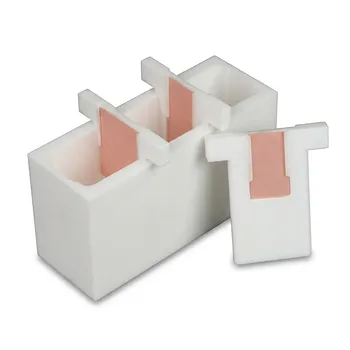
- Corrosion Resistant PTFE Electrochemical Cell for New Energy Research Inert Insulating Customizable Lab Reaction Vessel
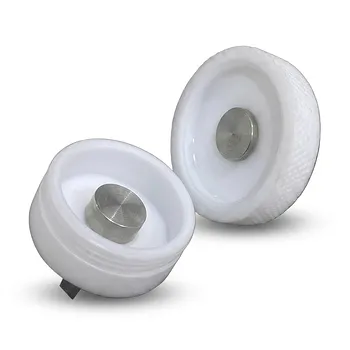
- Acid Resistant PTFE Button Cell Battery Test Fixture Customizable Machining High Purity Electrochemical Testing Clamp
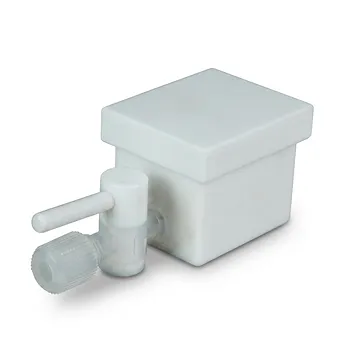
- Square PTFE Electrochemical Cell for Silicon Wafer Processing and Hydrofluoric Acid Resistance in Semiconductor and New Energy Research
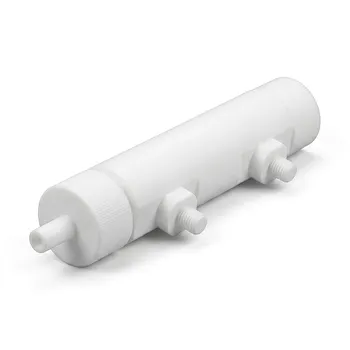
- Custom PTFE Electrolytic Cell Corrosion Resistant Low Background Reaction Vessel with Inlet Outlet Ports
- Custom PTFE Reaction Box Opaque White Square Electrochemical Cell Tank
People Also Ask
- What parameters govern the electrochemical decomposition of perfluorooctanoic acid (PFOA) in aqueous solutions, and why are custom PTFE electrochemical cells preferred? Key factors include anode material, current density, electrolyte, and cell design.
- How do custom PTFE electrochemical cells improve the accuracy of stability testing for alkaline catalysts compared to glass cells?
- How does the hydrophobicity of PTFE benefit electrochemical measurements? Enhance Stability and Precision in Your Lab
- What makes PTFE an ideal construction material for custom electrochemical cells and electronic analytical instrumentation housings? Discover superior chemical resistance and electrical insulation
- Why must seawater electrolysis test cells have high corrosion resistance? Protect catalyst stability & data accuracy.