Bound water acts as a molecular barrier to methanol transport. In modified fluorinated aromatic polyether membranes, water tightly associated with sulfonic acid groups reduces methanol diffusion and limits methanol movement driven by osmotic drag. This can produce substantially lower methanol permeability than conventional perfluorosulfonic acid membranes, making hydration state a critical design variable for direct methanol fuel cells (DMFCs) and their test hardware.
The key insight is that not all membrane water behaves the same way: strongly bound water helps suppress methanol crossover, while more mobile water can support methanol transport. Low-crossover materials improve measurement accuracy, fuel efficiency, and separation between the anode and cathode during testing.
How Bound Water Reduces Methanol Crossover
Bound water is associated with ionic groups
Sulfonic acid groups attract and retain water within the membrane’s ionic regions. This bound water is less mobile than bulk or loosely held water.
Because it remains closely associated with the acid sites, it occupies and stabilizes the transport environment rather than forming an unrestricted pathway through which methanol can move freely.
It restricts methanol diffusion
Methanol crossover occurs when methanol migrates from the anode side toward the cathode through the electrolyte membrane. Strongly bound water makes that migration more difficult by reducing the membrane’s freely available transport pathways.
The result is a lower methanol permeability coefficient and less unwanted fuel transfer across the membrane.
It reduces osmotic-drag-related transport
Methanol can also be carried through the membrane with water movement, a process associated with osmotic drag. When a larger fraction of the membrane water is tightly bound, less water is available to move freely and carry methanol with it.
This suppresses both direct methanol diffusion and water-mediated methanol transport.
Why the Membrane Structure Matters
A high bound-water-to-freezing-water ratio is favorable
The relevant design feature is not simply the total water content. A membrane with a high ratio of bound water to freezing water contains a greater proportion of water that is strongly associated with the polymer’s ionic groups.
That water distribution can provide hydration for proton conduction while limiting the mobile liquid-like pathways that promote methanol crossover.
Lower permeability improves DMFC operation
The modified fluorinated aromatic polyether membranes described in the reference reach methanol permeability values as low as 2.15 × 10⁻⁸ cm/s, while standard commercial perfluorosulfonic acid benchmark membranes are reported at values around 1.55 × 10⁻⁶ cm²/s.
These figures indicate a major reduction in crossover, but the units should be checked before making a strict numerical comparison: cm/s and cm²/s represent different reported quantities unless one value has been converted or the source uses nonstandard terminology.
Crossover affects more than fuel consumption
Methanol reaching the cathode can cause a mixed-potential effect, interfere with the cathode reaction, and reduce the apparent cell performance. It can also make current-voltage data reflect chemical cross-contamination rather than the intended electrochemical behavior.
For test systems, this distinction is especially important because a small unintended transport pathway can compromise repeatability and obscure the performance of the membrane or catalyst being evaluated.
Why This Matters for Fluoropolymer Test Cell Components
The membrane and hardware form one transport system
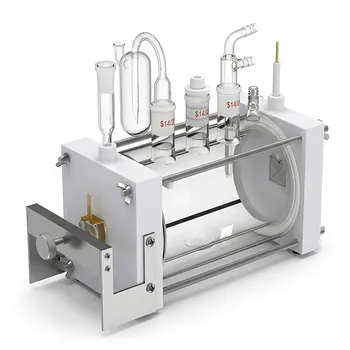
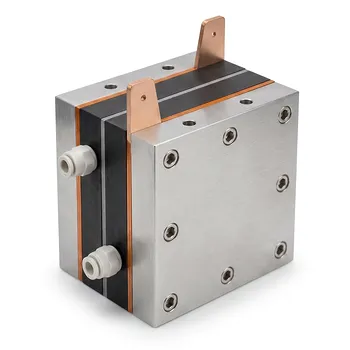
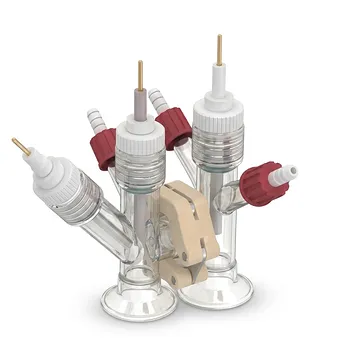
The membrane is the primary barrier to methanol crossover, but the surrounding cell assembly determines whether the experiment preserves that barrier. Gaskets, seals, tubing, fittings, flow-field materials, and end plates must maintain chemical separation and prevent bypass leakage.
A low-permeability membrane cannot deliver reliable results if methanol travels around its edges, accumulates in dead volumes, or permeates through an incompatible auxiliary material.
Material selection protects measurement accuracy
Fluoropolymer components are often selected for chemical resistance and low reactivity, but those properties do not automatically guarantee low methanol uptake or zero permeation. The component’s specific polymer, morphology, thickness, temperature, pressure, and exposure time all influence its transport behavior.
Hardware design should therefore consider chemical compatibility and transport resistance, not just whether a material survives contact with methanol.
Low crossover improves current-density measurements
Uncontrolled methanol transport can alter the reactant concentration at the electrodes and create parasitic electrochemical effects. Minimizing crossover helps ensure that measured current density represents the intended cell reaction under the defined operating conditions.
This is particularly important when comparing membranes, catalysts, electrode structures, or operating temperatures.
Proper containment prevents cross-contamination
In an electrochemical test cell, leakage or permeation can contaminate the opposite fluid stream, downstream tubing, sampling equipment, or analytical instruments. Cross-contamination may persist after a test and affect subsequent experiments.
A fluoropolymer assembly designed with appropriate seals, interfaces, and fluid paths helps preserve the separation between anode and cathode circuits.
Understanding the Trade-offs
Lower crossover does not guarantee higher overall performance
A membrane must balance methanol rejection with proton conductivity, hydration, mechanical strength, and dimensional stability. Increasing resistance to methanol transport is valuable only if the membrane still supports adequate proton transport and remains durable under operating conditions.
The correct design target is therefore high proton selectivity, not simply the lowest possible permeability.
Water retention can have competing effects
Strongly associated water supports the low-crossover mechanism described here, but membrane hydration still has to be maintained. Excessive drying can reduce proton conductivity, while excessive swelling may change transport pathways and weaken dimensional stability.
Testing should evaluate permeability and conductivity under the same hydration and temperature conditions expected in service.
Do not compare incompatible permeability data
Permeability, permeance, and diffusion coefficients are different quantities and may be reported with different units. A value in cm/s cannot be directly compared with one in cm²/s without confirming the definitions and applying the appropriate conversion.
This is a common source of misleading material rankings.
Do not treat all fluoropolymers as equivalent
“Fluoropolymer” describes a broad family of materials. Different fluoropolymers can differ substantially in methanol sorption, swelling, permeability, surface energy, and seal behavior.
Component qualification should be based on the specific material and the actual DMFC operating environment, rather than on the fluorinated label alone.
How to Apply This to Your Project
The design process should connect membrane hydration behavior with the complete fluid-containment and measurement architecture.
- If your primary focus is minimizing methanol crossover: Favor membranes with a high bound-water-to-freezing-water ratio, and verify permeability using consistent units and test conditions.
- If your primary focus is accurate current-density measurements: Eliminate bypass paths at membrane edges, seals, fittings, and flow channels, and confirm that hardware does not introduce measurable cross-contamination.
- If your primary focus is selecting fluoropolymer components: Screen the specific polymer, seal design, thickness, temperature, pressure, and exposure time for methanol uptake and permeation rather than relying only on general chemical-resistance data.
- If your primary focus is comparing membrane materials: Measure methanol permeability together with proton conductivity, hydration dependence, mechanical stability, and durability under representative operating conditions.
Designing around bound-water behavior allows the membrane and fluoropolymer cell assembly to function as a controlled transport system rather than as a collection of chemically resistant parts.
Summary Table:
| Factor | Impact on Methanol Crossover | Design Consideration |
|---|---|---|
| Bound water | Blocks methanol transport | Select membranes with high bound-to-freezing water ratio |
| Membrane structure | Determines water distribution | Optimize for proton conductivity and low permeability |
| Hardware materials | Can cause bypass leakage | Choose fluoropolymers with low methanol uptake |
| Permeability units | Comparative validity | Ensure consistent units (cm/s vs cm²/s) |
| Operating conditions | Affect hydration and transport | Test under representative DMFC conditions |
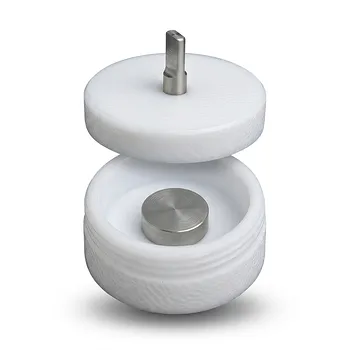
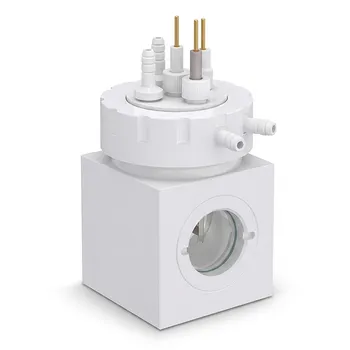
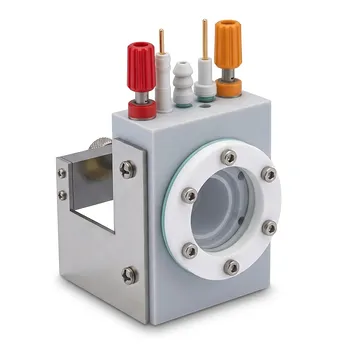
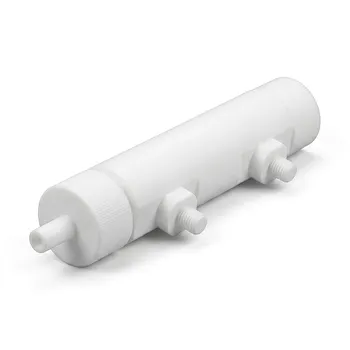
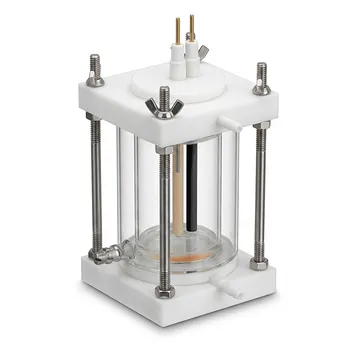
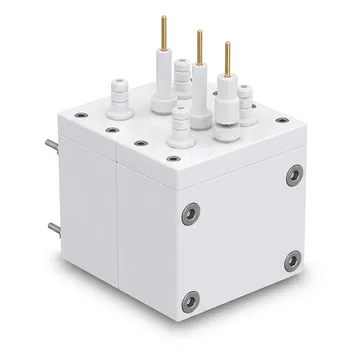
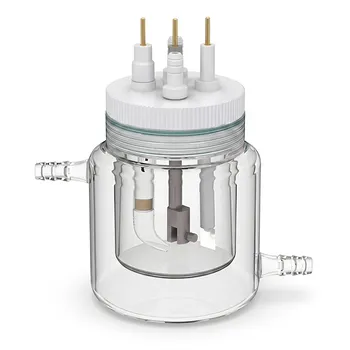
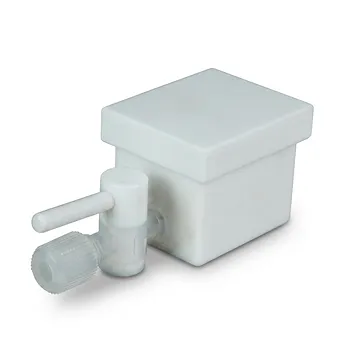
Optimize your DMFC test cell with low-crossover fluoropolymer components. KINTEK's high-performance PTFE and PFA labware, custom machined parts, and complete fluid systems ensure precise measurements and chemical resistance. Contact us today to discuss your requirements!
Related Products
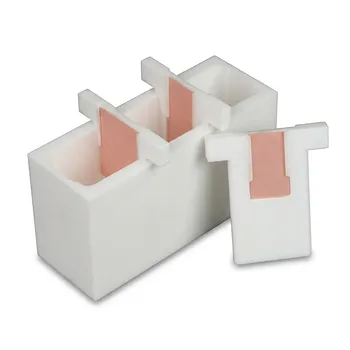
- Corrosion Resistant PTFE Electrochemical Cell for New Energy Research Inert Insulating Customizable Lab Reaction Vessel
- Square PTFE Electrochemical Cell for Silicon Wafer Processing and Hydrofluoric Acid Resistance in Semiconductor and New Energy Research
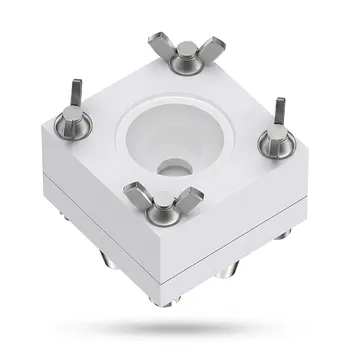
- Corrosion Resistant PTFE Coin Cell Battery Testing Clamps and Acid Proof Custom Fluoropolymer Battery Fixtures
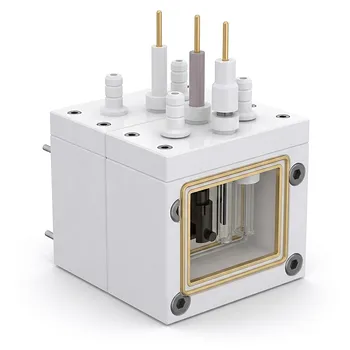
- Custom PTFE Electrolytic Cell Corrosion Resistant Low Background Reaction Vessel with Inlet Outlet Ports
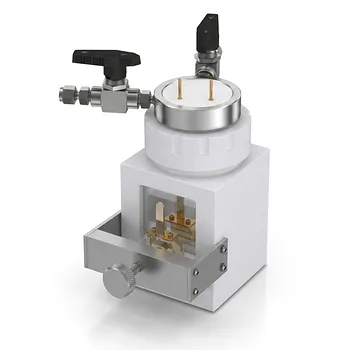
- White PTFE Electrolytic Cell with Movable Slider and Insulated Lid for Fluorine Corrosion Resistance
People Also Ask
- What parameters govern the electrochemical decomposition of perfluorooctanoic acid (PFOA) in aqueous solutions, and why are custom PTFE electrochemical cells preferred? Key factors include anode material, current density, electrolyte, and cell design.
- How do custom PTFE electrochemical cells improve the accuracy of stability testing for alkaline catalysts compared to glass cells?
- How does the hydrophobicity of PTFE benefit electrochemical measurements? Enhance Stability and Precision in Your Lab
- What makes PTFE an ideal construction material for custom electrochemical cells and electronic analytical instrumentation housings? Discover superior chemical resistance and electrical insulation
- Why must seawater electrolysis test cells have high corrosion resistance? Protect catalyst stability & data accuracy.