Sulfonated fluorinated poly(p-phenylene-co-aryl ether ketone) (SPP-co-PAEK) membranes combine high proton transport with substantial mechanical strength. For a 3:1 copolymer composition, reported Young’s modulus is 1.8 GPa and tensile strength is 51 MPa, while proton conductivity reaches 164 mS/cm in water at 60 °C at an ion-exchange capacity above 2.03 mEq/g. In humidified fuel-cell testing at 90 °C, the membranes achieved an open-circuit voltage of 0.94 V and a power density of 0.85 W/cm² at 1.7 A/cm².
The membrane’s performance comes from fluorinated sulfonic-acid chemistry and interconnected hydrated ionic domains, while custom PTFE/PFA cells make the measurements reliable by isolating the membrane electrically and chemically under demanding temperature and electrolyte conditions.
What the SPP-co-PAEK Membranes Deliver
High proton conductivity under hydrated conditions
The reported conductivity of 164 mS/cm at 60 °C in water indicates efficient proton transport when the sulfonic-acid groups are well hydrated.
An IEC above 2.03 mEq/g provides a high concentration of ion-conducting sites. However, IEC alone does not determine conductivity; water uptake, ionic-domain connectivity, morphology, and temperature also matter.
Strong mechanical performance
The 3:1 copolymer membranes show a Young’s modulus of 1.8 GPa and a tensile strength of 51 MPa.
This combination is important because highly sulfonated membranes often become softer or swell excessively as their hydrophilic content increases. The reported mechanical values indicate that the membrane can retain useful structural integrity while supporting substantial proton transport.
Fuel-cell performance confirms practical function
Under humidified operation at 90 °C, the membrane produced an open-circuit voltage of 0.94 V and 0.85 W/cm² at 1.7 A/cm².
These results connect material-level conductivity with device-level behavior. The membrane is not merely conductive in a laboratory water bath; it also supports electrochemical current generation with relatively low gas crossover or parasitic transport under the stated test conditions.
Why Fluorination Supports Proton Transport
Stronger proton dissociation
Fluorinated structures exert a strong electron-withdrawing effect on nearby sulfonic-acid groups. This promotes proton dissociation, including at lower hydration levels than would be possible in a less strongly polarizing polymer environment.
The result is a greater population of mobile protons associated with sulfonate groups and hydronium species.
Connected hydrophilic nanochannels
The membrane’s hydrophilic regions form interconnected ionic domains, reported in the supplementary information as channels or clusters on approximately the nanometer scale.
These domains provide pathways through the otherwise more hydrophobic fluorinated polymer matrix. Their continuity is critical: isolated ionic groups may increase IEC without producing equally effective long-range conductivity.
Two complementary transport mechanisms
In hydrated membranes, proton transport occurs primarily through:
- The Grotthuss mechanism, in which protons hop between hydronium ions and neighboring sulfonic-acid sites.
- Vehicular diffusion, in which hydrated proton-containing species move through the water-rich domains.
Higher temperature and adequate hydration generally support both mechanisms, but excessive water uptake can compromise dimensional stability and mechanical performance.
How PTFE/PFA Apparatuses Enable Accurate Evaluation
They prevent parasitic current paths
PTFE and PFA are highly electrically insulating materials. Their high volume resistivity and surface resistance reduce current leakage through the cell body, electrode holders, and surrounding fixtures.
This is essential during electrochemical impedance spectroscopy (EIS). The measured resistance should represent proton transport through the membrane rather than leakage through the test hardware.
They resist chemical attack
The fluoropolymer cell components are chemically inert toward aggressive humidified gases, corrosive electrolytes, and many acids and bases.
That resistance helps prevent corrosion products, dissolved metal ions, and surface reactions from contaminating the membrane or changing the electrolyte composition during testing.
They tolerate elevated-temperature testing
PTFE and PFA provide thermal stability for measurements involving heated water, humidified gases, and elevated-temperature electrochemical operation.
For example, PTFE fixtures can support conductivity measurements across temperature changes such as 24–80 °C without introducing significant deformation or parasitic electrical currents in the stated testing arrangement.
They maintain controlled membrane geometry
A custom cell can hold the membrane between defined electrodes and control the exposed area, thickness direction, and compression conditions.
This allows the electric field to pass through the membrane in a known direction. The resulting resistance can then be converted into conductivity using the appropriate sample geometry and measured dimensions.
How the Conductivity Measurement Works
EIS isolates membrane resistance
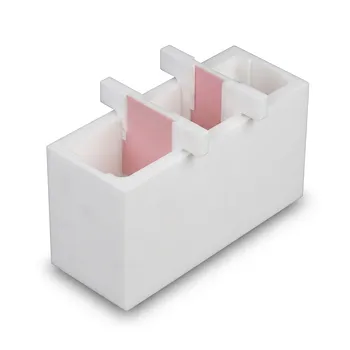
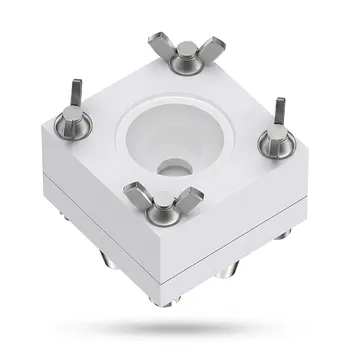
In a typical arrangement, the membrane is placed between platinum electrodes and immersed in double-distilled water. The PTFE fixing block positions the sample and electrically isolates the electrodes from the rest of the apparatus.
An impedance measurement produces a resistance associated with ion transport through the membrane. Conductivity is then calculated from that resistance together with the membrane’s thickness and electrode area.
Cell materials protect measurement integrity
Non-inert metal fixtures can corrode, release ions, or create unintended electrical paths. Glass can also be unsuitable for certain fluoride-containing or otherwise aggressive chemical environments.
PTFE and PFA minimize these sources of error, helping the measured impedance reflect the membrane rather than contamination, corrosion, leakage, or an unstable fixture.
Custom machining supports non-standard experiments
High-precision CNC machining allows PTFE or PFA cells to incorporate unusual electrode layouts, channels, sample holders, fluid ports, and sealing geometries.
This is valuable when the membrane requires a specific orientation, active area, gas-flow arrangement, or two-chamber configuration that commercial test hardware cannot provide.
How the Apparatus Supports Fuel-Cell Testing
Controlled humidified gas delivery
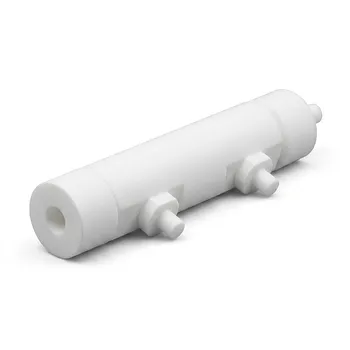
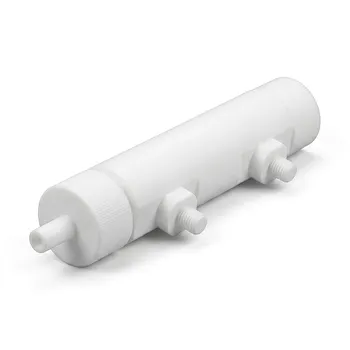
Custom PTFE/PFA manifolds and fluid-transfer components can direct humidified gases to the membrane-electrode assembly while resisting chemical attack.
Stable gas routing is necessary for separating membrane conductivity from mass-transport limitations and for maintaining repeatable hydration conditions.
Reliable sealing and compression
The cell must maintain stable contact and compression around the membrane without allowing gas or liquid leakage.
Fluoropolymer fixtures provide chemically resistant contact surfaces and can be machined to match the membrane and electrode geometry. The design still has to account for compression, thermal expansion, and sealing behavior; material inertness alone does not guarantee a leak-free cell.
Long-duration stability
During extended current-density measurements, the cell is exposed simultaneously to heat, moisture, electric fields, and reactive gases or electrolytes.
PTFE and PFA reduce the likelihood that the apparatus itself will corrode or chemically degrade, improving the reliability of measurements such as open-circuit voltage, polarization behavior, and power density.
Understanding the Trade-offs
High conductivity can increase swelling
A high IEC and well-connected hydrophilic phase support proton transport, but they can also increase water uptake and dimensional change.
The practical objective is therefore not maximum IEC alone. It is a balance among conductivity, water retention, mechanical strength, gas barrier properties, and dimensional stability.
Water-bath conductivity is not fuel-cell conductivity
The 164 mS/cm value was obtained in water at 60 °C. A fuel cell operates with different hydration, pressure, gas composition, electrode interfaces, and current-driven transport conditions.
Consequently, liquid-water conductivity should be treated as an intrinsic materials indicator, not as a direct prediction of fuel-cell power density.
PTFE and PFA improve testing but do not remove all errors
Fluoropolymer fixtures reduce leakage, corrosion, and contamination, but accurate results still depend on electrode alignment, membrane thickness, active area, temperature control, hydration uniformity, contact resistance, and correct impedance interpretation.
Poor compression or an inaccurate geometry factor can distort conductivity even when the cell material itself is chemically ideal.
Material selection remains design-dependent
PTFE and PFA are both useful for inert electrochemical hardware, but the appropriate choice depends on the required geometry, temperature, sealing approach, machining tolerance, and chemical exposure.
A custom apparatus should be designed around the measurement—not simply fabricated from an inert polymer without validating its mechanical and thermal behavior under the intended conditions.
How to Apply This to Your Evaluation
SPP-co-PAEK membranes should be evaluated at both the material and device levels.
- If your primary focus is intrinsic proton conductivity: Use a calibrated PTFE or PFA EIS cell with platinum electrodes, controlled hydration, accurate membrane dimensions, and temperature control.
- If your primary focus is mechanical durability: Measure tensile strength and modulus alongside water uptake and dimensional change, because conductivity gains may be accompanied by swelling.
- If your primary focus is fuel-cell performance: Use a custom PTFE/PFA gas cell or manifold to maintain controlled humidification, compression, temperature, and leak-free operation.
- If your primary focus is long-term testing: Prioritize chemically inert fixtures, electrically isolated electrode holders, stable seals, and materials that will not release contaminants into the membrane environment.
With appropriate cell design and measurement controls, the combination of high proton conductivity and strong mechanical properties makes SPP-co-PAEK a credible membrane platform for demanding electrochemical applications.
Summary Table:
| Property | Value | Conditions |
|---|---|---|
| Proton conductivity | 164 mS/cm | In water at 60 °C |
| Ion-exchange capacity | > 2.03 mEq/g | - |
| Young's modulus | 1.8 GPa | 3:1 copolymer |
| Tensile strength | 51 MPa | 3:1 copolymer |
| Open-circuit voltage | 0.94 V | Humidified fuel cell at 90 °C |
| Power density | 0.85 W/cm² | At 1.7 A/cm², humidified fuel cell at 90 °C |
Elevate your membrane research with precision PTFE/PFA electrochemical cells and custom lab apparatus from KINTEK. Our high-performance fluoropolymer solutions ensure reliable, uncontaminated measurements for demanding fuel cell and electrolyzer testing. Contact us today to discuss your custom requirements and benefit from our expertise in high-purity PTFE/PFA fabrication.
Related Products
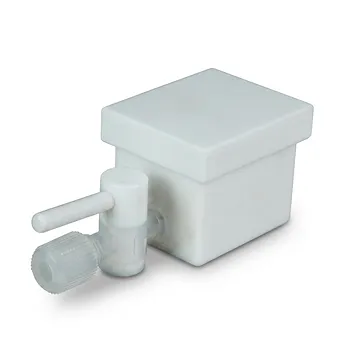
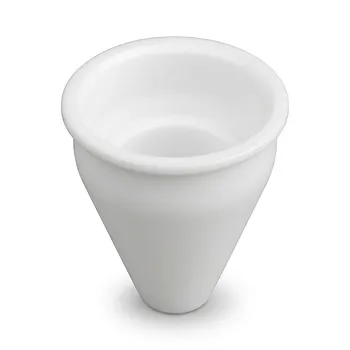
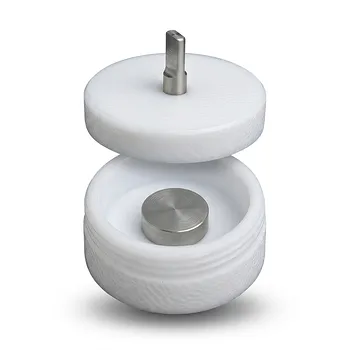
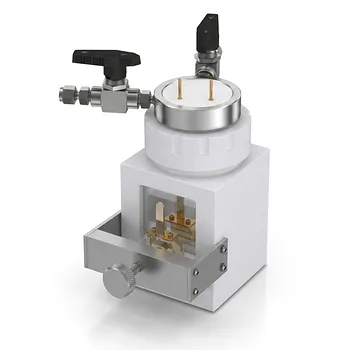
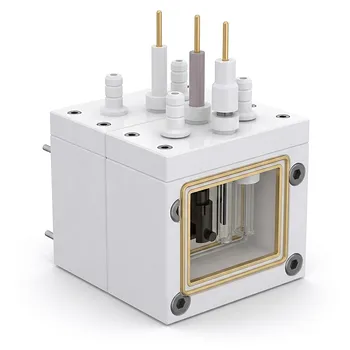
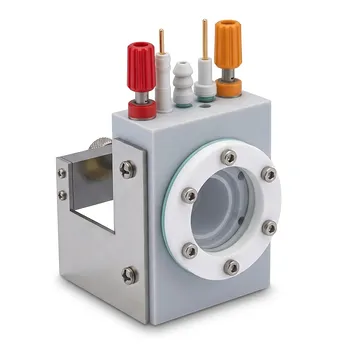
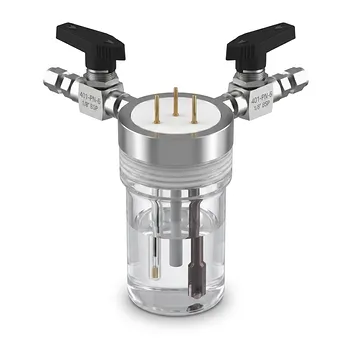
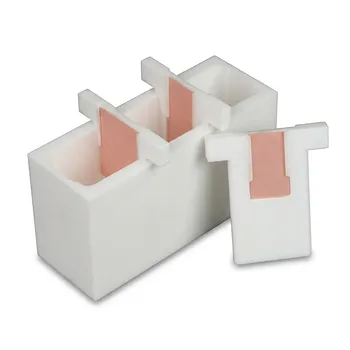
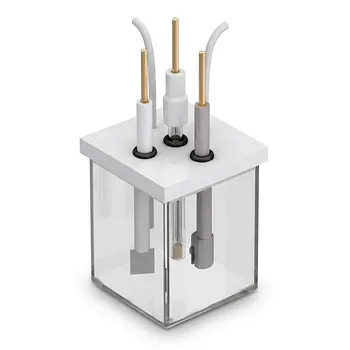
- Corrosion Resistant PTFE Electrochemical Cell for New Energy Research Inert Insulating Customizable Lab Reaction Vessel
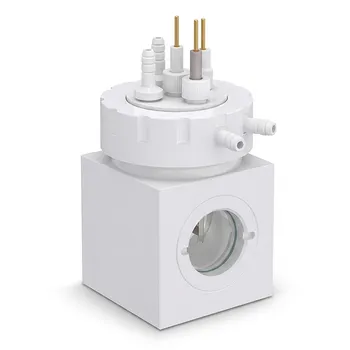
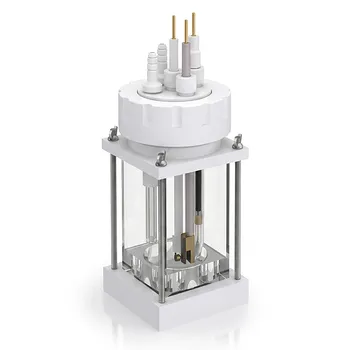
- Custom PTFE Electrolytic Cell Corrosion Resistant Low Background Reaction Vessel with Inlet Outlet Ports
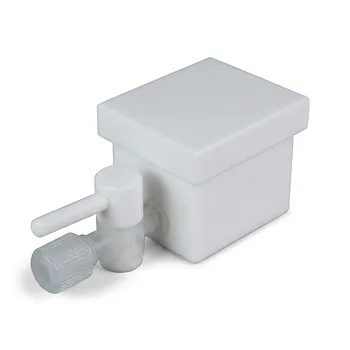
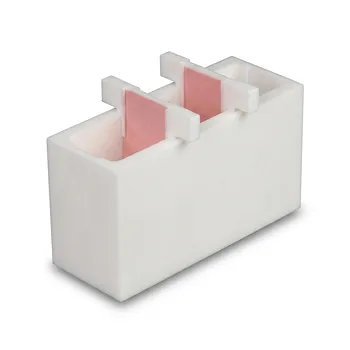
- Custom PTFE Reaction Box Opaque White Square Electrochemical Cell Tank
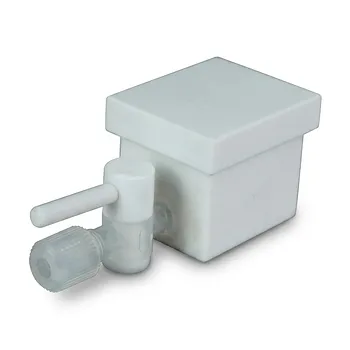
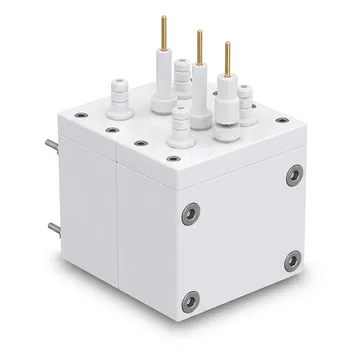
- High Purity Custom PTFE Reaction Cell Electrolytic Tank for Semiconductor and Polysilicon Industrial Applications
- Custom PTFE Corrosion Resistant Insulating Electrophoresis Reaction Cell with Septum and Valves for Low Background Trace Analysis
People Also Ask
- What parameters govern the electrochemical decomposition of perfluorooctanoic acid (PFOA) in aqueous solutions, and why are custom PTFE electrochemical cells preferred? Key factors include anode material, current density, electrolyte, and cell design.
- How do custom PTFE electrochemical cells improve the accuracy of stability testing for alkaline catalysts compared to glass cells?
- How does the hydrophobicity of PTFE benefit electrochemical measurements? Enhance Stability and Precision in Your Lab
- What makes PTFE an ideal construction material for custom electrochemical cells and electronic analytical instrumentation housings? Discover superior chemical resistance and electrical insulation
- Why must seawater electrolysis test cells have high corrosion resistance? Protect catalyst stability & data accuracy.