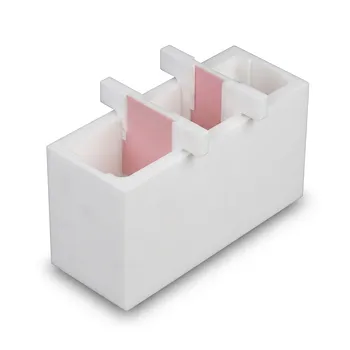
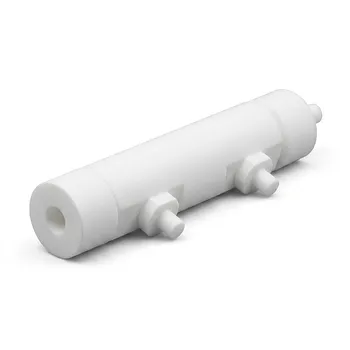
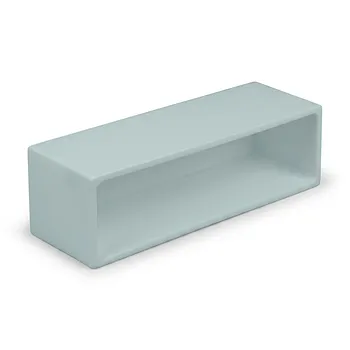
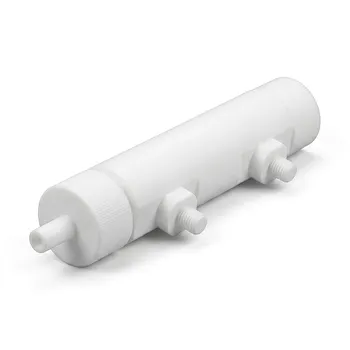
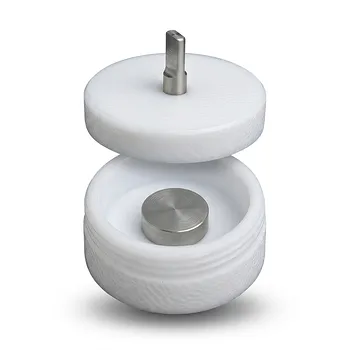
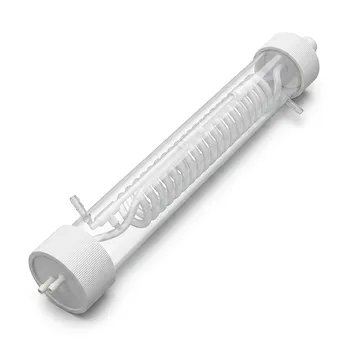
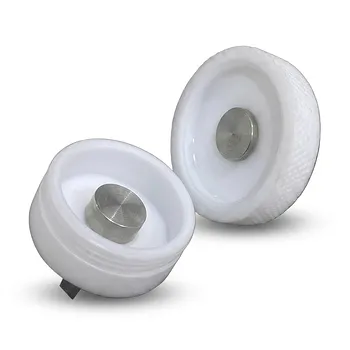
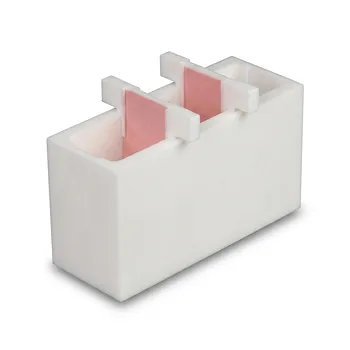
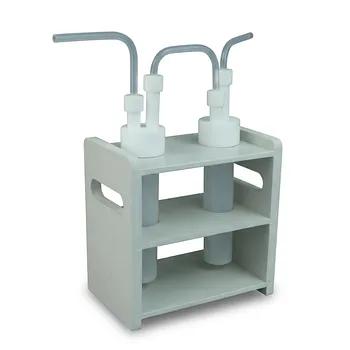
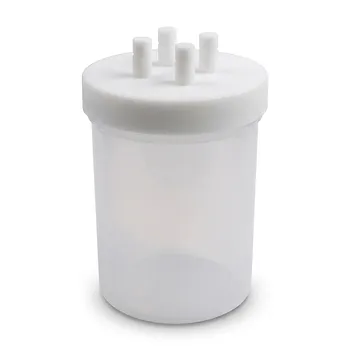
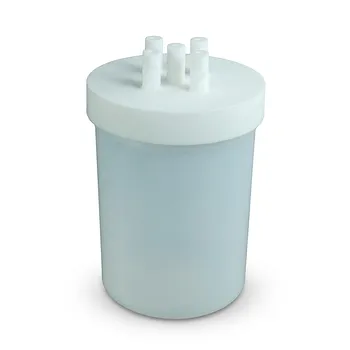
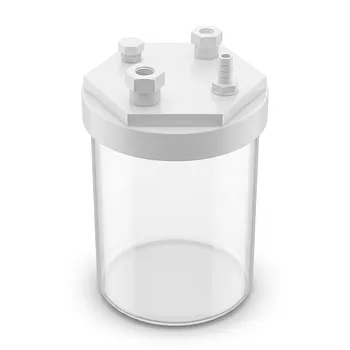
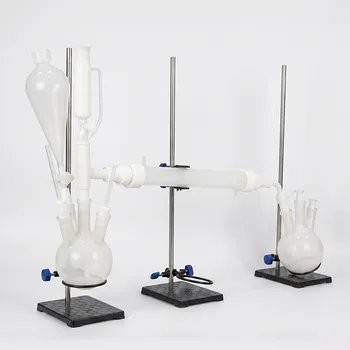
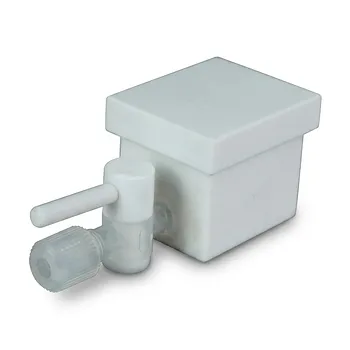
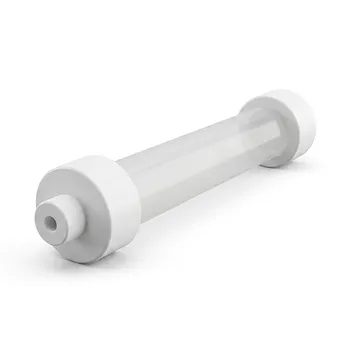
Customized PFA electrochemical cells are engineered to eliminate the material limitations and structural inconsistencies that frequently lead to data noise and experimental failure in precision analysis. These cells specifically resolve the issues of chemical corrosion, electrode displacement, and signal interference that plague standard glass or generic plastic containers.
The core advantage of customized PFA cells lies in their ability to combine extreme chemical inertness with high-precision CNC machining. This synergy ensures that the physical environment remains perfectly stable and uncontaminated, allowing for the capture of weak electrochemical signals with absolute fidelity.
Overcoming Material Limitations of Standard Glass
Resistance to Aggressive Chemical Environments
Standard glass cells are highly susceptible to corrosion from hydrofluoric acid and strong alkaline solutions, which can leach contaminants into the electrolyte. PFA (Perfluoroalkoxy) is chemically inert to nearly all reagents, ensuring that the electrolyte remains pure during long-term testing.
Eliminating Fragility and Leakage Risks
Unlike glass, which is prone to cracking under mechanical stress or thermal shifts, PFA is physically tough and impact-resistant. High-precision CNC machining allows for the creation of customized threading and seals that provide a "perfect fit" for specific electrode dimensions, preventing electrolyte leakage.
Maintaining Visual Monitoring Capabilities
While materials like PTFE offer similar chemical resistance, they are usually opaque. PFA's transparency allows researchers to observe experimental phenomena, such as bubble formation or color changes, without compromising the cleanliness of the environment.
Ensuring Signal Integrity and Structural Stability
Precise Electrode Geometry and Positioning
The relative distance between the working, counter, and reference electrodes must remain constant to ensure a uniform current distribution. Customized cells use fixed internal structures to lock electrodes in place, preventing the data fluctuations caused by accidental movement or vibration.
Reduction of Background Noise and Interference
PFA possesses high dielectric properties and natural electrical insulation, which are critical when measuring weak signals. By shielding the system from environmental electrical interference, these cells significantly reduce background current, allowing for more accurate cyclic voltammetry and charge-discharge curves.
Facilitating Non-Standard Experimental Designs
Standard cells often force researchers to compromise their experimental setup to fit available hardware. Customized CNC fabrication enables the creation of complex, non-standard geometries, such as flow-through cells or multi-port anaerobic chambers, tailored to specific research needs.
Managing Environmental Sensitivity
Support for Anaerobic and Anhydrous Testing
Precision analysis often involves air-sensitive materials that degrade instantly upon exposure to oxygen or moisture. The superior sealing capabilities of customized PFA cells help maintain strict anaerobic or anhydrous environments, ensuring the integrity of sensitive electrochemical signals.
Minimizing Cross-Contamination
The high-purity surface of PFA is non-stick and easy to decontaminate between experiments. This prevents the carry-over of trace elements, which is a common cause of "ghost peaks" and irreproducible results in high-sensitivity trace analysis.
Understanding the Trade-offs
Cost and Lead Times
Unlike mass-produced glass components, customized PFA cells require specialized CNC machining and engineering design. This results in a higher initial financial investment and longer lead times for procurement compared to off-the-shelf alternatives.
Thermal and Pressure Constraints
While PFA has a wide temperature range, it may not match the extreme thermal stability of certain specialty ceramics or quartz in high-heat applications. Furthermore, while PFA is tough, it is softer than glass; over-tightening customized threads can lead to material deformation if not handled with professional care.
Making the Right Choice for Your Goal
How to Apply This to Your Project
- If your primary focus is working with HF or strong alkalis: Prioritize PFA over glass to prevent vessel corrosion and electrolyte contamination.
- If your primary focus is measuring extremely weak signals: Invest in a custom-machined cell with fixed electrode positions to minimize background noise and ensure current uniformity.
- If your primary focus is air-sensitive material research: Opt for customized cells with integrated hermetic seals to maintain a stable anaerobic environment.
- If your primary focus is visual observation of reactions: Ensure the cell is fabricated from PFA rather than PTFE to maintain transparency while keeping chemical resistance.
By shifting from generic hardware to customized PFA solutions, researchers transform the electrochemical cell from a simple container into a calibrated scientific instrument.
Summary Table:
| Challenge | PFA Solution | Key Benefit |
|---|---|---|
| Chemical Corrosion | Universal PFA Inertness | Prevents leaching from HF & alkalis |
| Signal Noise | High Dielectric Insulation | Captures weak signals with high fidelity |
| Positional Drift | CNC Machined Fixed Geometry | Ensures uniform current distribution |
| Monitoring Needs | Material Transparency | Allows visual observation of reactions |
| Sample Integrity | Airtight CNC Sealing | Maintains strict anaerobic environments |
Elevate Your Precision Analysis with KINTEK
Don’t let material limitations compromise your data. KINTEK specializes in high-performance fluoropolymer manufacturing, offering an extensive range of laboratory supplies crafted from PTFE and PFA.
Whether you need everyday basic labware (beakers, crucibles, reagent bottles, and digestion tubes) or advanced reaction apparatus like customized PFA electrochemical cells, battery testing fixtures, and hydrothermal synthesis liners, our end-to-end custom CNC fabrication ensures every component meets your exact specifications. From high-purity fluid transfer components (tubing, valves, and fittings) to complex non-standard machined parts, we provide the chemical inertness and structural stability required for the most demanding trace analysis.
Ready to optimize your experimental setup? Contact us today to discuss your custom project and discover how KINTEK’s expertise in high-performance materials can enhance your laboratory’s efficiency and accuracy.
References
- Wenrui Sun, Ying Li. Modification of Nickel–Cobalt–Manganese Cathode Material Prepared Using Hydrothermal Method under Pulsed High Magnetic Field. DOI: 10.1002/cnma.202500015
This article is also based on technical information from Kintek Knowledge Base .
Related Products
- Customizable PFA Square Tray Corrosion Resistant High Temperature Large Petri Dish Electrolytic Cell
- Corrosion Resistant PTFE Electrochemical Cell for New Energy Research Inert Insulating Customizable Lab Reaction Vessel
- Custom PTFE Electrolytic Cell Corrosion Resistant Low Background Reaction Vessel with Inlet Outlet Ports
- Custom PTFE Reaction Box Opaque White Square Electrochemical Cell Tank
- High Purity Custom PTFE Reaction Cell Electrolytic Tank for Semiconductor and Polysilicon Industrial Applications
People Also Ask
- What are the chemical compatibility boundaries of PFA fluoropolymer labware, and how can PFA surfaces be treated for adhesive bonding? Learn safe usage and bonding methods.
- How are electrolytic cells utilized in the Hall-Héroult process? Optimizing Purity and Energy Efficiency
- What are the primary components required for the construction of a standard electrolytic cell? Essential Hardware Guide
- How does the incorporation of comonomers such as perfluoropropyl vinyl ether (PPVE) alter the molecular structure and processing characteristics of TFE-based fluoropolymers like PFA compared to standard PTFE?
- What is the fundamental operating principle of an electrolytic cell? Master Energy-Driven Redox Reactions