PPVE comonomers make TFE-based fluoropolymers processable by disrupting the highly regular PTFE chain structure. In standard PTFE, linear TFE sequences pack efficiently into a highly crystalline solid with extremely high melt viscosity, so the material does not flow conventionally during processing. Adding PPVE introduces bulky perfluoroalkoxy side groups that interrupt this packing, producing PFA with lower crystallinity, a lower melting point, and sufficient melt flow for extrusion, molding, and other thermoplastic fabrication methods while retaining much of PTFE’s chemical and thermal resistance.
The central change is structural irregularity: PPVE prevents PTFE chains from forming such a rigid, tightly packed crystalline matrix. That reduction in crystallinity converts an essentially non-melt-processable homopolymer into a melt-processable PFA copolymer, although the exact processing window depends on comonomer content and molecular-weight control.
Why Standard PTFE Is Difficult to Process
PTFE chains pack with exceptional regularity
PTFE is formed from highly symmetrical TFE repeat units. The fluorinated backbone and close-packed molecular structure produce high crystallinity and strong resistance to chemical attack, heat, and surface interaction.
This regularity is beneficial in service but restrictive during fabrication. When heated above its melting transition, PTFE has an extremely high melt viscosity and does not flow like an ordinary thermoplastic.
PTFE relies on specialized fabrication methods
Conventional PTFE is commonly shaped through compression molding, ram extrusion, or paste extrusion followed by sintering. The sintering step fuses particles into a consolidated part rather than relying on straightforward melt flow.
This limits the practical fabrication of intricate geometries, fine internal passages, molded sealing features, and highly repeatable complex components.
How PPVE Changes the Molecular Structure
PPVE introduces bulky side groups
PPVE is a perfluoroalkyl vinyl ether comonomer. When incorporated into a TFE chain, its perfluoroalkoxy side group is substantially bulkier and less structurally regular than a TFE repeat unit.
These side groups act as interruptions in the otherwise uniform PTFE backbone. They reduce the ability of neighboring chain segments to align and recrystallize into the same highly ordered structure.
The copolymer becomes less crystalline
The principal molecular consequence is reduced crystallinity. PFA still contains long TFE-derived fluorinated sequences, so it retains the characteristic inertness and thermal stability of PTFE, but the chains no longer form such an uninterrupted crystalline matrix.
The result is a material with a greater balance between crystalline and less ordered regions. This change affects melting behavior, flow, dimensional response, and mechanical performance.
The effect depends on comonomer concentration
Increasing PPVE content generally increases structural disruption and lowers the melting point. The supplied reference gives an illustrative change from approximately 330 °C for a composition with no PPVE to about 313 °C at 5.2 wt% PPVE.
That relationship is not a universal specification for every PFA grade. Actual melting point, crystallinity, and flow depend on PPVE concentration, polymerization conditions, molecular weight, and subsequent thermal history.
How the Structural Change Affects Processing
PFA can flow during melt processing
Unlike standard PTFE, PFA can be heated into a melt that flows at practical processing rates. This enables melt extrusion, injection molding, compression molding from melt, and other thermoplastic operations.
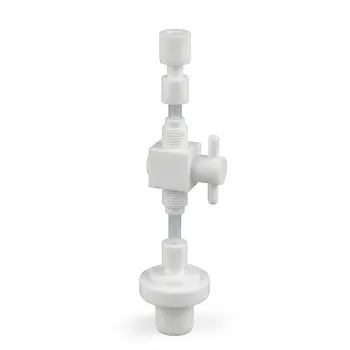
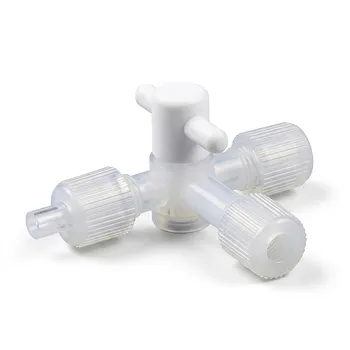
Manufacturers can therefore form tubing, fittings, valves, vessels, and parts with complex external or internal geometries without depending solely on PTFE-style paste processing and sintering.
Melt viscosity becomes controllable
PPVE disrupts chain packing and can lower the resistance to flow, but comonomer incorporation alone does not determine processability. Molecular weight remains a major control variable: very high-molecular-weight PFA can still exhibit substantial melt viscosity.
Polymer producers may use process controls such as chain-transfer agents to adjust molecular weight and place the resin within a target processing window. In practice, commercial PFA grades can have melt flow rates spanning roughly 1 to 100 g/10 min under ASTM D-1238-type conditions, depending on grade and test conditions.
Complex, non-porous parts become easier to fabricate
Melt processing allows more uniform filling of molds and more precise formation of detailed features. It can also support the production of dense, smooth, non-porous components with consistent dimensions.
For high-purity fluid handling, this matters because surface smoothness, leak-tight sealing, and low permeability are often more important than simple chemical compatibility alone.
Machining and finishing options expand
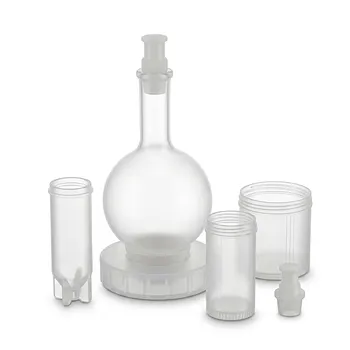
PFA can be molded into near-net-shape components and can also be machined for custom geometries. This is useful for specialized laboratory equipment such as fluid-transfer fittings, valve bodies, digestion vessels, trace-analysis vessels, and custom reaction components.
The practical advantage is design flexibility: engineers can combine molded geometry with precision machining rather than adapting every design to the constraints of sintered PTFE.
What PFA Retains from PTFE
Chemical resistance remains a core property
The polymer remains dominated by strongly fluorinated chemistry. PFA therefore preserves very high resistance to many aggressive chemicals and maintains low surface energy and low contaminant retention.
The exact chemical limits still depend on temperature, chemical concentration, exposure time, stress, and the specific grade. “Comparable to PTFE” does not mean identical performance in every environment.
Thermal stability remains high
PFA retains high-temperature capability, although its processing and service limits must be evaluated by grade and application. The lower melting point created by PPVE is primarily a processing advantage; it should not be interpreted as a proportional loss of operating performance.
Processing temperature, continuous-use temperature, mechanical load, and chemical exposure are separate design considerations.
Purity and sealing performance can improve in practice
Melt fabrication can produce dense parts with smooth surfaces and precise sealing features. In fluid-handling systems, that can reduce leakage paths, crevice volume, contaminant absorption, and chemical permeation compared with poorly consolidated or geometrically constrained PTFE components.
These benefits arise from the combination of polymer chemistry and fabrication method, not from PPVE alone.
Understanding the Trade-offs
Lower crystallinity changes dimensional behavior
Reduced crystallinity improves melt processability but changes the balance of stiffness, thermal expansion, shrinkage, and mechanical response. PFA should therefore be dimensioned using data for the specific grade and molding process.
A component designed from generic PTFE properties may not behave as expected when redesigned in PFA.
PFA is not simply “PTFE with lower viscosity”
PFA has a different molecular architecture and processing history. Its melt behavior, crystallization during cooling, weldability, surface characteristics, and mechanical properties must be treated as material-specific rather than inferred entirely from PTFE data.
More PPVE is not automatically better
Increasing comonomer content can lower the melting point and increase processability, but excessive structural disruption may affect crystallinity, stiffness, thermal behavior, and other performance characteristics. Resin selection requires balancing flow against the required mechanical and chemical service conditions.
Processing still requires elevated temperatures
PFA is melt-processable, but it is not a low-temperature thermoplastic. Processing temperatures are high, and equipment must provide appropriate temperature control, corrosion resistance, ventilation, and residence-time management.
Thermal degradation, contamination, and dimensional distortion remain relevant risks when processing conditions are poorly controlled.
Machining does not remove design constraints
PFA enables custom machining, but thin walls, deep narrow cavities, tight tolerances, and thermal distortion still require careful design. Molded construction may be more economical for repeated production, while machining is often more appropriate for prototypes, low-volume parts, or specialized geometries.
Making the Right Choice for Your Goal
PFA is most useful when PTFE’s chemical inertness is required but conventional PTFE fabrication cannot provide the needed geometry, density, or sealing precision.
- If your primary focus is chemical inertness: Choose PFA when you need PTFE-like fluorochemical resistance with the added flexibility of thermoplastic fabrication, while verifying compatibility at the actual temperature and concentration.
- If your primary focus is complex geometry: Use melt-processable PFA for intricate fittings, valves, tubing, vessels, and molded features that are difficult to produce through conventional PTFE paste processing and sintering.
- If your primary focus is high-purity fluid handling: Favor a properly processed PFA grade and fabrication method that provide smooth, dense, low-permeability surfaces and reliable sealing.
- If your primary focus is maximum mechanical or dimensional performance: Compare the specific PFA grade with modified PTFE and standard PTFE under the expected load, temperature, creep, and thermal-cycling conditions.
PPVE converts PTFE’s exceptionally ordered molecular structure into a less crystalline, controllably flowable architecture, giving PFA the fabrication flexibility needed for complex components without abandoning the defining advantages of fluoropolymers.
Summary Table:
| Property | Standard PTFE | PFA (with PPVE) |
|---|---|---|
| Molecular structure | Highly regular, linear TFE chains | Irregular due to bulky PPVE side groups |
| Crystallinity | High | Lower |
| Melting point | ~330°C (no PPVE) | ~313°C at 5.2 wt% PPVE (illustrative) |
| Melt viscosity | Extremely high, non-flow | Controllable, melt-processable |
| Processability | Requires sintering/paste extrusion | Melt extrusion, injection molding, etc. |
| Chemical resistance | Excellent | Excellent |
| Thermal stability | High | High (grade-dependent) |
Ready to elevate your lab with custom PFA components? At KINTEK, we specialize in high-performance fluoropolymers, offering precision-machined PTFE/PFA parts from complex reaction vessels to high-purity fluid handling systems. Our end-to-end CNC machining ensures your unique requirements are met, whether for prototypes or large-volume orders. Contact our experts today to discuss your project and discover how KINTEK can enhance your research and production efficiency. Get in touch with us.
Related Products
- High Purity PFA Chromatography Column with Collection Bottle Corrosion Resistant Fluoropolymer Filtration System for Trace Analysis
- Custom PFA Tubing 1/4 Inch High Purity Corrosion Resistant Fluoropolymer Tube with Welding and Machining Services
- High Purity PFA Chromatography Columns and Collection Bottles Corrosion Resistant Fluoropolymer Filtration Systems for Trace Analysis
- High Purity PFA Chromatography Column Double Layer Constant Pressure Filter Column with Sieve Plate Acid Resistant Fluoropolymer Filtration System
- Custom PFA Pear Shaped Flask High Purity Corrosion Resistant Labware Custom Molded Fluoropolymer Flask Glass Replacement Solution
People Also Ask
- What are the primary functional and temperature differences between PFA and FEP when selecting melt-processible fluoropolymers for custom laboratory apparatus?
- Why is the chemical stability of polymer endgroups critical when selecting melt-processible fluoropolymers like PFA for high-purity laboratory apparatus? Choose Stable Endgroups for Reliable Performance
- What are the characteristics of PFA material? A Guide to Its High-Performance Balance
- Why is Perfluoroalkoxy alkane (PFA) preferred over glass or stainless steel in pharmaceutical process development? Pure Yield
- Why is PFA superior for cleaning and preventing cross-contamination? The Gold Standard for Ultra-Trace Lab Hygiene