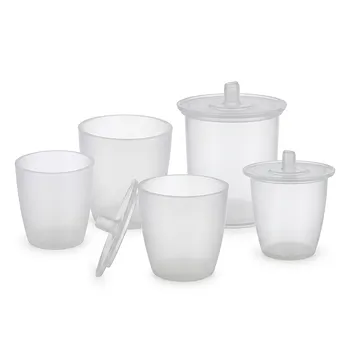
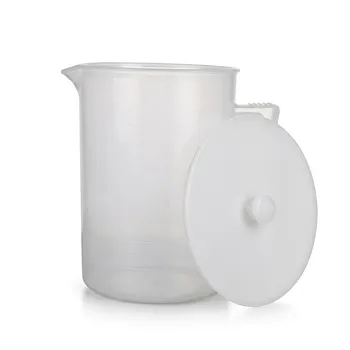
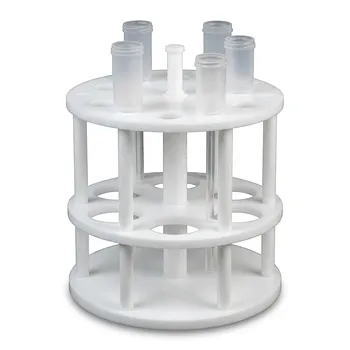
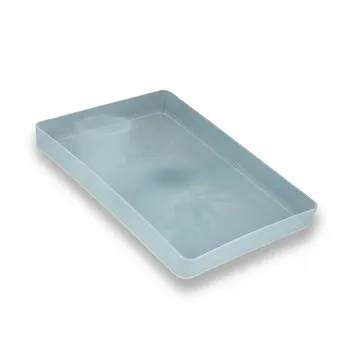
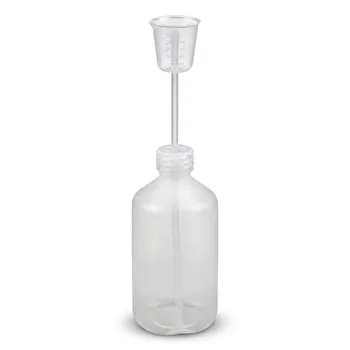
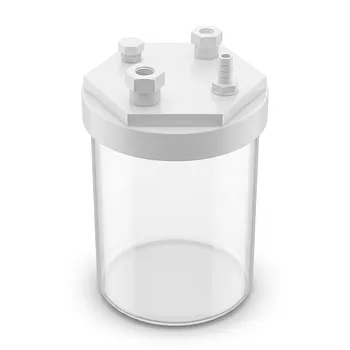
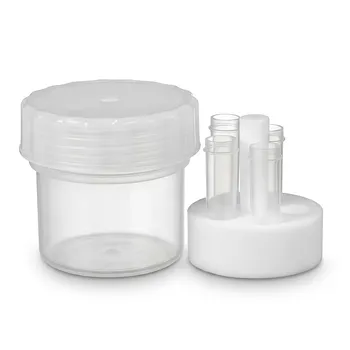
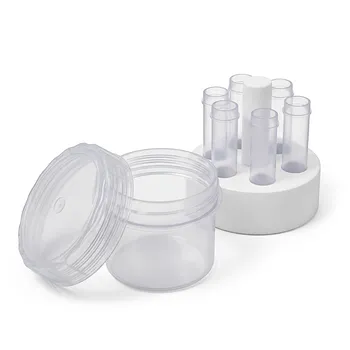
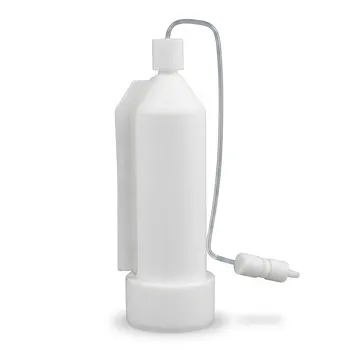
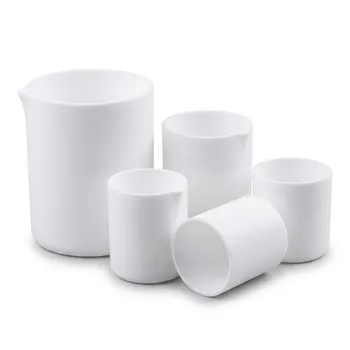
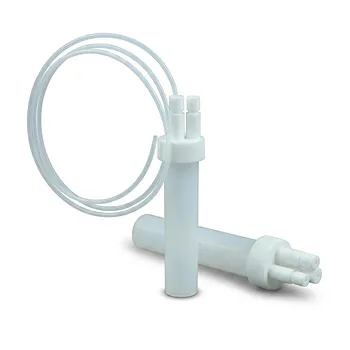
PFA labware is chemically inert in nearly all laboratory environments, but it is not universally resistant. It withstands virtually all strong mineral acids, inorganic bases, strong oxidizing agents, and organic solvents, including many exposures at elevated temperatures. The principal chemical boundaries are elemental fluorine, molten alkali metals such as sodium, and molten sodium hydroxide. Adhesive bonding is difficult because untreated PFA has extremely low surface energy; reliable bonding requires chemical etching, plasma treatment, or corona treatment.
PFA’s bulk chemical resistance is exceptionally broad, but the most aggressive fluorinating and molten alkali-metal conditions remain exceptions. For bonding, the surface must be activated without compromising the PFA component or contaminating the fluid-contact area.
Where PFA Chemical Resistance Reaches Its Limits
Strong acids and mineral acids
PFA generally resists strong mineral acids, including hydrochloric, hydrobromic, hydrofluoric, and hydroiodic acid under appropriate operating conditions.
Resistance still depends on concentration, temperature, exposure duration, pressure, and mechanical loading. A compatibility chart or application-specific test is necessary for unusual combinations or prolonged high-temperature service.
Inorganic bases
PFA is broadly resistant to inorganic bases and alkaline solutions under ordinary laboratory conditions.
The important exception is molten sodium hydroxide, which can chemically attack the fluoropolymer. Highly concentrated alkaline systems at elevated temperatures should therefore be evaluated rather than treated as automatically compatible.
Oxidizing agents
PFA tolerates many strong oxidizing agents better than most engineering plastics.
However, elemental fluorine is a specific incompatibility boundary. Fluorinating environments capable of removing fluorine or attacking the fluoropolymer backbone require specialized material evaluation.
Organic solvents
PFA is resistant to virtually all common organic solvents, making it suitable for solvent handling, trace analysis, tubing, reaction vessels, and custom laboratory components.
This does not eliminate the need to assess permeation, swelling, stress cracking, dimensional stability, and seal performance. Chemical resistance of the polymer is only one part of a complete compatibility assessment.
Molten alkali metals
Molten alkali metals, especially elemental sodium, can attack PFA. This reaction is also the basis of one method for preparing PFA surfaces for adhesive bonding.
The distinction is important: a treatment that chemically modifies PFA may be useful on an external bonding region but is inappropriate for an untreated fluid-contact surface unless the process is carefully controlled and fully validated.
Why Untreated PFA Is Difficult to Bond
Low surface energy prevents strong wetting
PFA is inherently non-stick and has very low surface energy. Many adhesives therefore tend to bead up or make only limited contact instead of spreading across the surface.
This produces a weak interface even when the adhesive itself has high strength.
Structural adhesives need surface activation
High-strength bonding requires the adhesive to wet the PFA and form interactions with an activated surface layer.
Surface preparation changes only the near-surface chemistry while preserving the desirable bulk properties of the PFA, provided the treatment is properly controlled.
Contact adhesives are a limited alternative
Pressure-sensitive or contact adhesives can often be applied without chemical surface treatment.
Their bond strength is relatively low—approximately 0.1–1.8 kg/cm according to the supplementary reference—so they are generally appropriate for light-duty uses such as linings, tapes, and low-load attachments rather than mechanically loaded assemblies.
How PFA Surfaces Can Be Treated for Adhesive Bonding
Chemical etching with sodium-based systems
The traditional approach uses an alkali-metal treatment, commonly a sodium-based chemical etchant such as sodium naphthalenide.
The treatment removes fluorine atoms from the outer polymer layer and introduces more polar, chemically active functionality. This substantially increases surface wettability and gives structural adhesives a surface to which they can bond.
Direct molten-sodium treatment
The primary reference identifies reaction with molten sodium as a practical way to etch fluoropolymer surfaces.
This process is chemically aggressive and hazardous. It should be performed only with a qualified, controlled procedure because residual reagent, inconsistent etch depth, surface contamination, or excessive treatment can undermine the assembly.
Plasma treatment
Atmospheric or vacuum plasma treatment uses energetic gas species to activate and microscopically modify the PFA surface.
Oxygen, argon, or air plasma can increase surface energy and introduce polar functional groups without materially changing the bulk PFA. Plasma is often attractive when chemical contamination must be minimized or when treatment needs to be localized and repeatable.
Corona discharge treatment
Corona treatment uses a high-voltage electrical discharge to activate the surface.
It is commonly used for films, sheets, tubing, and other relatively thin or accessible geometries before coating, lamination, or adhesive application. Its effectiveness depends on treatment uniformity, part geometry, and the time between treatment and bonding.
A Practical Bonding Sequence
Prepare the bonding region
Clean the area to remove oils, mold-release residues, dust, and handling contamination.
Mask or protect any surface that will contact chemicals, especially when using a chemically aggressive etchant.
Apply a controlled surface treatment
Select chemical etching, plasma, or corona treatment based on the geometry, required bond strength, contamination constraints, and available process controls.
The goal is surface activation, not bulk material removal.
Bond promptly after activation
Activated fluoropolymer surfaces may lose some of their increased wettability with time or through recontamination.
Apply the adhesive as soon as practical after treatment, using the adhesive manufacturer’s specified mix ratio, open time, cure schedule, bond-line thickness, and pressure.
Validate the finished assembly
Test representative assemblies under the actual or worst-case conditions expected in service.
Validation should include chemical exposure, temperature cycling, pressure or mechanical loading, leakage, and bond aging where relevant.
Understanding the Trade-offs
Chemical etching versus plasma treatment
Chemical etching can produce strong adhesion and is effective for difficult fluoropolymer surfaces, but it involves hazardous reagents and possible residual contamination.
Plasma and corona treatments are cleaner alternatives, but their performance can depend strongly on equipment, treatment uniformity, part shape, and the delay before bonding.
Adhesive bonding versus welding
Adhesives enable PFA to be joined to metals and other structural substrates, which is useful for custom assemblies and hybrid components.
For demanding fluid-handling systems exposed to high temperature, aggressive chemicals, mechanical force, or strict zero-emission requirements, adhesive-less welding may be preferable. Welding can approach parent-material joint strength and avoids adhesive degradation or adhesive-created leak paths.
Surface activation versus chemical purity
Etching improves adhesion by deliberately changing the chemistry of the outer PFA layer.
That change may be unacceptable on a fluid-contact surface in trace analysis, ultra-pure processing, or contamination-sensitive laboratory work. In such cases, keep the treated region isolated from the process fluid or use welding instead.
Bond strength versus service conditions
A strong initial bond does not guarantee long-term performance.
The adhesive must also tolerate the service chemicals, operating temperature, differential thermal expansion between PFA and the mating substrate, and any cyclic pressure or flexing.
Common Pitfalls to Avoid
Treating PFA as universally inert
“Chemically inert” does not mean compatible with every reagent or every temperature.
Elemental fluorine, molten alkali metals, and molten sodium hydroxide are clear boundaries identified in the reference material.
Bonding untreated PFA directly
Applying a structural adhesive to untreated PFA usually produces poor wetting and weak adhesion.
If a high-strength joint is required, use an appropriate surface-activation process or choose a different joining method.
Using an etchant without controlling contamination
Sodium-based treatments can leave reactive or chemically altered residues if improperly processed.
Do not allow an incompletely treated surface to become part of a critical fluid path without cleaning, verification, and compatibility testing.
Ignoring geometry and thermal expansion
PFA and metals can expand differently during temperature changes.
A rigid adhesive joint may experience substantial stress even when the chemical compatibility is satisfactory. Joint design must account for flexibility, bond area, edge stresses, and thermal cycling.
Making the Right Choice for Your Goal
The best approach depends on whether the priority is chemical purity, structural strength, manufacturability, or long-term reliability.
- If your primary focus is chemical resistance: Use PFA for most strong-acid, inorganic-base, oxidizer, and organic-solvent applications, but specifically screen elemental fluorine, molten alkali metals, and molten sodium hydroxide.
- If your primary focus is high-strength adhesive bonding: Activate the PFA surface with controlled sodium-based chemical etching or plasma treatment before applying a compatible structural adhesive.
- If your primary focus is low contamination: Prefer plasma or corona treatment, isolate treated regions from the fluid path, and validate cleaning and residue control.
- If your primary focus is maximum leak and temperature reliability: Evaluate adhesive-less welding before selecting an adhesive joint.
- If your primary focus is a light-duty attachment: A pressure-sensitive or contact adhesive may be sufficient without pretreatment, but do not rely on it for heavily loaded assemblies.
PFA provides an unusually broad chemical-resistance envelope, while controlled surface activation makes it possible to combine that resistance with practical structural bonding.
Summary Table:
| Aspect | Details |
|---|---|
| Chemical Resistance | Resists most acids, bases, oxidizers, and organic solvents |
| Exceptions | Elemental fluorine, molten alkali metals, molten NaOH |
| Bonding Challenge | Low surface energy prevents strong adhesion |
| Surface Treatments | Chemical etching (sodium-based), plasma, corona discharge |
| Bonding Methods | Structural adhesives (after treatment), contact adhesives (light-duty), welding (for high reliability) |
Looking for high-performance PFA labware and custom solutions? At KINTEK, we specialize in PTFE and PFA products engineered for extreme chemical resistance. Whether you need standard labware, custom machined parts, or expert advice on bonding and compatibility, our team is ready to support your applications. Contact us today to discuss your requirements and discover how we can enhance your lab's performance. Get in touch now!
Related Products
- Custom PFA Pear Shaped Flask High Purity Corrosion Resistant Labware Custom Molded Fluoropolymer Flask Glass Replacement Solution
- High Purity PFA Crucible and Corrosion Resistant PTFE Beaker for Trace Analysis and Custom Laboratory Applications
- High Purity PFA Beaker with Handle and Large Capacity Washable Soak Basket Multi Spec Teflon Laboratory Labware
- Custom PFA Microcolumn Racks and PTFE Machined Low Background Corrosion Resistant Laboratory Fixtures
- Customizable PFA Square Tray Corrosion Resistant High Temperature Large Petri Dish Electrolytic Cell
People Also Ask
- How does end-group stabilization during PFA polymer synthesis influence purity? Achieve Ultra-High Purity & Reliability in Lab Components.
- Why Use PFA Labware for MnFe2O4/rGO Precursors? Ensure Stoichiometric Precision and Purity
- Why is PFA labware recommended for CuBi2O4? Protect high-purity precursors and ensure semiconductor bandgap accuracy.
- How does PFA labware enhance the accuracy of ultra-trace element analysis? Achieving PPT Precision with Zero Leaching
- What are the primary properties of PFA for high-performance labware? Achieve ultra-trace purity & thermal stability.