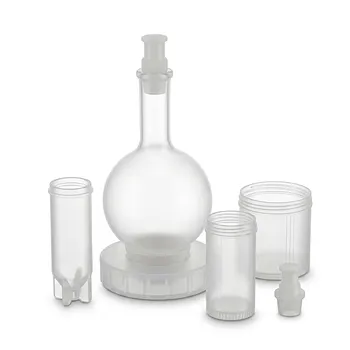
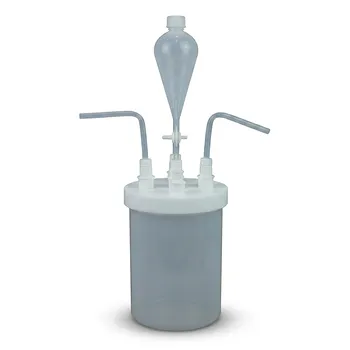
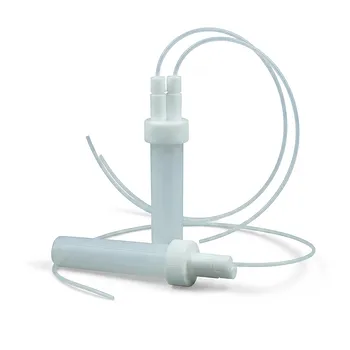
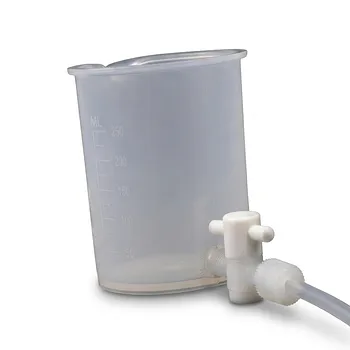
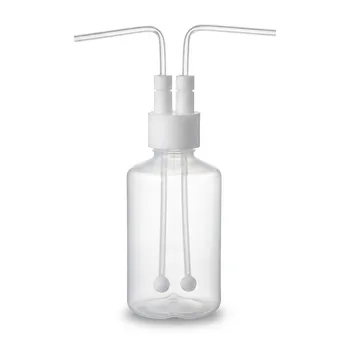
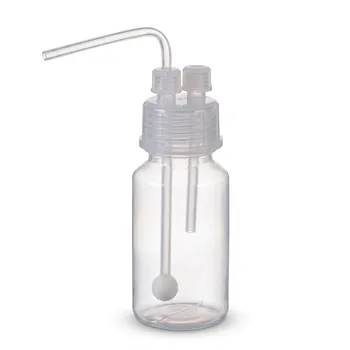
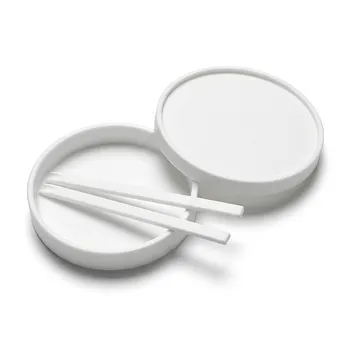
Perfluoroalkoxy (PFA) labware is the industry standard for Copper Bismuth Oxide (CuBi2O4) synthesis because it offers an unparalleled combination of chemical inertness and an extremely low metal ion background. In the preparation of nitric acid-based precursor solutions, PFA prevents trace metallic impurities from leaching into the mixture. This protection is critical because even minute contaminants can shift the doping energy levels of the semiconductor, compromising its bandgap accuracy and photocatalytic performance.
Core Takeaway: PFA labware acts as a "pure-state" environment, ensuring that the final Copper Bismuth Oxide material reflects its intended chemical composition without interference from container-leached ions. This precision is essential for maintaining the electronic integrity and reproducibility of high-performance photocatalysts.
The Critical Role of Purity in Semiconductor Synthesis
Preventing Trace Metal Ion Migration
The primary reason for using PFA is its extremely low leaching rate. Unlike standard borosilicate glass, which can release ions like sodium, boron, or aluminum into acidic solutions, PFA is chemically synthesized to remain stable. This ensures that the precursor solution—often a mixture of copper and bismuth salts in nitric acid—remains free from foreign cations that could act as unintentional dopants.
Protecting Doping Energy Levels
In materials like CuBi2O4, the electronic structure is highly sensitive to the presence of impurities. Trace metallic contaminants can introduce "trap states" within the bandgap, which alter how the material absorbs light and moves charge carriers. By using PFA volumetric flasks and beakers, researchers ensure that the observed photocatalytic activity is a result of the material's intended design rather than accidental contamination.
Ensuring Accurate Bandgap Testing
The bandgap is a fundamental property that dictates a material’s efficiency in solar energy conversion. If impurities migrate from the labware into the precursor, the resulting bandgap measurements may be skewed, leading to false conclusions about the material's physics. PFA’s purity levels allow for the high-precision quantitative analysis required for state-of-the-art semiconductor research.
Chemical Stability and Surface Properties
Resistance to Aggressive Nitric Acid Environments
Precursor solutions for bismuth and copper typically require high-concentration nitric acid to maintain solubility. While glass can be etched over time by aggressive reagents, PFA exhibits exceptional chemical inertness across a wide pH range. This stability prevents the container itself from degrading and introducing particulates or ions into the synthesis process.
Superior Anti-Adhesion and Recovery
PFA is known for its surface smoothness and superior anti-adhesion properties. This is vital when working with expensive or high-purity precursors, as it prevents the loss of target metal ions through adsorption onto the container walls. Researchers can achieve higher recovery rates and more accurate molar ratios, which is critical for the long-range order of the crystalline structure.
Comparison to Standard Laboratory Glassware
Traditional glassware is a significant source of "background noise" in trace analysis. Even after rigorous cleaning, glass retains a porous surface that can harbor and later release contaminants. PFA provides a non-porous, hydrophobic surface that is far easier to decontaminate, ensuring that each experiment starts with a truly "blank" slate.
Understanding the Trade-offs
The Factor of Initial Investment
The most significant hurdle to adopting PFA labware is the higher upfront cost compared to glass or even other fluoropolymers like PTFE. However, this cost is typically offset by the increased reproducibility of results and the avoidance of failed synthesis batches due to contamination.
Temperature and Physical Handling
While PFA has excellent temperature resistance, it is a flexible polymer, not a rigid solid like glass. It cannot be used with open flames and may deform under extreme mechanical pressure or vacuum if not specifically reinforced. Additionally, PFA is translucent rather than transparent, which can make visual monitoring of precipitates slightly more challenging than in clear glass.
How to Apply This to Your Project
When integrating PFA labware into your laboratory workflow, your choice should be dictated by the sensitivity of your specific application.
- If your primary focus is photocatalytic efficiency: Use PFA beakers and stir bars for the initial dissolution of copper and bismuth salts to ensure the highest electronic purity.
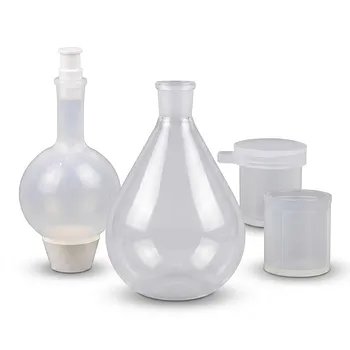
- If your primary focus is precise bandgap characterization: Utilize PFA volumetric flasks for all dilution steps to prevent trace leaching from affecting spectroscopic results.
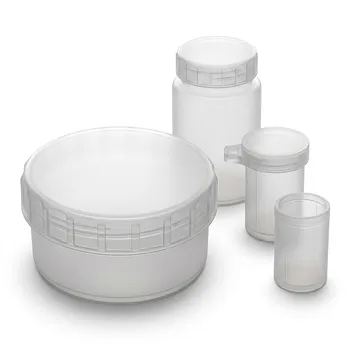
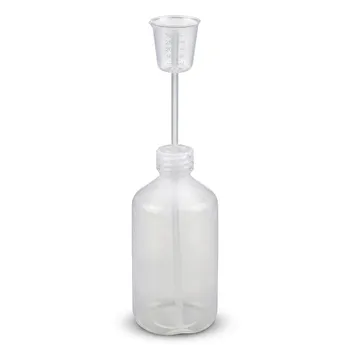
- If your primary focus is long-term precursor storage: Opt for PFA bottles, as their superior chemical resistance prevents ion migration during extended contact times.
By prioritizing PFA labware in the synthesis of CuBi2O4, you eliminate the container as a variable, ensuring that your data reflects the true potential of your material.
Summary Table:
| Feature | Benefit for CuBi2O4 Synthesis |
|---|---|
| Ultra-Low Leaching | Prevents unintentional doping and metallic "trap states." |
| Nitric Acid Resistance | Remains stable in aggressive acidic precursor environments. |
| Anti-Adhesion Surface | Ensures high recovery rates of expensive metal ions. |
| Chemical Inertness | Guarantees accurate bandgap and photocatalytic testing. |
| Thermal Stability | Maintains integrity during heating and dissolution processes. |
Precision Labware for High-Performance Photocatalysts
At KINTEK, we understand that in semiconductor research, the container is as critical as the reagent. Our high-performance PFA and PTFE laboratory supplies are engineered to provide the "pure-state" environment necessary for sensitive CuBi2O4 synthesis.
We offer a comprehensive range of fluoropolymer solutions, including:
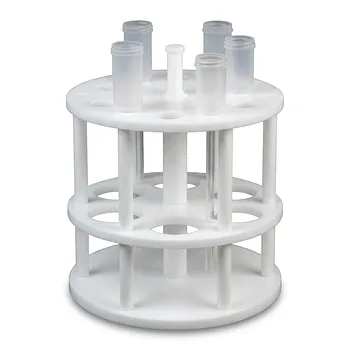
- Everyday Essentials: Beakers, measuring cylinders, volumetric flasks, reagent bottles, and centrifuge tubes.
- Sample Prep & Fluid Transfer: Tubing, fittings, valves, separatory funnels, and high-purity filters.
- Advanced Apparatus: Custom electrochemical cells, hydrothermal synthesis liners, microwave digestion vessels, and microchannel reactors.
Backed by end-to-end custom CNC fabrication, KINTEK can deliver everything from high-volume consumables to complex, non-standard machined parts tailored to your specific research needs.
Eliminate contamination variables and ensure the reproducibility of your materials—contact KINTEK today for a bespoke consultation!
References
- Saifullahi Shehu Imam. Copper bismuth oxide (CuBi2O4): Synthesis, properties and potential applications. DOI: 10.61186/jcc.7.1.1
This article is also based on technical information from Kintek Knowledge Base .
Related Products
- Custom PFA Pear Shaped Flask High Purity Corrosion Resistant Labware Custom Molded Fluoropolymer Flask Glass Replacement Solution
- High Purity PFA Crucible and Corrosion Resistant PTFE Beaker for Trace Analysis and Custom Laboratory Applications
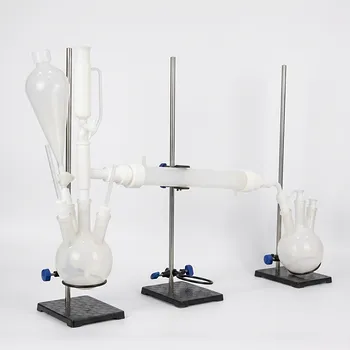
- High Purity PFA Constant Pressure Condensation Reaction System Acid Resistant High Temperature Customizable Teflon Labware
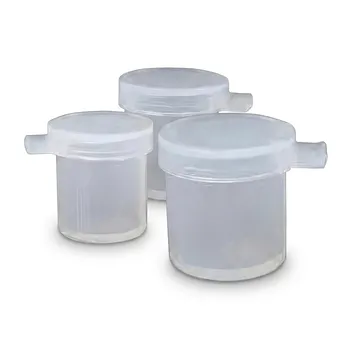
- High Purity PFA Sample Dissolution Cups Acid Resistant Chemical Digestion Vessels with Lids Trace Analysis Labware
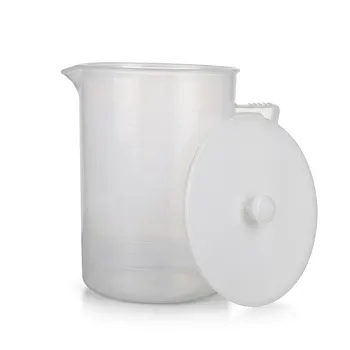
- High Purity PFA Beaker with Handle and Large Capacity Washable Soak Basket Multi Spec Teflon Laboratory Labware
People Also Ask
- Why Use PFA Labware for MnFe2O4/rGO Precursors? Ensure Stoichiometric Precision and Purity
- How does PFA labware enhance the accuracy of ultra-trace element analysis? Achieving PPT Precision with Zero Leaching
- What are the primary properties of PFA for high-performance labware? Achieve ultra-trace purity & thermal stability.
- What role does PFA labware play in semiconductor manufacturing? Ensuring Ultra-Pure Yields and Zero Contamination
- Why are low-surface-energy PFA labware and PTFE phase-separation tools critical for F-POSS macromers? Maximize recovery and accuracy.