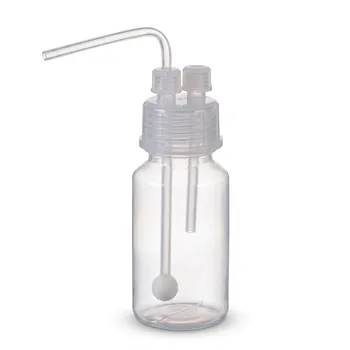
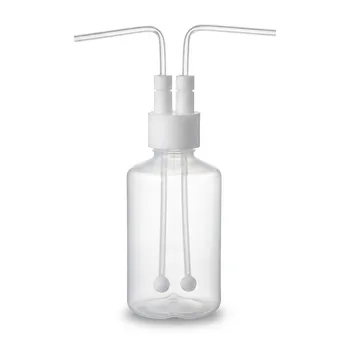
The use of high-purity PFA (Perfluoroalkoxy) labware is critical for preparing $\text{MnFe}_2\text{O}_4/\text{rGO}$ precursors because it prevents the loss of essential metal ions through wall adsorption and eliminates the risk of impurity leaching. This ensures that the precise stoichiometry of manganese ($\text{Mn}^{2+}$) and iron ($\text{Fe}^{3+}$) is maintained, which is the deciding factor in the magnetic and electrochemical performance of the resulting nanoparticles.
Core Takeaway: High-purity PFA provides a chemically inert environment that preserves the exact ratio of metal ions in solution. By eliminating contamination and adsorption, it ensures the reproducibility of the $\text{MnFe}_2\text{O}_4$ crystal structure and its subsequent interaction with reduced graphene oxide (rGO).
Preserving Stoichiometric Precision
The Impact of Ion Adsorption
When preparing precursor solutions, metal ions like $\text{Mn}^{2+}$ and $\text{Fe}^{3+}$ have a tendency to "stick" to the surface of conventional glass or lower-grade plastic containers.
High-purity PFA possesses non-stick properties and chemical inertness that minimize this adsorption. This ensures that the concentration of ions in the liquid phase remains exactly as calculated.
Maintaining the Mn-to-Fe Ratio
The synthesis of manganese ferrite ($\text{MnFe}_2\text{O}_4$) requires a strict 1:2 molar ratio of manganese to iron. Even minor losses of one element to the container walls can shift this stoichiometry.
A shift in this ratio can result in the formation of secondary phases or defects in the crystal lattice. These defects negatively impact the magnetic saturation and the specific capacitance of the material.
Eliminating Contamination Pathways
The Risks of Conventional Glassware
Standard laboratory glassware can leach impurities, such as silica or trace alkali metals, when exposed to the reagents used in nanoparticle synthesis.
These leached impurities can interfere with the structural assembly of the $\text{MnFe}_2\text{O}_4$ on the rGO sheets. Even parts-per-billion levels of foreign cations can alter the surface energy and growth kinetics of the crystals.
The Advantage of Low Leaching Background
PFA is manufactured to have an extremely low metal ion leaching background. It is resistant to the strong acids or bases often used to stabilize precursor solutions or adjust pH.
Using PFA ensures that the reaction system remains "clean," allowing researchers to attribute the material's properties solely to the intended components rather than environmental contaminants.
Understanding the Trade-offs
Cost and Resource Allocation
High-purity PFA labware is significantly more expensive than standard borosilicate glass or PTFE. For labs on a budget, this requires a strategic decision on where to implement these high-cost consumables.
In the context of $\text{MnFe}_2\text{O}_4/\text{rGO}$, the precursor preparation stage is the most critical point for PFA use. Contamination at this stage propagates through the entire synthesis and thermal reduction process.
Thermal and Mechanical Limits
While PFA has excellent thermal stability, it is still a fluoropolymer and cannot withstand the extreme temperatures of a muffle furnace. It is intended for solution-phase preparation and storage rather than high-temperature calcination.
Furthermore, PFA is softer than glass and can be prone to scratching if cleaned with abrasive tools. Scratches increase surface area, which could potentially lead to higher (though still minimal) adsorption over time.
How to Apply This to Your Project
Recommendations for Implementation
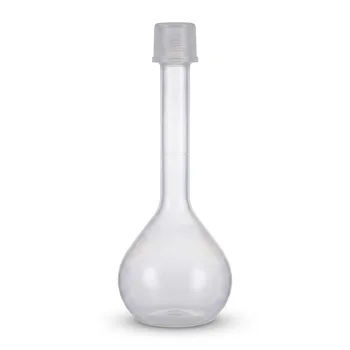
- If your primary focus is precise magnetic properties: Use PFA volumetric flasks and beakers for the initial dissolution of Mn and Fe salts to ensure the 1:2 ratio is perfectly preserved.
- If your primary focus is electrochemical cycling stability: Utilize PFA storage tanks for your precursor solutions to prevent the leaching of silica or other ions that could destabilize the crystal lattice during long-term cycling.
- If your primary focus is cost-effective scaling: Use PFA for the initial concentrated "mother liquors" and only transition to high-quality cleaned glassware for the final bulk dilution steps if necessary.
Choosing high-purity PFA is an investment in data integrity, ensuring that the performance of your $\text{MnFe}_2\text{O}_4/\text{rGO}$ composite is a result of your design, not accidental chemistry.
Summary Table:
| Feature of High-Purity PFA | Benefit for Precursor Preparation | Impact on MnFe2O4/rGO Performance |
|---|---|---|
| Chemical Inertness | Minimizes Mn²⁺ and Fe³⁺ wall adsorption | Preserves exact 1:2 molar ratio for crystal lattice. |
| Ultra-Low Leaching | Prevents silica or metal impurity intake | Ensures electrochemical stability and purity. |
| Non-Stick Surface | Eliminates residue and cross-contamination | Improves reproducibility of nanoparticle growth. |
| Acid/Base Resistance | Withstands aggressive pH adjustments | Reliable for stabilizing diverse precursor solutions. |
Achieve Uncompromising Purity in Your Lab with KINTEK
Don't let trace contamination or ion loss compromise your material science breakthroughs. KINTEK specializes in high-performance fluoropolymer solutions designed for the most demanding trace analysis and synthesis environments.
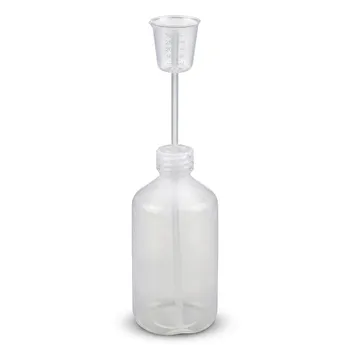
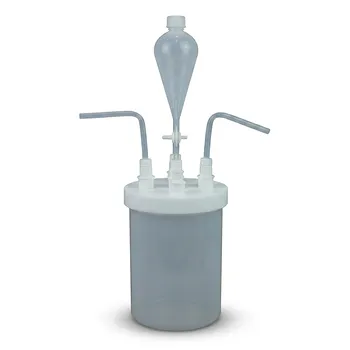
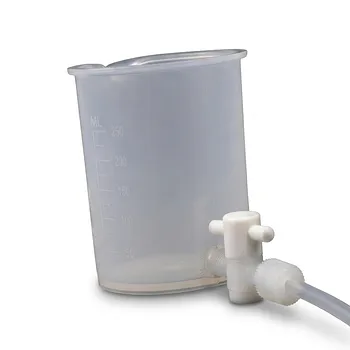
From everyday basic labware—including PFA beakers, measuring cylinders, and reagent bottles—to high-purity trace analysis instruments and comprehensive fluid transfer components (tubing, valves, and fittings), we provide the tools necessary for stoichiometric precision. Our expertise extends to advanced reaction apparatus, such as hydrothermal synthesis liners, microwave digestion vessels, and custom electrochemical cells.
Whether you require high-volume standard consumables or bespoke, non-standard parts crafted via our end-to-end custom CNC fabrication, KINTEK is your absolute partner for PTFE and PFA laboratory supplies.
Ensure your research integrity today—Contact our experts to discuss your custom setup!
References
- Kun-Yauh Shih, H.‐H. Tseng. One-Step Microwave-Assisted Synthesis of MnFe<sub>2</sub>O<sub>4</sub>/rGO Nanocomposites and Their Electrochemical Properties in Supercapacitors. DOI: 10.1021/acsomega.4c07810
This article is also based on technical information from Kintek Knowledge Base .
Related Products
- High Purity PFA Volumetric Flask 1000ml 2000ml Constant Volume Bottle Acid Resistant Trace Analysis Custom Laboratory Labware
- High Purity PFA Crucible and Corrosion Resistant PTFE Beaker for Trace Analysis and Custom Laboratory Applications
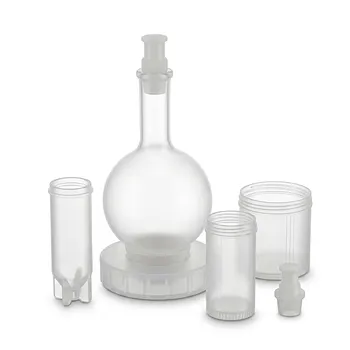
- Custom PFA Pear Shaped Flask High Purity Corrosion Resistant Labware Custom Molded Fluoropolymer Flask Glass Replacement Solution
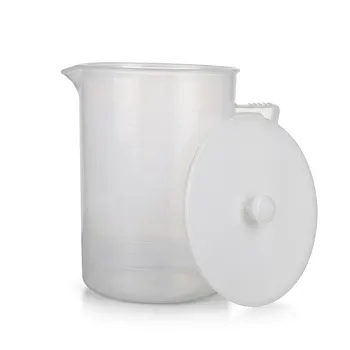
- High Purity PFA Beaker with Handle and Large Capacity Washable Soak Basket Multi Spec Teflon Laboratory Labware
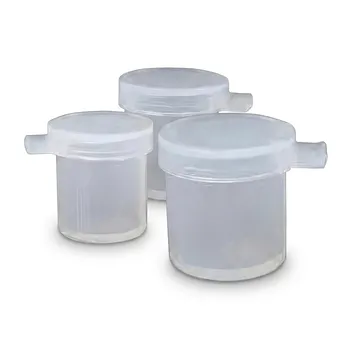
- High Purity PFA Sample Dissolution Cups Acid Resistant Chemical Digestion Vessels with Lids Trace Analysis Labware
People Also Ask
- What are the advantages of using high-purity PFA vs. glassware? Achieve Unmatched Accuracy in Trace Analysis
- Why use high-purity PFA bottles for Carbon Quantum Dots? Ensure Ink Stability and Prevent Fluorescence Quenching
- Why is high-purity PFA trace analysis labware used for MXene? Ensure Superior Material Integrity in Research
- Why is high-purity PFA trace analysis labware used for sample processing when preparing Mo2CTx@MoS2? Ensure Material Purity
- Why is high-purity PFA labware necessary for Znx@LS-2 zeolite ICP-OES analysis? Ensure Trace-Level Precision