The fundamental operating principle of an electrolytic cell is the use of external electrical energy to drive a non-spontaneous redox reaction. By applying a direct current (DC) voltage that exceeds the system's decomposition potential, the cell forces chemical changes to occur that would not happen naturally. This process, known as electrolysis, effectively converts electrical energy into stored chemical energy.
An electrolytic cell functions as a "chemical pump" that overcomes a positive Gibbs free energy change ($\Delta G > 0$) to decompose stable compounds or deposit materials. It relies on an external power source to move electrons against their natural thermodynamic gradient.
The Mechanics of Forced Redox Reactions
Overcoming Thermodynamic Stability
In nature, most chemical systems seek a state of lower energy, resulting in spontaneous reactions. An electrolytic cell reverses this logic by providing the necessary work to move a system to a higher energy state.
The Role of the External DC Source
The external power source acts as an electron pump, pulling electrons away from the anode and pushing them toward the cathode. For any reaction to occur, the applied voltage must be greater than the decomposition potential of the specific chemical system involved.
Energy Conversion Dynamics
Unlike a battery (galvanic cell) which releases energy, the electrolytic cell consumes electrical energy to create chemical products. This makes it a vital tool for non-spontaneous processes like splitting water into hydrogen and oxygen or refining ores.
Core Components and Their Functions
The Cathode: Site of Reduction
The cathode is the negative electrode in an electrolytic cell, where it provides electrons to the chemical species in the electrolyte. This process is called reduction, and it is where cations (positive ions) migrate to gain electrons.
The Anode: Site of Oxidation
The anode is the positive electrode, where electrons are stripped from species in the electrolyte. This process is called oxidation, and it attracts anions (negative ions) which give up their extra electrons to the circuit.
The Electrolyte as an Ionic Bridge
The electrolyte, whether a molten salt or an aqueous solution, serves as the medium for ion transport. It must be ionically conductive to allow the flow of internal current, yet it does not conduct electrons directly.
Understanding the Trade-offs
Energy Loss and Inefficiency
Electrolytic processes are rarely 100% efficient due to overpotential and internal resistance within the electrolyte. Much of the supplied electrical energy can be lost as heat rather than being converted into chemical energy.
Electrode Degradation
Depending on the material used, electrodes can be consumable or inert. Reactive electrodes may dissolve over time or become coated in impurities, which significantly alters the efficiency and purity of the final chemical output.
Competitive Reactions
In aqueous solutions, the presence of water molecules can lead to competing redox reactions. For example, instead of depositing a desired metal, the cell might simply electrolyze water into hydrogen and oxygen gases.
How to Apply This to Your Project
Making the Right Choice for Your Goal
To achieve a specific outcome with an electrolytic cell, you must match your components to your chemical objectives.
- If your primary focus is material deposition (Electroplating): Use a sacrificial anode made of the metal you wish to plate onto a conductive cathode.
- If your primary focus is chemical synthesis (e.g., Chlorine production): Utilize inert electrodes like graphite or platinum to prevent the electrodes themselves from reacting with the products.
- If your primary focus is high-purity metal refining: Carefully calibrate the applied voltage to ensure it sits exactly between the decomposition potentials of the target metal and its impurities.
Mastering the balance between voltage, electrolyte concentration, and electrode material allows you to precisely control the transformation of electrical energy into high-value chemical products.
Summary Table:
| Component/Process | Role in Electrolysis | Key Characteristic |
|---|---|---|
| Power Source | External DC Voltage | Must exceed decomposition potential |
| Cathode (-) | Site of Reduction | Cations gain electrons |
| Anode (+) | Site of Oxidation | Anions lose electrons |
| Electrolyte | Ionic Conductor | Facilitates internal ion transport |
| Energy Change | Endergonic | Positive Gibbs free energy (ΔG > 0) |
Optimize Your Electrochemical Setup with KINTEK
Precision in electrolysis starts with high-performance materials. KINTEK specializes in manufacturing virtually all imaginable laboratory supplies crafted from PTFE and PFA, ensuring maximum chemical resistance and purity for your most sensitive experiments.
Whether you need everyday basic labware (beakers, crucibles, reagent bottles) or advanced specialized apparatus like standard/custom electrochemical cells, battery testing fixtures, and electrode accessories, we have you covered. Our capabilities extend from high-purity trace analysis instruments and fluid transfer components (tubing, valves) to complex, custom CNC-fabricated parts tailored to your specific research needs.
From high-volume orders of general consumables to bespoke laboratory setups, KINTEK delivers the durability and precision required for advanced material synthesis and refining.
Ready to elevate your lab's performance? Contact us today to discuss your custom fluoropolymer requirements!
Related Products
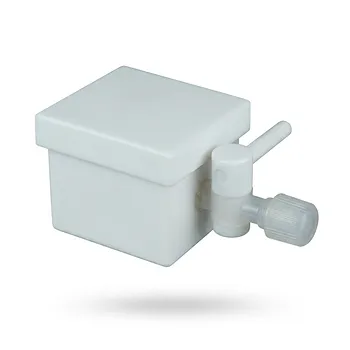
- White PTFE Electrolytic Cell with Movable Slider and Insulated Lid for Fluorine Corrosion Resistance
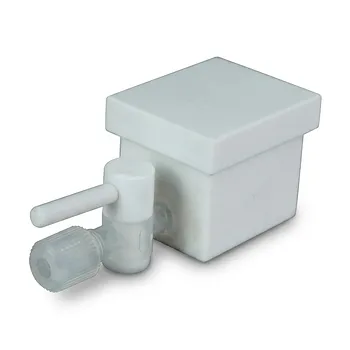
- Custom PTFE Electrolytic Cell Corrosion Resistant Low Background Reaction Vessel with Inlet Outlet Ports
- High Purity Custom PTFE Reaction Cell Electrolytic Tank for Semiconductor and Polysilicon Industrial Applications
- Square PTFE Electrochemical Cell for Silicon Wafer Processing and Hydrofluoric Acid Resistance in Semiconductor and New Energy Research
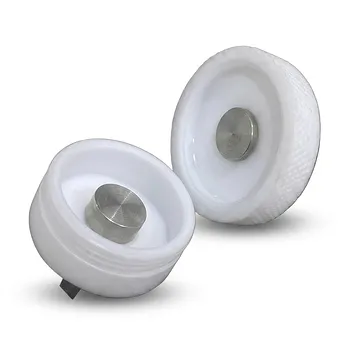
- Customizable PFA Square Tray Corrosion Resistant High Temperature Large Petri Dish Electrolytic Cell
People Also Ask
- What makes PTFE an ideal construction material for custom electrochemical cells and electronic analytical instrumentation housings? Discover superior chemical resistance and electrical insulation
- How do custom PTFE electrochemical cells improve the accuracy of stability testing for alkaline catalysts compared to glass cells?
- How does the hydrophobicity of PTFE benefit electrochemical measurements? Enhance Stability and Precision in Your Lab
- How are electrolytic cells utilized in the Hall-Héroult process? Optimizing Purity and Energy Efficiency
- What are the primary components required for the construction of a standard electrolytic cell? Essential Hardware Guide