Calculating current efficiency in an electrolytic cell requires comparing the actual mass of the substance produced at an electrode to the theoretical mass predicted by Faraday’s laws of electrolysis. This ratio, typically expressed as a percentage, identifies how much of the electrical energy supplied to the system is successfully driving the desired chemical reaction versus being lost to competing processes.
Current efficiency is a primary metric for determining the economic and technical viability of an electrochemical process. It quantifies the gap between ideal thermodynamic performance and real-world results, highlighting energy losses caused by side reactions and system resistance.
The Mathematical Foundation of Efficiency
Faraday’s Laws as the Benchmark
The theoretical yield is derived from Faraday’s First Law, which states that the mass of a substance produced is directly proportional to the quantity of electricity (charge) passed through the cell.
To find the theoretical mass ($m_{theoretical}$), you use the formula: $m = (I \times t \times M) / (z \times F)$. Here, $I$ is current, $t$ is time, $M$ is molar mass, $z$ is the number of electrons transferred, and $F$ is Faraday’s constant.
The Efficiency Formula
Once the theoretical yield is established, the Current Efficiency ($\eta$) is calculated by dividing the actual mass recovered ($m_{actual}$) by the theoretical mass.
The resulting figure is multiplied by 100 to yield a percentage: $\eta = (m_{actual} / m_{theoretical}) \times 100$. In a perfect system, this would be 100%, but industrial applications rarely achieve this.
Why Efficiency Falls Below 100%
The Impact of Parasitic Side Reactions
In many electrolytic environments, the applied voltage triggers unintended chemical reactions alongside the primary one. For example, in aqueous solutions, the electrolysis of water to produce hydrogen or oxygen gas often competes with the desired metal deposition.
These "parasitic" reactions consume a portion of the total current ($I$). Because this charge is spent on secondary products, it is unavailable for the primary product, directly lowering the calculated efficiency.
Energy Loss via Heat and Resistance
Physical components of the cell, including the electrolyte and electrodes, possess inherent electrical resistance. As current flows through these resistive elements, a portion of the electrical energy is converted into thermal energy (heat).
While heat generation does not always reduce the current efficiency directly (which is based on charge transfer), it significantly impacts voltage efficiency and overall energy costs. Excessive heat can also catalyze further side reactions, indirectly degrading the current efficiency.
Understanding the Trade-offs
Throughput vs. Efficiency
Increasing the current density (amps per unit area) is a common strategy to speed up production and increase the "throughput" of a cell. However, higher densities often lead to increased polarization and higher rates of side reactions.
This creates a fundamental trade-off where faster production usually results in lower current efficiency. Engineers must find the "sweet spot" where the cost of wasted energy is balanced by the value of increased production speed.
Purity and Maintenance Costs
Operating at near-100% efficiency often requires highly controlled environments and expensive membrane separators to prevent product re-mixing. These high-efficiency designs reduce energy bills but significantly increase the capital expenditure (CAPEX) and maintenance requirements of the facility.
Applying Efficiency Metrics to Your Goal
How to Apply This to Your Project
To optimize your electrolytic system, you must align your efficiency targets with your specific operational priorities.
- If your primary focus is reducing operational costs: You should prioritize maximizing current efficiency by lowering current density and using highly selective catalysts to suppress side reactions.
- If your primary focus is maximizing production volume: You may choose to accept a lower current efficiency in exchange for higher current loads, provided the cost of the "wasted" energy is offset by the increased product volume.
- If your primary focus is product purity: You must maintain high current efficiency, as low efficiency often indicates the presence of side products that can contaminate your primary output.
Mastering current efficiency allows you to transform an electrolytic process from a laboratory experiment into a commercially viable industrial operation.
Summary Table:
| Metric | Symbol/Formula | Description |
|---|---|---|
| Theoretical Mass | $m = (I \times t \times M) / (z \times F)$ | The ideal yield calculated via Faraday’s First Law. |
| Actual Mass | $m_{actual}$ | The real-world amount of substance produced at the electrode. |
| Current Efficiency | $\eta = (m_{actual} / m_{theoretical}) \times 100$ | The ratio of electrical energy used for the desired reaction. |
| Faraday’s Constant | $F \approx 96,485$ C/mol | The total electric charge per mole of electrons. |
Maximize Your Electrolytic Performance with KINTEK
Precision in electrochemical processes requires more than just calculations—it demands high-performance materials that resist corrosion and eliminate contamination. KINTEK specializes in high-performance fluoropolymer solutions, offering an exhaustive range of laboratory supplies crafted from PTFE and PFA.
From everyday labware like beakers, reagent bottles, and centrifuge tubes to advanced reaction apparatus including custom electrochemical cells, electrode accessories, and hydrothermal synthesis liners, we provide the tools necessary for high-purity trace analysis and complex fluid transfer. Our end-to-end custom CNC fabrication capabilities allow us to deliver everything from high-volume consumables (O-rings, gaskets, and filters) to bespoke, non-standard machined parts tailored to your specific research needs.
Ready to enhance your lab's efficiency and product purity? Contact us today to discuss how our fluoropolymer expertise can support your next breakthrough!
Related Products
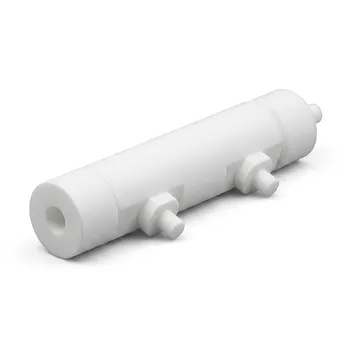
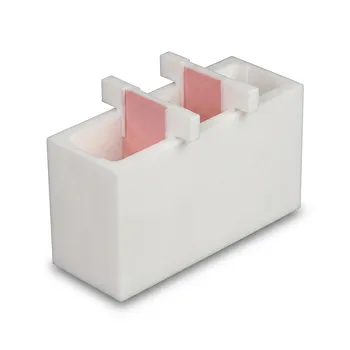
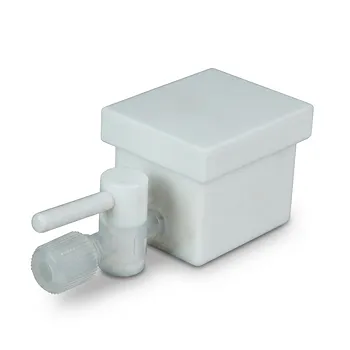
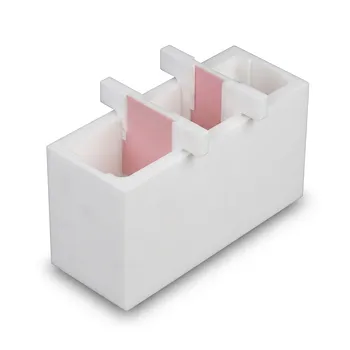
- White PTFE Electrolytic Cell with Movable Slider and Insulated Lid for Fluorine Corrosion Resistance
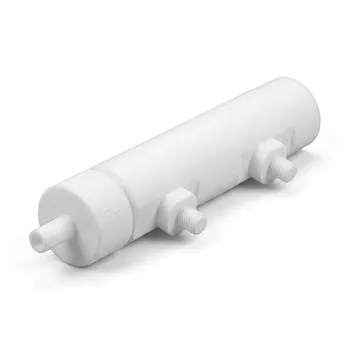
- Custom PTFE Electrolytic Cell Corrosion Resistant Low Background Reaction Vessel with Inlet Outlet Ports
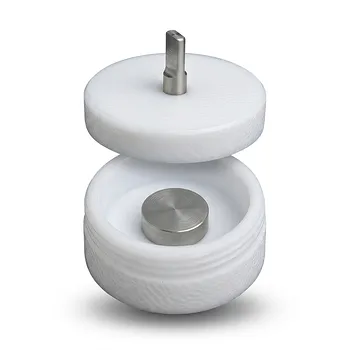
- High Purity Custom PTFE Reaction Cell Electrolytic Tank for Semiconductor and Polysilicon Industrial Applications
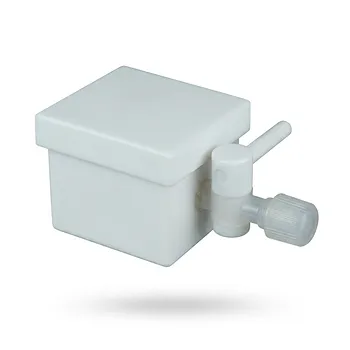
- Square PTFE Electrochemical Cell for Silicon Wafer Processing and Hydrofluoric Acid Resistance in Semiconductor and New Energy Research
- Customizable PFA Square Tray Corrosion Resistant High Temperature Large Petri Dish Electrolytic Cell
People Also Ask
- How do custom PTFE electrochemical cells improve the accuracy of stability testing for alkaline catalysts compared to glass cells?
- How does the hydrophobicity of PTFE benefit electrochemical measurements? Enhance Stability and Precision in Your Lab
- How are electrolytic cells utilized in the Hall-Héroult process? Optimizing Purity and Energy Efficiency
- What are the primary components required for the construction of a standard electrolytic cell? Essential Hardware Guide
- How does the use of electrolytic cells benefit electroplating and surface finishing applications? Precision & Durability